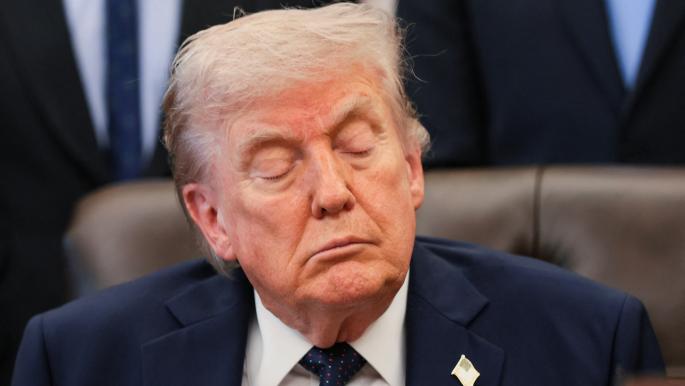
U.S. President Donald Trump defended the measures he has taken to eliminate humanitarian protection, which safeguards immigrants from deportation, during a Supreme Court hearing. Trump stated that judges do not have the right to intervene in these policies, indicating that these actions fall within his powers as President.
These remarks come at a sensitive time as immigrants in the United States face the risk of deportation following the cancellation of several programs that provided them protection. This issue has sparked widespread debate in political and legal circles, with some viewing it as a violation of human rights.
Details of the Hearing
During the Supreme Court session, Trump presented a series of legal arguments supporting his administration's stance. He pointed out that eliminating humanitarian protection is a necessary step to ensure national security, and that judges should respect the political decisions made by the administration.
Human rights organizations criticized these measures, arguing that they threaten the lives of many immigrant families. They emphasized that the removal of protection will exacerbate the humanitarian conditions for many individuals who rely on this status to remain in the United States.
Background & Context
Historically, the United States has provided protection for immigrants through various programs, such as humanitarian status, which allows individuals facing dire circumstances in their home countries to stay in the U.S. However, recent years have seen significant changes in U.S. immigration policy, with the current administration seeking to tighten laws and restrictions on immigrants.
These measures are part of a broader strategy aimed at reducing the number of undocumented immigrants and enhancing border security. Nonetheless, these policies face strong opposition from human rights advocates who view them as violations of individual rights.
Impact & Consequences
If the elimination of humanitarian protection is approved, it will significantly affect the lives of many immigrants and their families. This decision could lead to an increase in deportations, threatening the stability of immigrant communities in the United States.
Moreover, this decision may provoke strong reactions from human rights organizations and the international community, potentially impacting the United States' image as a supporter of human rights. Protests and demonstrations are likely to escalate across various states, reflecting the outrage over these policies.
Regional Significance
U.S. immigration policy has a significant impact on Arab countries, as many immigrants from these nations rely on humanitarian protection to stay in the United States. If this status is revoked, it could lead to an increase in the number of migrants returning to their home countries, thereby increasing the economic and social burdens in those nations.
Furthermore, this decision may affect the relations between the United States and Arab countries, potentially leading to diplomatic tensions due to harsh policies towards migrants.
In conclusion, immigration remains one of the most complex issues in U.S. politics, and the decisions made by the current administration are likely to continue to spark controversy and debate in political and social circles.