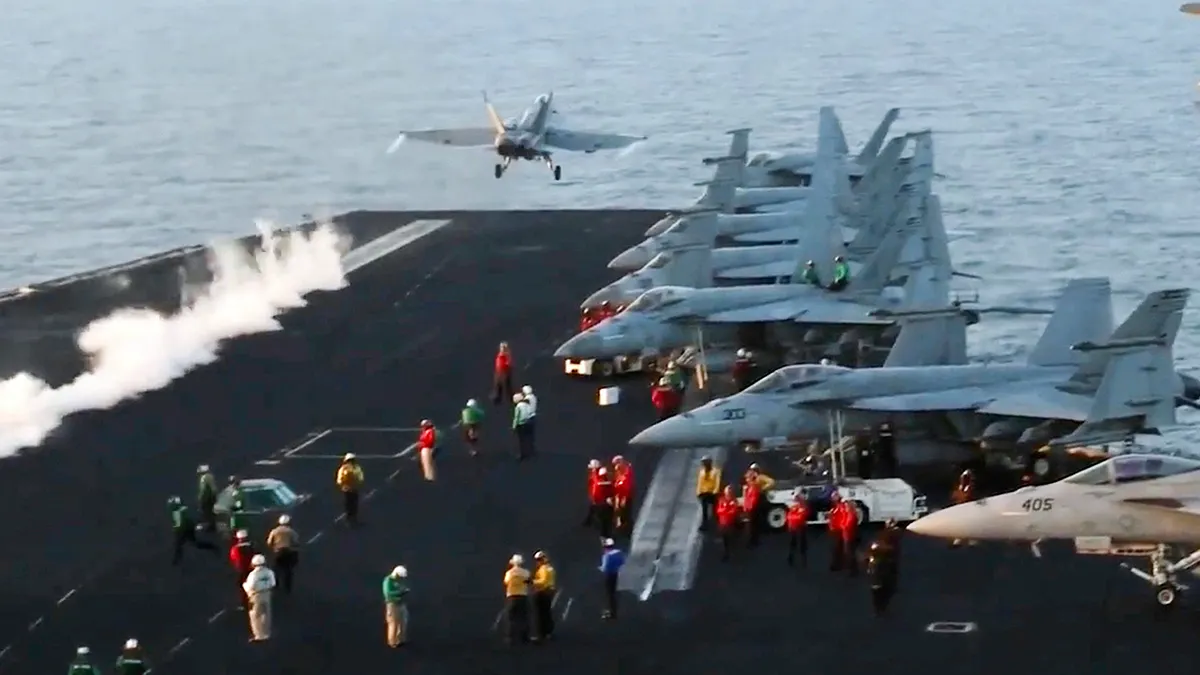
In an unprecedented military escalation, U.S. President Donald Trump has sent a substantial group of aircraft carriers to the Hormuz Strait, reflecting the strength of the American naval fleet in the region. This move comes at a sensitive time, as tensions rise between the United States and Iran, which lacks the military capability to confront this buildup.
Instead of a military response, Iran has chosen its own strategy, dispatching its diplomats to the international arena to bolster its position. This indicates that Iran is seeking to leverage its diplomatic skills in the face of military challenges, which could significantly impact the unfolding events in the region.
Details of the Event
Trump's naval buildup in the Hormuz Strait is part of the maximum pressure policy his administration is pursuing against Iran. This strait is a vital point for oil transport, through which approximately 20% of global oil supplies pass. This escalation is expected to heighten tensions in the region, especially as Iran continues to develop its nuclear program.
Conversely, Iran aims to use diplomacy as a means to influence the international community. Tehran has sent its diplomats to several countries, attempting to build new alliances and present itself as a supporter of stability in the region. This strategy may reflect Iran's desire to avoid direct military confrontation and focus on enhancing its position through dialogue.
Background & Context
Historically, the Hormuz Strait has witnessed increasing tensions between the United States and Iran, especially since Washington's withdrawal from the nuclear agreement in 2018. Since then, the United States has imposed strict sanctions on Iran, exacerbating the economic and political situation in the country. These sanctions have pushed Iran to take more aggressive steps in the region, including targeting oil tankers.
Trump's recent escalation also comes at a sensitive time, as the region is experiencing significant geopolitical changes, with the rising roles of China and Russia in the Middle East. These dynamics may influence how countries deal with tensions in the Hormuz Strait.
Impact & Consequences
The military escalation in the Hormuz Strait could lead to an increase in global oil prices, affecting the world economy. Any disruption in navigation through this strait could trigger a global energy crisis, negatively impacting financial markets. Additionally, this situation may heighten tensions among major powers, especially if other forces intervene in the conflict.
Regionally, this escalation could increase divisions among Arab states, as their positions towards Iran and the United States may vary. Some countries may support U.S. actions, while others may seek to maintain good relations with Iran.
Regional Significance
Arab countries are directly affected by any escalation in the Hormuz Strait, as many rely on imported oil. Any rise in oil prices could exacerbate economic crises in some nations. Moreover, military tensions may impact security and stability in the region, increasing the challenges faced by Arab governments.
In conclusion, the escalation in the Hormuz Strait appears to represent a turning point in international relations, as tensions rise between major powers. It is crucial to monitor developments in this context, as they may have far-reaching implications for security and stability in the region.