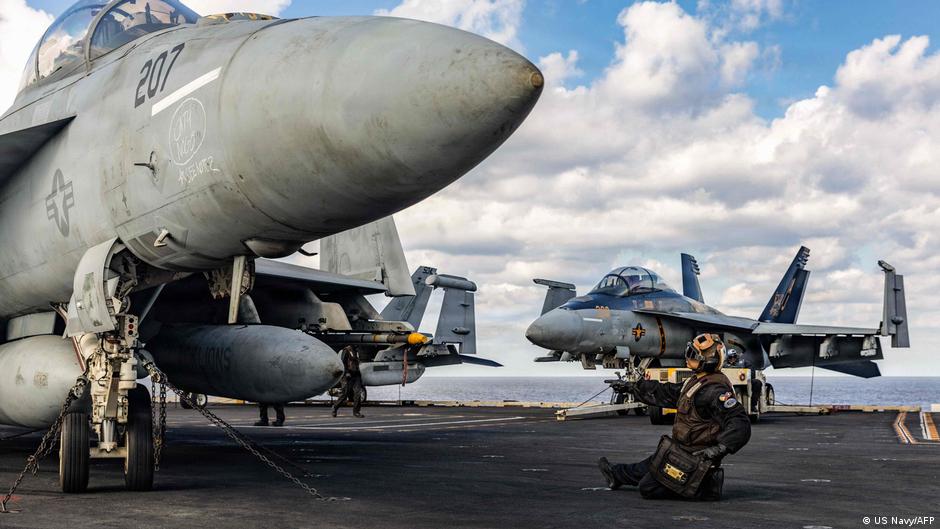
U.S. President Donald Trump is preparing to face new challenges as the legal deadline for military operations against Iran approaches, which ends on May 1. According to U.S. laws, the president can initiate military operations without congressional approval for 60 days, after which he must obtain formal approval from both the House of Representatives and the Senate.
On March 2, Trump notified Congress of the commencement of military operations in Iran, but as the deadline nears, pressure is mounting on him to reach a peaceful resolution or face the consequences of not obtaining congressional approval.
Details of the Situation
U.S. laws allow the president to conduct military operations in emergencies but require him to inform Congress within 48 hours. In the case of the war on Iran, this procedure was followed, but now Trump must take additional steps to justify the continuation of military operations after the specified deadline has passed.
Historically, responsibilities related to war are divided in the U.S. Constitution, where the president is considered the commander-in-chief of the armed forces, but only Congress can declare war. The War Powers Act was enacted in 1973 to define how power is divided between Congress and the president during wartime.
Background & Context
The origins of the War Powers Act stem from lessons learned during the Vietnam War, where the U.S. engaged in a prolonged conflict that was not officially declared by Congress until 1964. When the law was passed in 1973, it was opposed by then-President Richard Nixon, but his veto was overridden by a two-thirds majority in Congress.
Although Congress is the only body authorized to declare war, it rarely does so. The last official declaration of war was against Bulgaria, Hungary, and Romania in 1942. In recent years, many presidents have utilized the ambiguous wording of the law to authorize military force abroad.
Impact & Consequences
If a peaceful resolution is not reached before May 1, Trump will face difficult choices. He could extend the original deadline by an additional 30 days, but this would require him to provide strong justifications, especially if tensions continue in the Strait of Hormuz.
On the other hand, there is a possibility that Trump may argue that the 60-day rule does not apply in this case, citing a previous precedent set by President Barack Obama in 2011 when he conducted military operations in Libya without an official declaration of war.
Regional Significance
These developments directly affect the Arab region, where Iran remains a key player in many regional conflicts. Any escalation in military operations could exacerbate conditions in the Middle East, increasing tensions between Arab states and Iran.
In conclusion, Trump faces significant pressure to find a resolution before the midterm elections in November, as polls indicate that Republicans may lose control of Congress. He must find a way out that ensures him popular and political support.