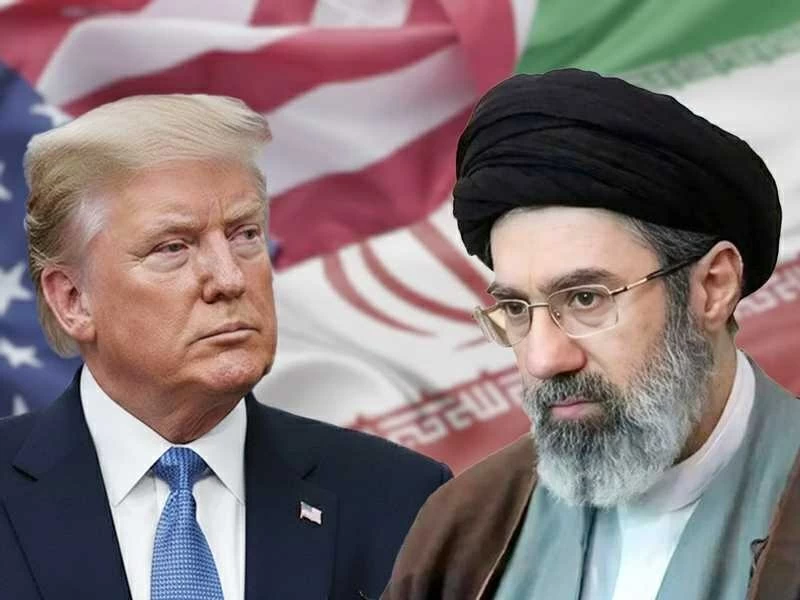
U.S. President Donald Trump confirmed today (Wednesday) that Iranian Supreme Leader Ali Khamenei is involved in ongoing talks with him and that a meeting could occur soon. In his remarks to the "New York Post," Trump indicated that the situation with Iran is evolving rapidly and is expected to be very positive, explaining that Iran has agreed not to pursue nuclear weapons.
Trump also mentioned that he received information indicating that the Iranian leader is giving his consent to the discussions and is actively participating in them, noting that gas prices will soon decrease. He asserted, "We do not need to deploy ground troops in Iran right now," anticipating that the blockade on Iran will continue until next September, stating, "I do not expect this to be resolved quickly."
Details of the Situation
In a related context, Trump addressed the situation in Lebanon, expressing his frustration over the ongoing conflict between Israeli Prime Minister Benjamin Netanyahu and Lebanon. He explained that he had an angry conversation with Netanyahu, informing him of his discontent with the continuous fighting with Lebanon. Trump's comments came just hours after Iranian attacks on Kuwait, which resulted in one death and several injuries, while Bahrain intercepted three Iranian missiles and drones.
ABC News reported that U.S. officials stated that President Trump is demanding that Tehran provide specific written nuclear concessions as part of a preliminary agreement. Reports indicated that Iranian negotiators had previously offered verbal assurances that the regime would eventually agree to certain terms regarding its nuclear program. However, Trump noted that Iran's commitments were not strong enough during their last meeting.
Background & Context
These statements come at a sensitive time as the U.S. administration seeks to reassess its policy towards Iran after years of escalating tensions. Relations between Washington and Tehran have seen a significant escalation since the U.S. withdrawal from the nuclear agreement in 2018, leading to the imposition of severe economic sanctions on Iran.
In this context, U.S. Secretary of State Marco Rubio confirmed yesterday that Washington will not ease sanctions on Iran concerning the Strait of Hormuz, indicating that the sanctions are related to Iran's nuclear file, not the strait. Rubio clarified that it is Iran that seeks an agreement, not the U.S., stating that the Iranians have agreed to negotiate on abandoning their nuclear program.
Impact & Consequences
Concerns are growing that current developments may affect the stability of the region, especially amid rising tensions between Iran and Gulf states. Any progress in the talks could lead to a de-escalation of tensions; however, a failure to reach an agreement could result in potential military escalation.
These discussions represent an opportunity to rebuild trust between Iran and the United States, but they require concessions from both sides. If the talks succeed, it could lead to improved relations between Iran and Western countries, positively impacting regional security.
Regional Significance
Developments in U.S.-Iranian relations directly affect the situation in the Arab region, with Gulf states being among the most impacted. Any change in U.S. policy towards Iran may reflect on regional stability and influence oil prices and financial markets.
Ultimately, the situation in the region remains complex, with political and economic interests intertwining, making it difficult to predict the final outcomes of the talks. Close monitoring of upcoming developments is essential.