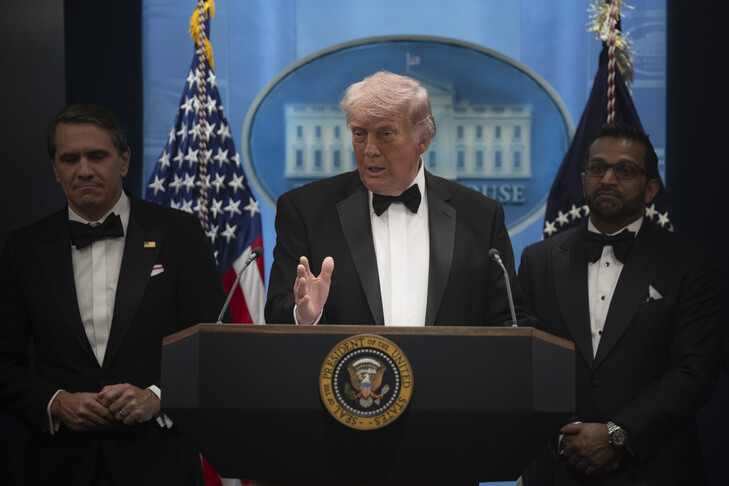
U.S. President Donald Trump convened with his national security team to discuss Iran's proposal regarding the Strait of Hormuz, where the U.S. administration emphasized that Trump's red lines concerning Iran are very clear. This meeting occurs at a sensitive time as tensions between the United States and Iran are escalating, particularly following reports that Tehran has made an offer related to the strait without addressing nuclear talks.
According to sources within the White House, Trump and his team discussed available options for dealing with this Iranian proposal, which is seen as part of Tehran's strategy to pressure Washington. The Strait of Hormuz is a vital point for global trade, through which approximately 20% of the world's oil passes.
Details of the Meeting
These developments come at a time when U.S.-Iran relations are increasingly strained, with both nations exchanging accusations regarding military activities and regional interventions. U.S. officials have indicated that any potential agreement with Iran must include clear commitments regarding its nuclear program, which Tehran has so far rejected.
Reports also suggest that Iran is seeking to exploit the current situation to alleviate the economic pressures imposed on it, especially after U.S. sanctions have significantly impacted its economy. Iran's offer regarding the Strait of Hormuz is seen as an attempt to position itself as a negotiable party on strategic issues.
Background & Context
Historically, the Strait of Hormuz has been the stage for numerous political and military crises, with the region experiencing repeated tensions among major powers. In 2019, tensions escalated following a series of attacks on oil tankers in the area, prompting the United States to bolster its military presence in the Gulf.
Iran considers the Strait of Hormuz a lifeline for its economy, with a significant portion of its oil exports relying on this waterway. Therefore, any threat or escalation in the region could substantially affect global oil prices.
Impact & Consequences
These developments carry significant implications for regional and international security. The increasing tensions between the United States and Iran could lead to military escalation, threatening regional stability and impacting global oil markets. Additionally, any potential agreement could alter the dynamics of international relations in the Middle East.
Furthermore, any action taken by the United States or Iran may affect each country's allies in the region, complicating the political landscape. Neighboring Arab countries, such as Saudi Arabia and the UAE, are closely monitoring these developments, as any escalation in the region poses a threat to their national interests.
Regional Significance
The recent developments in U.S.-Iranian relations are particularly significant for Arab countries, as regional stability heavily depends on how major powers handle this crisis. Arab nations are keen to maintain their economic and security stability amidst these tensions.
Moreover, any escalation in the Strait of Hormuz could impact trade and oil movement, negatively affecting Arab economies. Therefore, there is an urgent need for diplomatic solutions to avoid any escalation that could lead to open conflict.