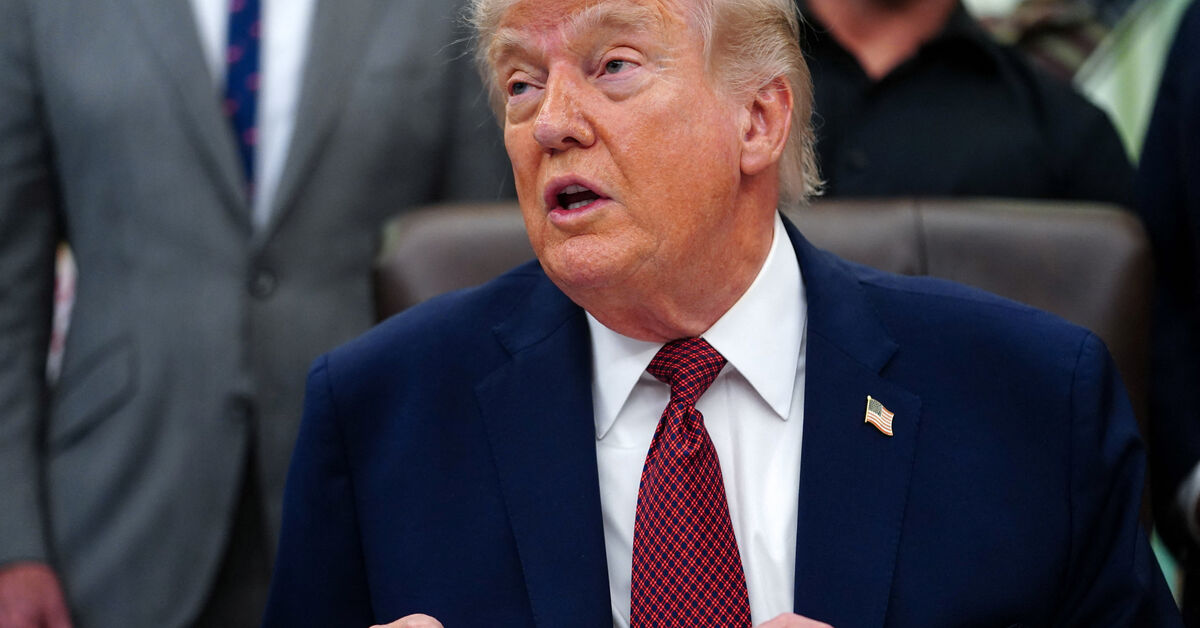
U.S. President Donald Trump has stated that Iran can reach out to him if it wishes to negotiate to replace the ongoing conflict between the two nations. In a recent interview with Fox News, Trump emphasized that the U.S. does not seek war with Iran, but is prepared to defend its interests.
Trump indicated that the United States might offer opportunities for negotiations with Iran if it desires to replace the war. He reiterated that the U.S. is open to dialogue, provided that Iran shows willingness to engage in discussions aimed at resolving the ongoing tensions.
Details of the Statement
During the interview, Trump elaborated on the U.S. stance, stating that while the nation does not want conflict, it will continue to protect its interests in the region. He expressed hope that diplomatic channels could be opened to facilitate peace.
Furthermore, Trump mentioned that the U.S. is prepared to engage in talks if Iran is ready to abandon its aggressive posturing. He believes that such negotiations could lead to a more stable relationship between the two countries.
Background & Context
The conflict between the United States and Iran has escalated over time, particularly after Iran's actions led to the death of an American soldier in Iraq. This incident marked a significant turning point in U.S.-Iran relations.
In response to the attack, the U.S. executed an Iranian soldier, further intensifying the hostilities. The cycle of retaliation has contributed to a fraught atmosphere, making diplomatic efforts increasingly challenging.
Impact & Consequences
Experts have noted that Trump's recent statement could represent a pivotal moment towards peace between the two nations. Analysts suggest that this shift in rhetoric may indicate a change in U.S. policy towards Iran.
They argue that if the U.S. is genuinely open to negotiations, it could lead to a de-escalation of tensions and potentially pave the way for a comprehensive agreement that addresses the concerns of both parties.
Regional Significance
This statement from Trump could have significant implications for the broader Arab region. Experts believe that a change in U.S. policy towards Iran might influence Iran's approach to its neighbors.
Additionally, the potential for dialogue could alter the dynamics of power in the region, affecting various alliances and conflicts. The Arab nations may need to reassess their strategies in light of these developments.
In conclusion, the willingness to negotiate could signal a new chapter in U.S.-Iran relations, one that prioritizes diplomacy over military confrontation.