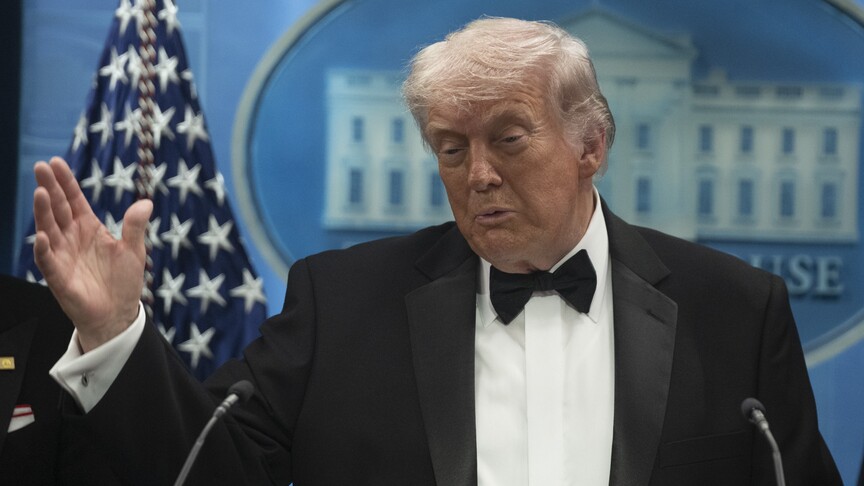
U.S. President Donald Trump stated that Iran has informed the United States that it is in a 'state of collapse.' This declaration comes at a time when tensions are escalating in the Arab Gulf, where the Hormuz Strait is considered one of the most critical waterways in the world.
During a press conference, Trump emphasized that Iran wants the United States to open the Hormuz Strait 'as soon as possible.' This statement is made against the backdrop of increasing economic and political pressure on Iran, which is suffering from severe sanctions imposed by the United States.
Details of the Event
Trump's remarks are part of a broader strategy aimed at pressuring the Iranian regime. The U.S. administration seeks to intensify pressure on Tehran by enhancing economic sanctions, which have led to a deterioration of the economic situation in the country. This statement also indicates that the United States is closely monitoring developments in Iran, especially amid the rising tensions in the region.
On the other hand, these remarks come at a sensitive time, as U.S.-Iran relations are experiencing increasing strain. Trump pointed out that Iran may be in a weak position, which could push it to take new steps in peace talks or negotiations regarding its nuclear program.
Background & Context
Historically, U.S.-Iran relations have been tense since the Islamic Revolution in 1979. These relations have seen significant fluctuations, particularly after the U.S. withdrawal from the nuclear agreement in 2018. Since then, the U.S. has imposed strict economic sanctions on Iran, significantly impacting the Iranian economy.
In recent years, tensions in the Gulf region have increased, with Iran and the Hormuz Strait being a central hub for global trade. Approximately 20% of the world's oil passes through this strait, making it a strategically important point. Any disruptions in this corridor could affect global oil prices.
Impact & Consequences
Trump's statements could escalate tensions in the region, as Iran may feel the increasing pressure from the United States. This pressure could lead Iran to take more extreme measures, raising the risk of conflict in the area. Furthermore, any escalation in tensions could impact global markets, particularly oil markets.
Moreover, these remarks may affect relations between the United States and its allies in the region, especially the Gulf countries. These nations are striving for stability in the region and may be concerned about any potential escalation.
Regional Significance
The Arab Gulf region is considered one of the most sensitive areas in the world, and any tension between the United States and Iran could directly impact neighboring Arab countries. An escalation of tensions could increase security risks in the region, affecting political and economic stability.
Additionally, any disruptions in the Hormuz Strait could lead to rising oil prices, impacting the economies of Arab countries that heavily rely on oil exports. Therefore, the situation in Iran and the Hormuz Strait remains a vital issue for Arab nations.
In conclusion, developments in Iran and the Hormuz Strait are under close observation, as they could affect security and stability in the region. Trump's statements reflect the increasing tensions, necessitating careful monitoring by Arab countries and the international community.