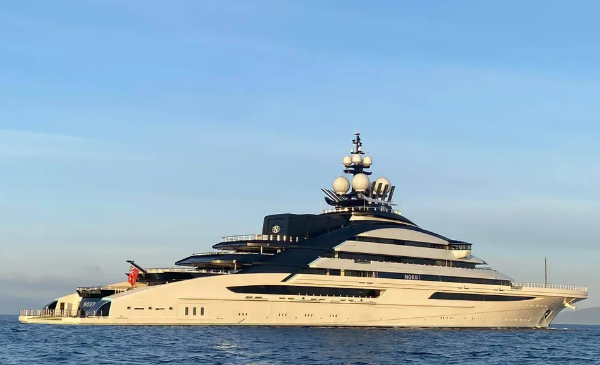
The luxurious yacht 'Noor', measuring 464 feet, has passed through the Strait of Hormuz, believed to be linked to Alexey A. Mordashov, one of the prominent Russian oligarchs in the steel sector. This event comes at a time when international pressure is increasing on wealthy Russians due to sanctions imposed as a result of ongoing political events.
Mordashov is considered one of the richest businessmen in Russia and has been listed on U.S. and European sanctions lists due to his role in supporting the Russian government. The yacht 'Noor', regarded as a symbol of luxury, illustrates how the wealthy can circumvent the sanctions imposed on them.
Details of the Yacht's Journey
The yacht 'Noor' is one of the largest luxury yachts in the world, designed to be a symbol of wealth and power. It was spotted passing through the Strait of Hormuz, a strategic waterway connecting the Arabian Gulf to the Sea of Oman. This passage is one of the most important maritime routes globally, through which approximately 20% of the world's total oil passes.
Concerns are growing that the passage of this yacht may indicate a challenge to the sanctions imposed on wealthy Russians, raising questions about the effectiveness of these sanctions in achieving their intended goals. Additionally, this event reflects the increasing tensions in the region, where relations between Western countries and Russia remain strained.
Background & Context
The roots of the sanctions imposed on Russians date back several years, beginning after Russia's annexation of Crimea in 2014. Since then, Western countries have taken increasing steps to impose sanctions on individuals and companies in Russia, aiming to pressure the Russian government to change its policies. However, many wealthy Russians have managed to adapt to these sanctions, raising questions about their actual impact.
Mordashov serves as an example of how the wealthy can maintain their luxurious lifestyles despite international pressures. He owns a number of major companies in Russia and is believed to have a fortune estimated in the billions of dollars, making him one of the most prominent figures in the Russian business world.
Impact & Consequences
The world is currently undergoing a sensitive phase regarding economic sanctions, as Western countries seek to intensify their pressure on Russia. However, the passage of the yacht 'Noor' highlights the challenges these countries face in effectively implementing their sanctions. This may lead to a reassessment of sanction strategies, especially as wealthy Russians continue to evade these pressures.
This event may also affect relations between Western countries and Gulf states, as the Strait of Hormuz is a vital point for global trade. Any escalation in tensions could impact oil prices and global markets in general.
Regional Significance
The passage of the yacht 'Noor' through the Strait of Hormuz serves as a reminder of the complexities involved in enforcing sanctions against wealthy individuals. It underscores the need for a more coordinated international approach to address the loopholes that allow the affluent to bypass restrictions.
In conclusion, the situation surrounding the yacht 'Noor' not only raises questions about the effectiveness of sanctions but also highlights the ongoing geopolitical tensions that continue to shape the dynamics of international relations.