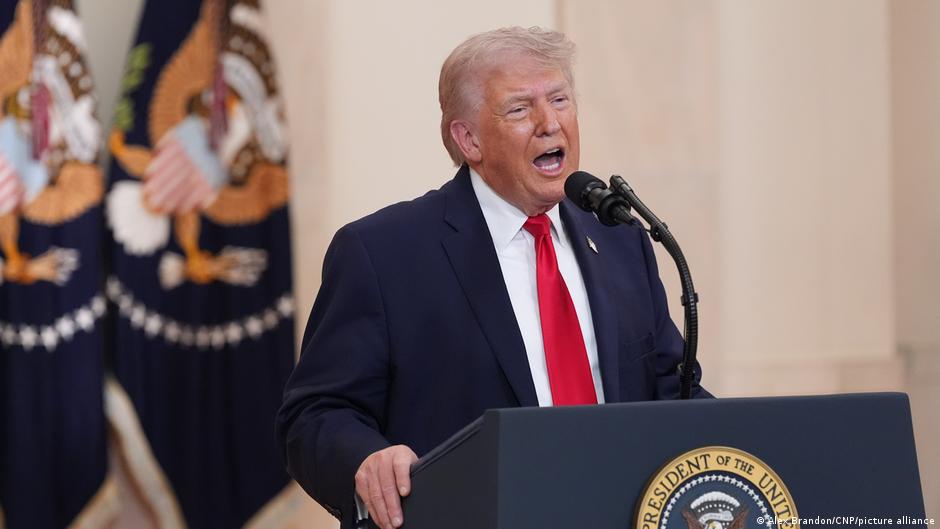
In a national address delivered from the White House on April 1, President Donald Trump announced new strategies regarding the war in Iran, asserting that the United States aims to end the conflict within "the next few weeks." Trump also claimed that "all original Iranian leaders" have died, raising questions about the accuracy of these statements and their impact on the regional situation.
During his 20-minute speech, Trump discussed the war's impact on the American economy but did not mention NATO as expected. Some of his remarks regarding Iranian leadership and dependence on Middle Eastern oil have sparked widespread debate, as fact-checking reports indicate that some of these claims are inaccurate or misleading.
Details of the Address
While speaking, Trump stated, "Our goal was not regime change, but regime change has occurred due to the death of all their original leaders. They are all dead." However, facts indicate that some key leaders in Iran remain in their positions, such as President Masoud Beizhekin and Foreign Minister Abbas Araghchi.
Trump also noted that the United States has become "completely independent" from Middle Eastern oil, yet data shows that the U.S. still imports about 40% of its oil needs, including a portion from the Gulf region. This contradicts his claims that the U.S. does not need oil from the Middle East.
Background & Context
Historically, U.S.-Iranian relations have been tense, especially following the Islamic Revolution in 1979. Recent years have seen an escalation in tensions, particularly after the assassination of Iranian military commander Qasem Soleimani in 2020, which had a significant impact on regional stability. The ongoing war between the U.S., Israel, and Iran has led to changes in Iranian leadership, but it has not resulted in a radical regime change.
These statements are part of Trump's political strategy as he seeks to bolster his position ahead of the upcoming midterm elections scheduled for November. The remarks have raised questions about their potential impact on U.S. domestic and foreign policy.
Impact & Consequences
Trump's statements regarding Iran and the American economy have raised significant concern among political analysts, who believe these remarks could exacerbate tensions in the region. Additionally, claims about independence from Middle Eastern oil may affect global oil markets, as many countries rely on oil exports from this region.
Furthermore, these statements could impact U.S. relations with its allies in the region, particularly Gulf states that depend on oil exports. As elections approach, Trump may seek to leverage these statements to enhance his popularity among American voters.
Regional Significance
American statements regarding Iran are particularly significant for Arab countries, as they may affect regional stability. Tensions between Iran and Arab states, especially Gulf countries, could escalate as a result of these remarks, increasing fears of potential military escalation.
Moreover, the impact of the war on the American economy could have repercussions for the Arab economy, as many countries rely on American investments. Consequently, any changes in U.S. policy could affect economic relations between the United States and Arab nations.
In conclusion, Trump's statements regarding Iran and the American economy raise numerous questions about their accuracy and impact on the regional situation. As tensions continue, the future remains uncertain for the region and the world.