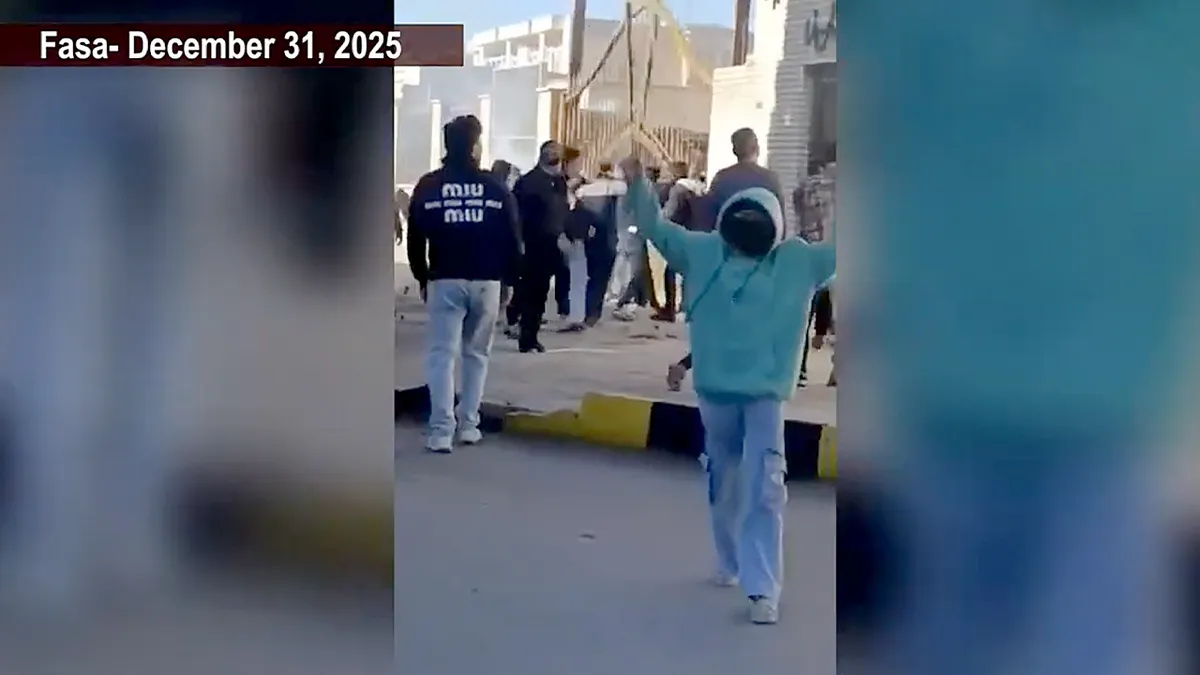
In a controversial statement, U.S. President Donald Trump confirmed on Monday that he sent weapons to protesters in Iran, who are facing repression from the Iranian regime. However, Trump indicated that these weapons did not reach the hands of the protesters, raising questions about the effectiveness of U.S. support in such crises.
Trump's remarks came a day after he accused the Kurds of holding onto these weapons, suggesting internal tensions within U.S. policy towards the Kurds in the region. These statements also reflect the complexities of the situation in Iran, where protesters are facing severe repression from the authorities.
Details of the Event
Trump's statements come at a sensitive time, as Iran is witnessing widespread protests against the government, which is accused of failing to meet the needs of the people. The protests have intensified following the death of young Mahsa Amini, whose case sparked widespread public outrage. Trump, who has long criticized the Iranian regime, seems to be attempting to leverage these protests to bolster his political stance.
In this context, Trump indicated that U.S. support for the protesters could have a significant impact on the events in Iran, but the failure of the weapons to arrive raises questions about the United States' ability to achieve its goals in supporting democracy and human rights in countries experiencing turmoil.
Background & Context
Iran has a long history of popular protests, with the government facing ongoing criticism from citizens over corruption and discrimination. In recent years, the intensity of these protests has increased, particularly following U.S. sanctions on the country, which have led to a deteriorating economic situation.
On the other hand, the relationship between the United States and Iran has been tense for decades, marked by numerous political and military crises. Trump's statements come as part of his attempts to change this dynamic, but the outcomes remain uncertain.
Impact & Consequences
The impact of Trump's statements could be far-reaching, potentially leading to increased tensions between the United States and Iran, and may contribute to escalating protests within Iran itself. Additionally, the accusation against the Kurds of holding onto the weapons could heighten tensions between the United States and its allies in the region.
On an international level, these statements could affect U.S. relations with other countries monitoring the situation in Iran, prompting some nations to reassess their strategies towards Tehran. Furthermore, these events may influence regional security, especially with the presence of other powers like Russia and China seeking to enhance their influence in the area.
Regional Significance
The situation in Iran has direct implications for the Arab region, as Iran is a key player in many conflicts in the Middle East. Protests in Iran could inspire similar movements in other countries, potentially leading to significant political changes in the region.
Moreover, any escalation in tensions between the United States and Iran could impact oil prices and financial markets, reflecting on Arab economies that heavily rely on oil. Therefore, monitoring these developments remains essential for understanding the near future of the region.