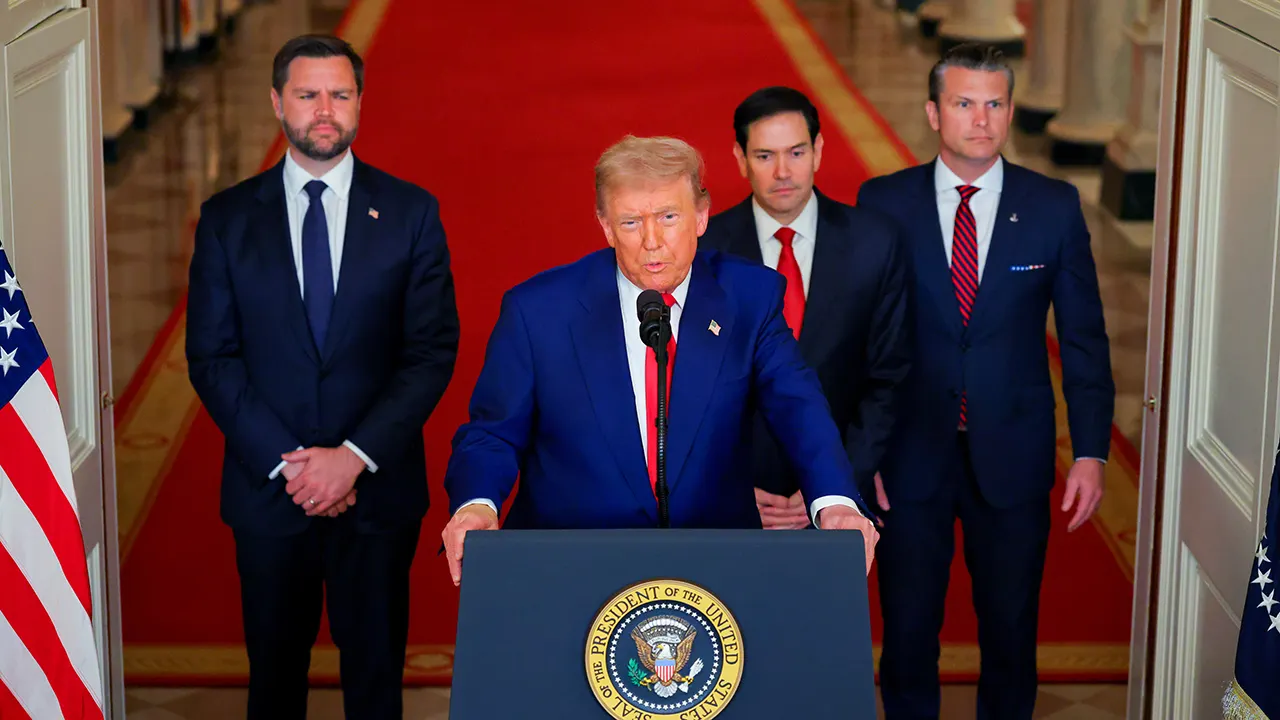
The White House revealed that President Donald Trump may seek assistance from Arab nations to finance costs associated with the ongoing conflict between the United States and Israel on one side and Iran on the other. This statement was made by White House Press Secretary Caroline Levitt during a press conference on Monday, where she confirmed that this idea might be on Trump's mind.
Levitt added, "I don't want to get ahead of Trump on this matter, but it is clear that this is an idea that may be in his mind, and I believe we will hear about it more frequently in the future." This statement comes at a sensitive time, as tensions in the region are escalating, and the U.S. administration appears to be looking for ways to alleviate the financial burdens associated with military operations.
Details of the Situation
Earlier this month, officials from the U.S. Department of Defense (Pentagon) informed Congress that the Trump administration spent over $11.3 billion in the first six days of the war against Iran. These figures do not include damages resulting from battles or compensation for losses, which could range between $1.4 billion to $2.9 billion during the first three weeks of the conflict, according to reports published by The Wall Street Journal.
Concerns are growing that this conflict could lead to greater escalation in the region, necessitating more financial and military support from Arab nations, which may have direct interests in regional stability.
Background & Context
Historically, the relationships between the United States and Arab nations have been complex, with political and economic interests overlapping. In recent years, we have witnessed significant shifts in these relationships, especially following normalization agreements between some Arab countries and Israel. These agreements may open the door for greater cooperation in facing regional threats, such as Iran.
Iran, which the U.S. and its allies consider a major threat, may raise concerns among Arab nations, particularly those sharing borders or economic interests with Tehran. Therefore, the idea of seeking financial support from Arab nations could be part of a broader strategy to counter Iranian influence in the region.
Impact & Consequences
If Arab nations respond to Trump's request, it could lead to enhanced military and economic cooperation between the United States and these countries. However, conversely, this request may provoke negative reactions from some nations that might view it as interference in their internal affairs or pressure to adopt certain positions.
On the other hand, this cooperation could escalate the conflict in the region, threatening regional stability and increasing tensions. Additionally, the financial costs associated with this support could impact the budgets of Arab nations, which are already facing economic challenges.
Regional Significance
These developments are significant for Arab nations, as they may influence their defensive and political strategies. If Arab nations respond to Trump's call, it could strengthen their position in facing regional challenges, but it may also lead to increased tensions with Iran and its allies.
In conclusion, the question remains about how these dynamics will affect relations between Arab nations and Iran, and whether they will lead to further cooperation or escalation of conflicts. Upcoming events will determine the course of relationships in the region.