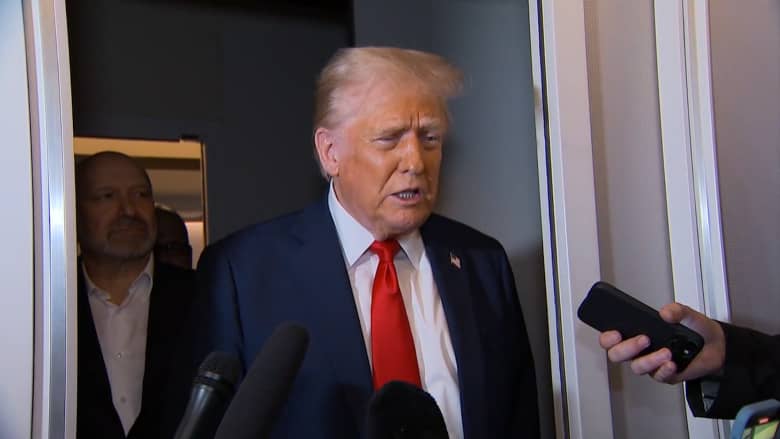
In a dramatic escalation of the crisis between the United States and Iran, President Donald Trump has issued an ultimatum to Tehran, urging it to fully open the Strait of Hormuz within 48 hours. Should Iran fail to respond, Trump stated that he would take actions that include bombing the country's electrical infrastructure. This threat follows his announcement of plans to invade Kharg Island, one of Iran's key oil marketing sites.
These statements come amid rising tensions between the two nations, with hostile rhetoric escalating following a series of military events in the region. Trump's use of warlike language can widely be seen as an intensification of the current U.S. administration's stance towards Iran, which is surrounded by severe economic sanctions. Furthermore, through these remarks, Trump aims to threaten the ruling regime in Tehran, sending a strong message intended to impact shipping and trade in one of the world's most strategic straits.
Details of the Event
Trump, who faces both domestic and international criticism for his handling of crises, has employed a threatening warning style to maintain international pressure on Iran. In his repeated statements, he has talked about the need to control Iranian energy resources as part of his broader strategy to reapply pressure on U.S. adversaries. His announcement of an intention to invade Kharg Island is not merely a military escalation; it also reflects an attempt to divert attention away from the internal crises plaguing his administration.
This ultimatum did not come in a vacuum, as it coincided with U.S. military movements in the region and increasing skirmishes between U.S. and Iranian naval forces. In this context, the Strait of Hormuz can be considered the frontline of the conflict, through which about 20% of global oil supplies pass.
Background & Context
The Strait of Hormuz, located between Iran and the Arabian Peninsula, has long been a focal point for ideological and geographical conflicts. Following the U.S. withdrawal from the nuclear agreement in 2018, relations between Washington and Tehran sharply declined, leading to a continuous escalation of tensions. Since then, the U.S. has imposed stricter economic sanctions on Iran in an attempt to force it to change its regional policies.
In this context, Trump's recent moves are part of a larger strategy aimed at undermining Iranian influence in the region. Some observers believe this strategy could lead to a full-scale war, a scenario many are keen to avoid due to its severe global implications.
Impact & Consequences
The implications of these new threats could be severe. Negotiating a deal with Iran has become more complicated as tensions rise, exacerbating instability in the region. Moreover, military threats will reflect on maritime navigation, making the strait susceptible to potential bottlenecks, which could lead to a rise in global oil prices.
The international scene is on high alert, as major powers strive to achieve a political and security balance. Reactions to U.S. threats may vary between support and rejection, reshaping alliances in the region and potentially leading to the outbreak of new conflicts.
Regional Significance
Undoubtedly, the current situation has profound implications for Arab countries. The increasing tensions between the U.S. and Iran could have repercussions on security and stability in Gulf states. Additionally, a military clash between the two parties could significantly preoccupy Arab regimes and alter their military and security strategies.
In light of this, Arab countries must closely monitor developments and continuously assess their policies to address any new challenges, as their interests are intertwined and affected by these crises.