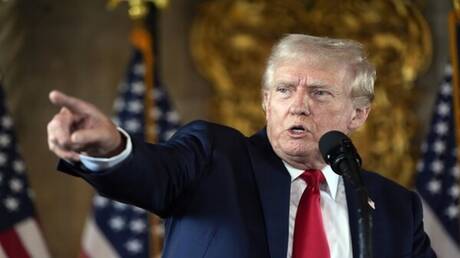
U.S. President Donald Trump has threatened to impose hefty tariffs on all countries that supply weapons to Iran, asserting that there will be no exceptions or exemptions. These remarks come at a sensitive time as the United States seeks to intensify its pressure on Tehran amid escalating tensions in the region.
This move is part of Trump's broader strategy to confront what the U.S. administration perceives as Iranian threats to regional and international security. Trump indicated that any country cooperating with Iran in this area would face severe economic consequences.
Details of the Announcement
In a press conference, Trump announced that the United States would take strict measures against countries that provide military support to Iran, stating that these tariffs would serve as a penalty for those nations. He confirmed that this policy aims to undermine Iran's ability to develop its military programs, particularly in the field of ballistic missiles.
Trump also added that these tariffs would apply to all countries without exception, raising questions about potential reactions from nations that might be affected by these measures. These statements come at a time when concerns are growing over escalating tensions between the United States and Iran, especially following Washington's withdrawal from the nuclear agreement in 2018.
Background & Context
Historically, relations between the United States and Iran have been tense, marked by numerous crises since the Islamic Revolution in 1979. Successive U.S. policies have led to the imposition of stringent economic sanctions on Tehran, significantly impacting the Iranian economy.
Iran is considered one of the key countries in the Middle East, wielding considerable influence over various regional conflicts, including those in Iraq, Syria, and Lebanon. Therefore, any actions taken by the United States against Iran will have far-reaching implications for regional stability.
Impact & Consequences
If these tariffs are implemented, they are likely to escalate tensions between the United States and the countries that may be affected. Some nations might adopt counter-policies, complicating international relations in the region further.
This move could also impact the global economy, potentially leading to rising oil prices and increased instability in financial markets. At the same time, Iran may seek to strengthen its relationships with other countries to circumvent these sanctions, which could lead to new alliances in the region.
Regional Significance
The Arab countries neighboring Iran are among those most affected by these developments. The tariffs could heighten tensions between Arab nations and Iran, especially amid ongoing conflicts in Iraq and Syria.
Moreover, these policies may influence regional security, as some Arab states might seek to bolster their military capabilities to counter potential threats from Iran. Ultimately, the region will remain on alert regarding the unfolding situation amid these increasing tensions.