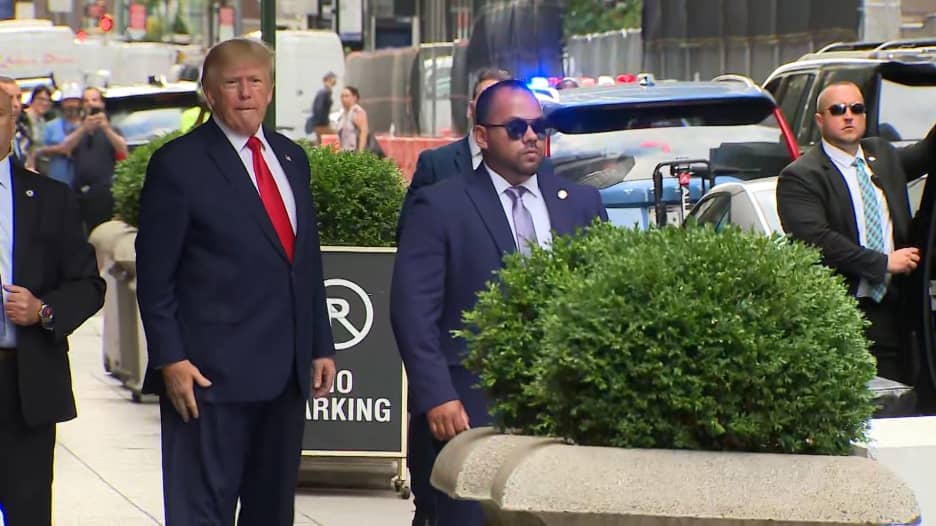
President Donald Trump announced on Tuesday that the United States is communicating with what he referred to as 'the right people' in Iran, a statement that reflects Washington's desire to reopen channels of dialogue with Tehran. Trump confirmed that the Iranians are seeking to reach an agreement with the United States, raising questions about the future of relations between the two countries.
Trump's remarks come at a sensitive time, as tensions between Iran and the United States have escalated since the previous U.S. administration's withdrawal from the nuclear agreement in 2018. This withdrawal led to the imposition of severe economic sanctions on Iran, significantly impacting its economy and exacerbating internal crises.
Details of the Announcement
During his remarks, Trump did not provide specific details about the identity of the 'right people' being contacted, but he indicated that there is a willingness on the Iranian side to find a solution to the current crisis. These statements come at a time when international pressures on Iran to comply with nuclear standards are increasing, amid fears of the acceleration of its nuclear program.
In recent years, relations between Washington and Tehran have experienced significant fluctuations, with multiple attempts at negotiation, most of which have failed. However, it seems that the current U.S. administration is looking to explore new opportunities for dialogue, which could pave the way for a potential agreement.
Background & Context
The roots of tensions between Iran and the United States date back decades, beginning after the Islamic Revolution in 1979. Since then, relations between the two countries have been characterized by conflict and tension, with repeated attempts to negotiate over nuclear and regional issues. The nuclear agreement reached in 2015 was an important step towards easing these tensions, but the U.S. withdrawal from it in 2018 brought relations back to square one.
Today, Iran is considered one of the countries facing severe economic and political challenges, suffering from crippling international sanctions. Under these circumstances, it appears that Tehran is seeking to improve its relations with the West, especially with the United States, in an attempt to salvage its deteriorating economy.
Impact & Consequences
If an agreement is reached between the United States and Iran, it could have significant implications for stability in the Middle East. The agreement could lead to a relaxation of sanctions imposed on Iran, which may contribute to improving the economic situation in the country. Additionally, it could open the door to greater cooperation in other areas, such as combating terrorism and trade.
However, any potential agreement may face strong opposition from certain regional and international powers, who fear that it would enhance Iran's influence in the region. Therefore, the biggest challenge will be how to balance various interests and ensure regional stability.
Regional Significance
The relations between the United States and Iran have a direct impact on Arab countries, as any changes in these relations could affect security and stability in the region. Arab nations, especially those sharing borders with Iran, are closely monitoring current developments, fearing any escalation that might affect their interests.
At the same time, any potential agreement between Washington and Tehran could pave the way for improved relations between Iran and Arab countries, which may contribute to achieving stability in the region. However, this requires significant diplomatic efforts from all parties involved.
In light of President Trump's recent statements, the question remains whether the United States and Iran will be able to overcome historical obstacles and reach an agreement that achieves peace and stability in the region.