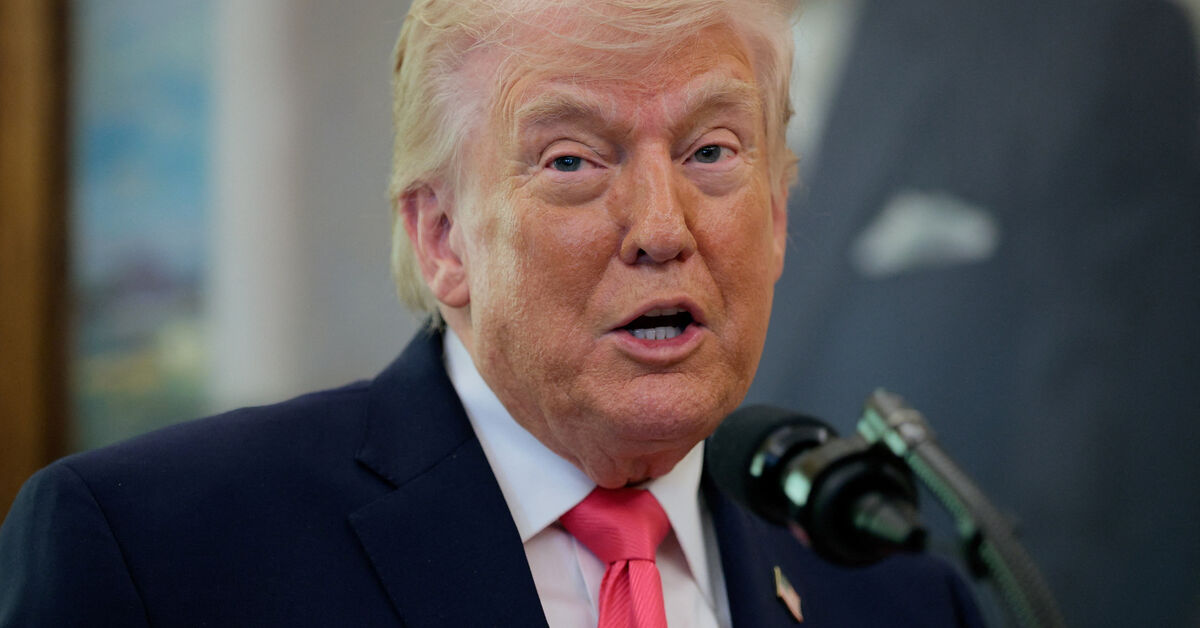
President Donald Trump announced during a press conference held on Tuesday at the Oval Office that the United States is engaging in discussions with 'the right people' in Iran as part of its efforts to reach an agreement that would end the ongoing hostility between the two countries. Trump emphasized that the Iranians show a strong desire to reach an agreement, reflecting a potential shift in the political dynamics between Washington and Tehran.
In his remarks to reporters, Trump clarified that the United States is currently in a 'negotiation phase' regarding Iran, but he did not provide specific details about these negotiations, particularly concerning the plans of American envoys Steve Biegun and Jared Kushner to hold talks this week. These statements come at a sensitive time, as tensions between the United States and Iran have escalated in recent years, especially following Washington's withdrawal from the Iranian nuclear deal in 2018.
Details of the Event
Trump's statements come at a time when relations between the United States and Iran are experiencing increasing tension, with concerns about a potential military escalation in the region. Trump indicated that talks are taking place with 'the right people,' opening the door for expectations about possible progress in negotiations. Pakistan has also expressed its readiness to host talks between the United States and Iran, reflecting its role as a potential mediator in this crisis.
These remarks are seen as a positive step towards de-escalating tensions, as both parties seek to find common ground. However, uncertainty remains regarding the trajectory of the negotiations and whether they will lead to tangible results.
Background & Context
Historically, U.S.-Iranian relations have experienced significant fluctuations, beginning with the Islamic Revolution in 1979, which led to the severing of diplomatic ties between the two nations. Since then, there have been several attempts at negotiations, but most have failed. The U.S. withdrawal from the Iranian nuclear deal in 2018 marked a turning point, as Washington reinstated strict economic sanctions on Iran, significantly impacting its economy.
In recent years, there have been multiple attempts by countries such as Oman and Qatar to facilitate dialogue between the United States and Iran, but those efforts have not yielded substantial results. Now, with Trump's recent statements, there appears to be a new opportunity to reopen channels of communication.
Impact & Consequences
If the current negotiations succeed, they could lead to a de-escalation of tensions in the Middle East, which is already suffering from multiple conflicts. Reaching an agreement could also contribute to stabilizing oil prices, which are significantly affected by geopolitical tensions in the region. At the same time, any progress in the negotiations could improve relations between the United States and its allies in the region, including Gulf Arab states.
However, the question remains regarding Iran's willingness to make concessions, especially in light of the economic pressures it faces. Any potential agreement must take into account the security concerns of both parties, making the process complex.
Regional Significance
The U.S.-Iranian relationship is pivotal for security and stability in the Arab region. Any improvement in these relations could directly impact ongoing conflicts, such as the disputes in Yemen and Syria. Gulf Arab states are closely monitoring the developments of these negotiations, as any change in U.S. policy towards Iran could affect their security strategies.
In conclusion, negotiations between the United States and Iran remain at a sensitive stage, with the potential to lead to radical changes in the geopolitical landscape of the region. The success of these negotiations depends on the willingness of both parties to make concessions, which remains uncertain at this time.