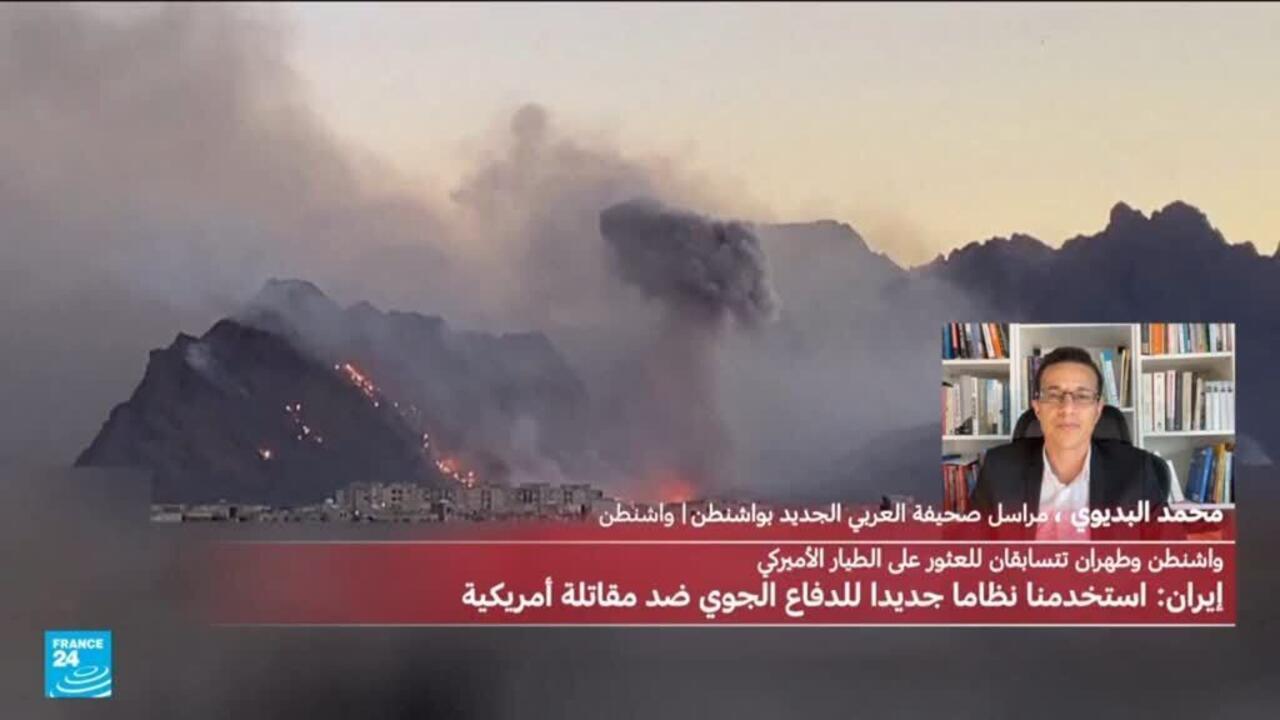
U.S. President Donald Trump has warned Iran that the deadline for a peace agreement to end the ongoing war, which has lasted for over a month, is nearing, indicating that 48 hours remain before they face dire consequences. At the same time, efforts are ongoing to locate two American pilots whose plane crashed within Iranian territory.
In a tweet on his platform Truth Social, Trump stated: "Do you remember when I gave Iran ten days to reach an agreement or face the closure of the Strait of Hormuz? Time is running out, there are 48 hours left before hell descends upon them!" These remarks come at a sensitive time as tensions escalate between the United States and Iran, heightening the conflict in the region.
Details of the Incident
Events are unfolding rapidly in the Middle East, where the United States is seeking to locate one of the American pilots after their plane crashed inside Iranian territory. While the other pilot was rescued by U.S. special forces, the fate of the missing pilot remains uncertain. This incident occurs at a critical time as tensions rise between Washington and Tehran, raising fears of a larger escalation in the conflict.
Trump, facing both domestic and international pressures, is using these statements as leverage to push Iran towards a deal that ensures regional stability. Time appears to be running out, with growing concerns about a military escalation that could have severe consequences for all parties involved.
Background & Context
Historically, relations between the United States and Iran have been strained since the Islamic Revolution in 1979. Recent years have seen an escalation in tensions, especially following the U.S. withdrawal from the Iranian nuclear deal in 2018. Since then, Washington has imposed strict sanctions on Tehran, exacerbating the economic and political situation in Iran.
In recent months, hostilities between the two sides have intensified, with Iran ramping up its military activities in the region, alarming the United States and its allies. This military escalation reflects the ongoing instability in the Middle East, influenced by numerous political and economic factors.
Impact & Consequences
If an agreement is not reached between the United States and Iran, military escalation could have severe consequences for the region. This could lead to increased tensions among neighboring countries and potentially spark new conflicts in the Middle East, which is already suffering from instability.
Moreover, the escalation of the conflict could impact global oil prices, as any threat to close the Strait of Hormuz, a vital artery for oil transport, could lead to significant price hikes. This situation could affect the global economy at large, increasing pressure on oil-importing countries.
Regional Significance
The Arab countries neighboring Iran and the United States find themselves in a sensitive position, as they could be directly affected by any military escalation. Countries like Iraq, Syria, and Lebanon may be caught in the crossfire, complicating the security situation in the region.
Additionally, any escalation in the conflict could lead to an influx of refugees from the affected areas, increasing the pressure on Arab countries that are already hosting refugees. This situation requires a coordinated response from Arab nations and the international community to ensure regional stability.
In conclusion, the fate of U.S.-Iranian relations hangs on the brink, with pressures mounting on both sides. The coming hours may prove crucial in determining the future of the conflict in the Middle East.