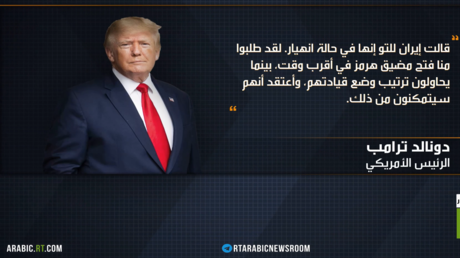
U.S. President Donald Trump stated on his 'Truth Social' platform that Iran is experiencing a state of collapse, emphasizing the urgent need to open the Strait of Hormuz as soon as possible. These remarks come amid escalating tensions in U.S.-Iranian relations, raising questions about the political and economic implications of this crisis.
Trump's statements reflect American concerns regarding the internal situation in Iran, where the country is suffering from worsening economic and social crises. Many analysts have pointed out that the economic pressures, exacerbated by U.S. sanctions, have contributed to the deteriorating conditions within Iran.
Details of the Situation
In his post, Trump did not hesitate to describe the Iranian situation as a collapse, reflecting the current U.S. administration's perspective towards Tehran. He also called for the opening of the Strait of Hormuz, which is considered one of the most important waterways in the world, through which a significant percentage of global oil exports pass. This call comes at a critical time, as fears of escalating tensions in the region are increasing.
The Strait of Hormuz is a strategic point, through which about 20% of the world's oil passes. Any closure or disruption in this passage could lead to a significant rise in oil prices, impacting the global economy.
Background & Context
Historically, U.S.-Iranian relations have seen numerous tensions, especially following the U.S. withdrawal from the Iranian nuclear deal in 2018. Since then, Washington has imposed strict sanctions on Tehran, leading to a deterioration of the economic situation in the country. These conditions have contributed to the outbreak of internal protests against the Iranian government, increasing pressure on the regime.
Iran, which is suffering from a crippling economic crisis, faces multiple challenges including high unemployment rates and a declining national currency. These internal crises may affect the Iranian government's ability to respond to external challenges, increasing the likelihood of worsening conditions.
Impact & Consequences
American statements could lead to an escalation of tensions in the region, as Iran may interpret them as a direct threat to its national security. If U.S. pressures continue, Iran may take escalatory steps, increasing the risk of armed conflict in the region.
On the other hand, these statements may impact global markets, particularly oil markets. Any indication of instability in the Strait of Hormuz could lead to rising oil prices, affecting the global economy as a whole.
Regional Significance
Neighboring Arab countries such as Iraq, Kuwait, and the UAE find themselves in a sensitive position regarding these developments. Any escalation in tensions could affect security and stability in these countries, raising concerns about negative repercussions on the economy and investment in the region.
Additionally, the situation in Iran may influence relations between Arab states and Iran, as some countries may seek to strengthen their alliances with the United States to confront Iranian challenges.
In conclusion, developments in Iran and the Strait of Hormuz remain under close observation, as any changes could significantly impact regional security and the global economy.