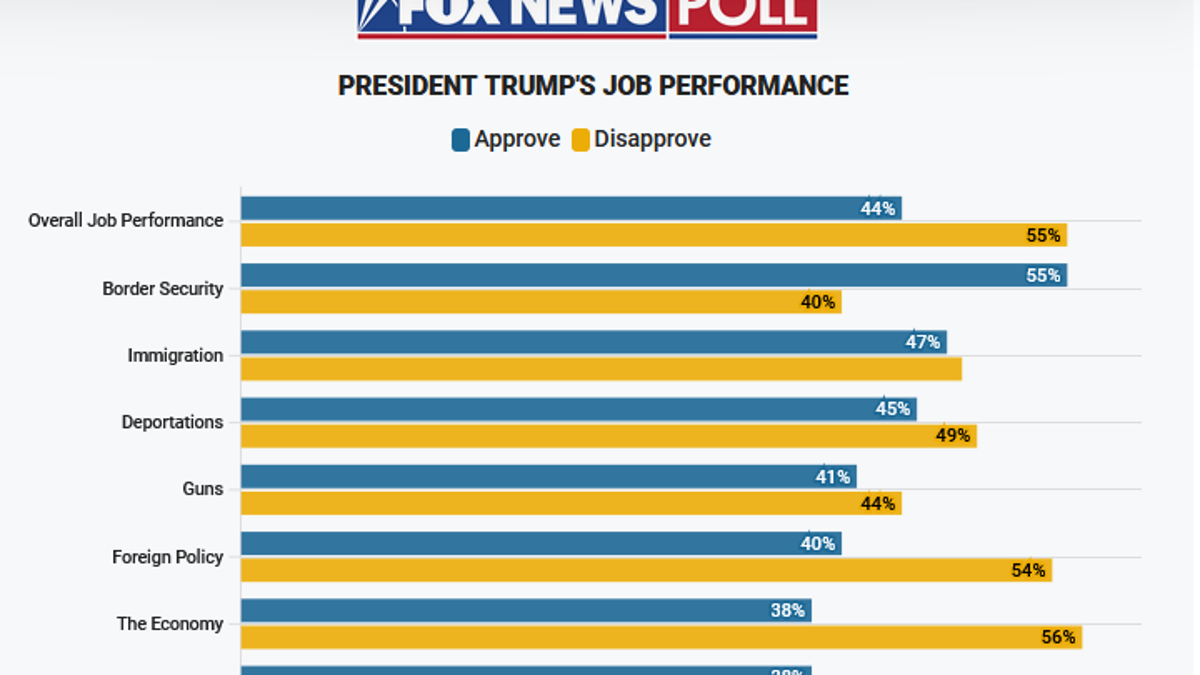
Pressure is mounting on U.S. President Donald Trump as his poll numbers decline, facing increasing legal resistance to his trade and immigration agenda. These developments come at a critical time ahead of the upcoming presidential elections, complicating his political position.
Reports indicate that Trump is facing multiple challenges, not only politically but also legally. Recent polls have shown a significant drop in his popularity, raising questions about his ability to secure a second term. At the same time, his policies on trade and immigration are facing legal scrutiny from the courts, further complicating his situation.
Details of the Situation
Crises are piling up for Trump, as polls indicate that his approval ratings have dropped significantly, placing him in a vulnerable position ahead of the elections. Some studies have shown that his approval rating has fallen to its lowest level since he took office, reflecting a decline in voter confidence.
On another front, his trade and immigration policies are facing increasing legal resistance. Some courts have issued rulings against certain decisions made by Trump, undermining his ability to implement his agenda. This legal resistance could significantly impact his political strategies, especially amid rising pressure from the opposition.
Background & Context
Historically, U.S. presidents have faced similar challenges during periods of low polling. For example, during Barack Obama's presidency, he faced numerous legal challenges that affected his policies. However, Trump is in a different situation, as his declining popularity comes at a critical time ahead of the elections, increasing the pressure on him.
Trump's trade and immigration policies are among the most controversial issues during his presidency. He has made several decisions that have sparked strong reactions from the opposition, leading to heightened political tensions. These circumstances make it difficult for him to achieve his political goals amid declining popularity.
Impact & Consequences
The implications of Trump's declining popularity extend beyond the United States, potentially affecting international relations and global trade. If his popularity continues to decline, it could lead to changes in his strategies for dealing with other countries, impacting the global economy.
Additionally, the legal resistance he faces may delay the implementation of his policies, increasing instability in the market. This situation could affect investors and heighten uncertainty in the U.S. economy.
Regional Significance
Political developments in the United States are of great importance to the Arab region, as Trump's policies toward the Middle East have directly impacted relations between Arab countries and the United States. If Trump's popularity continues to decline, the U.S. approach to Arab issues may change, leading to a reassessment of relationships.
Moreover, any changes in U.S. policy could affect investments and aid provided to Arab countries, increasing the importance of closely monitoring these developments.
In light of the increasing challenges Trump faces, his political future appears to be at risk. These conditions require careful monitoring by observers and analysts, especially given their potential impact on international relations and politics in the Arab region.