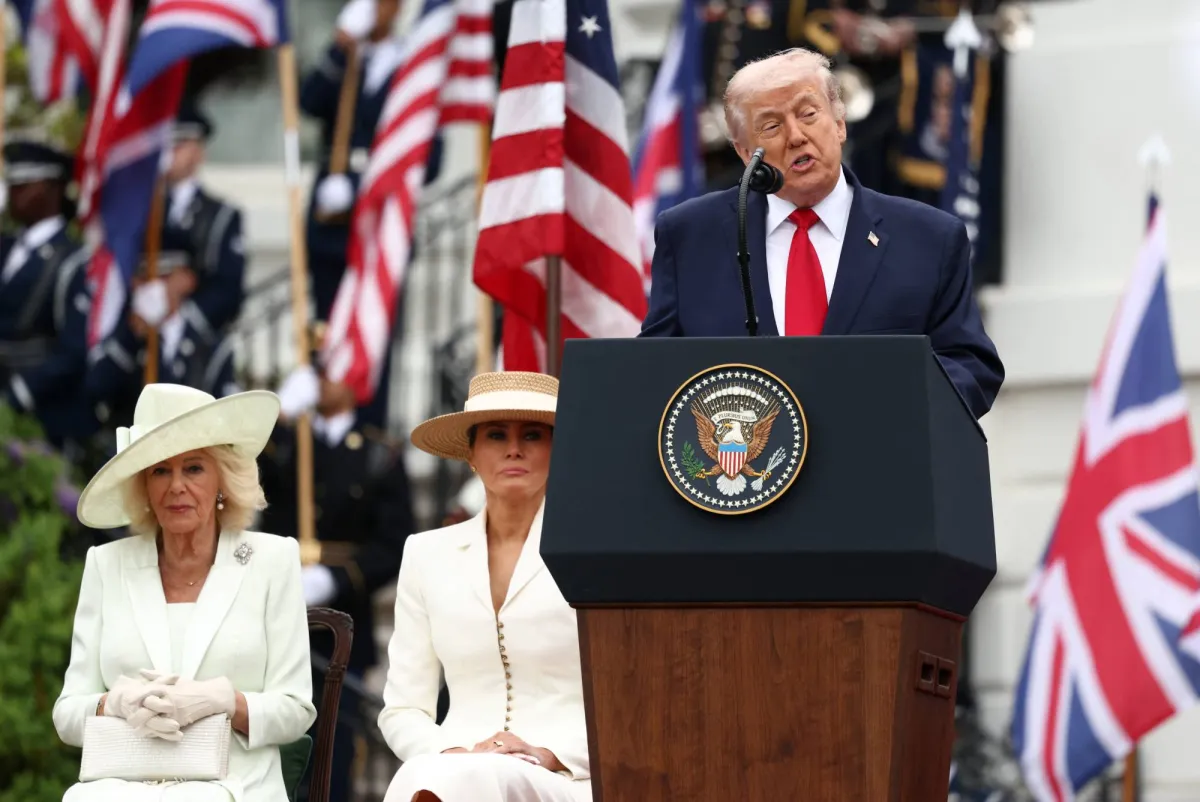
A new survey conducted by Reuters/Ipsos indicates that U.S. President Donald Trump's popularity has plummeted to its lowest point during his current term, with only 34% of Americans expressing satisfaction with his performance in the White House. This decline comes at a time when citizens are increasingly frustrated with his handling of rising living costs and the unpopular war with Iran.
The four-day poll, which concluded on Monday, showed a decrease from the 36% approval rating recorded in a previous survey conducted from April 15 to 20. Most of the responses were collected before the shooting incident that occurred at the White House Correspondents' Association dinner, where Trump was scheduled to speak.
Details of the Event
Trump's popularity has been declining since he took office in January 2025, when 47% of Americans gave him a positive rating at the start of his term. As tensions escalated due to the war launched by the U.S. and Israel against Iran on February 28, gasoline prices surged significantly, adversely affecting Trump's ratings. Only 22% of poll participants expressed satisfaction with his performance regarding living costs, a notable drop from 25% in the previous survey.
The survey included 1014 American adults, with a margin of error of 3 percentage points. The recent shooting incident has raised questions about security at official events, as federal prosecutors charged the shooter with attempted assassination of the president.
Context and Background
The United States is experiencing a politically tense atmosphere, with partisan divisions becoming increasingly pronounced. Trump has blamed the Democrats for the rise in political violence, asserting that their hate speech poses a serious threat. Meanwhile, Iran has accused the U.S. of piracy due to the maritime blockade imposed on Iranian vessels, complicating the situation in the region.
These developments come as the U.S. administration seeks to exert economic pressure on Tehran, while Iran continues to restrict international shipping through the Strait of Hormuz, a vital corridor for oil and gas exports. Concerns are growing that these conditions could lead to further escalation in the conflict between the two countries.
Impact and Consequences
Trump's declining popularity could significantly affect his political strategy, especially with the upcoming elections on the horizon. Polls indicate that many voters are worried about Trump's management of economic and political crises. Additionally, the rising dissatisfaction with living costs may lead to a decrease in popular support for him, reflecting a general sense of public discontent.
In this context, the U.S. administration is working to enhance security at official events, with some Republicans proposing legislation to support the construction of a secure event hall at the White House. This proposal follows the shooting incident, with calls for improved security measures to protect officials.
Impact on the Arab Region
The Arab region is directly affected by the escalating tensions between the U.S. and Iran, as these tensions are a significant factor in the region's stability. The war with Iran could lead to increased tensions in the Arabian Gulf, negatively impacting oil prices and Arab economies.
Moreover, Trump's declining popularity may influence U.S. policy towards the Middle East, as the next administration may seek to alter its strategies in dealing with regional issues. Under these circumstances, the situation in the Arab region remains complex and requires effective diplomatic solutions.
In conclusion, the situations in the U.S. and Iran continue to attract significant attention, as the political and economic dimensions intertwine in complex ways. Trump's declining popularity may have far-reaching implications for U.S. policy, necessitating close monitoring of upcoming events.