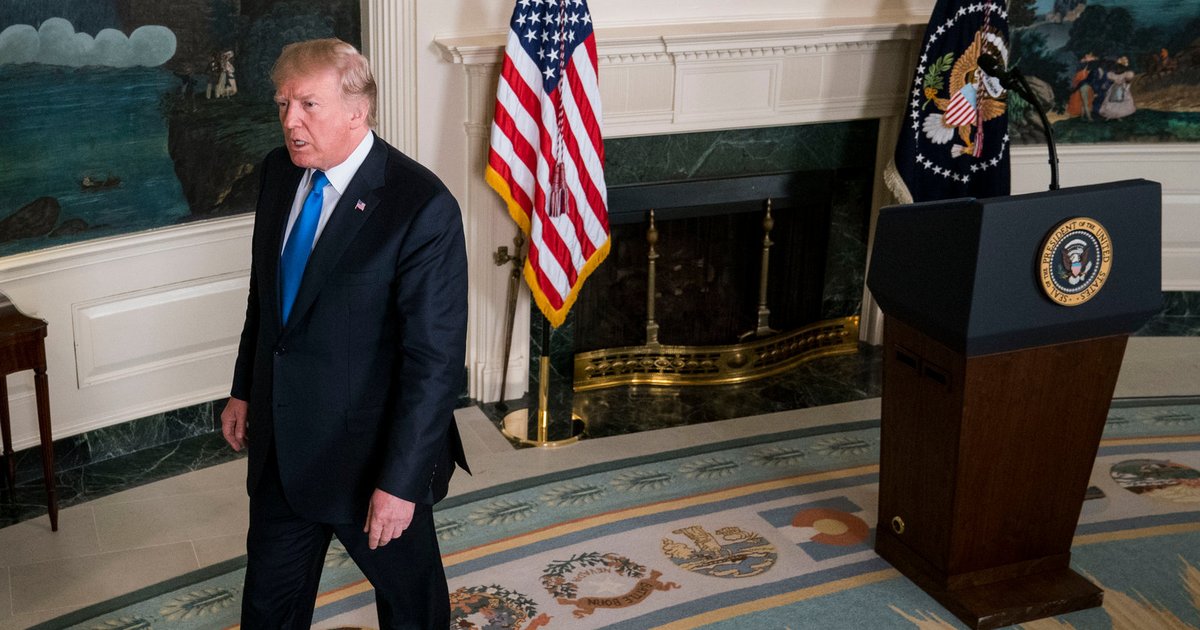
The chief architect of the 2015 nuclear agreement has asserted that President Donald Trump's strategy towards Iran will not succeed. She explained that this policy ignores the complex geopolitical realities in the region, which could exacerbate the situation rather than improve it.
In her remarks, she pointed out that the economic pressures and sanctions imposed by the Trump administration on Iran have not yielded the desired results; instead, they have heightened tensions in the region. She stressed that dialogue and negotiation are the only paths to achieving stability.
Details of the Event
These statements come at a sensitive time when relations between the United States and Iran are increasingly strained. The Trump administration withdrew from the nuclear agreement in 2018, leading to an escalation of crises between the two sides. Since then, Iran has taken several steps to reduce its commitments under the agreement, raising concerns in the international community.
The architect believes that returning to the negotiating table is the optimal solution, noting that the sanctions have only worsened the humanitarian situation in Iran, where citizens are suffering from severe shortages of basic resources.
Background & Context
The Iranian nuclear agreement, known as the Joint Comprehensive Plan of Action (JCPOA), was reached in 2015 between Iran and the P5+1 group (the United States, the United Kingdom, France, Russia, China, and Germany). The agreement was designed to limit Iran's nuclear program in exchange for the easing of economic sanctions imposed on it.
However, the U.S. withdrawal from the agreement and the reinstatement of sanctions have cast a shadow over international relations, as European countries seek to preserve the agreement and ease tensions. Some nations have expressed a desire to find alternative diplomatic solutions.
Impact & Consequences
The architect emphasizes that continuing the pressure policy will only exacerbate crises, not only in Iran but throughout the region. The escalating tensions could lead to new conflicts, threatening both regional and international security.
Moreover, the failure of the American strategy could negatively impact relations with Washington's allies in the region, who may feel insecure amid the growing instability.
Regional Significance
The developments in U.S.-Iranian relations are particularly significant for Arab countries, as any escalation could directly affect security and stability in the region. Arab nations, especially those located near Iran, are monitoring the situation with concern.
Ultimately, dialogue and negotiation remain the most logical options to avoid further escalation, as military solutions would only lead to catastrophic outcomes.