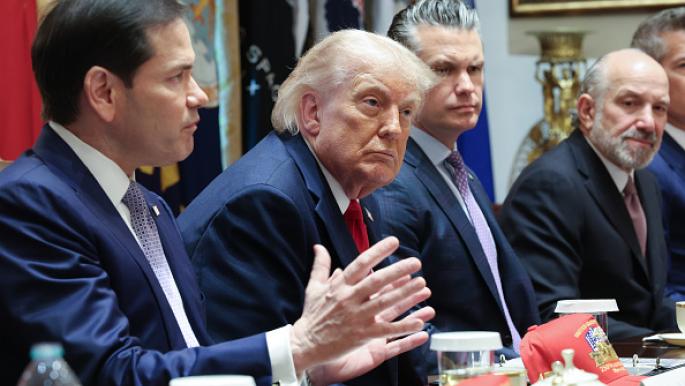
U.S. President Donald Trump's recent comments regarding Oman and his threats have caused shockwaves in Washington, as he included normalization in negotiations. This comes at a time when regional conditions are becoming more complex following a ceasefire, increasing the ambiguity of U.S. policy in the region.
Trump's remarks are part of a broader strategy adopted by the U.S. administration, which focuses on reshaping relationships in the Middle East. This ambiguity was clearly evident this week, as there appears to be a divergence in positions between the White House and the concerned countries.
Details of the Event
In statements made by Trump, he indicated that Oman could be part of negotiations related to normalization with Israel, which sparked mixed reactions in political circles. This comes at a sensitive time, as the U.S. administration seeks to make progress in the peace process, despite the significant challenges it faces.
It is worth noting that Oman has always played an important role as a mediator in regional conflicts, making it a key player in any negotiations related to normalization. However, introducing normalization into the negotiations may raise questions about the true intentions of the U.S. administration.
Background & Context
Historically, Oman has maintained good relations with both the United States and Israel, always striving to promote peace and stability in the region. However, the current situation requires a reassessment of these relationships in light of the rapidly changing political landscape.
Since the ceasefire, the region has experienced a state of tension, with fears of escalating violence increasing. The U.S. administration seems to be trying to seize this opportunity to rearrange the cards, but this may come at political costs.
Impact & Consequences
Trump's statements underscore the importance of Oman in the regional landscape, but they also raise concerns that these threats may be part of a pressure policy on Arab countries. These statements could lead to new tensions between Oman and neighboring countries, complicating the regional situation further.
Moreover, introducing normalization into the negotiations may affect the relationships between Arab countries and Israel, as some countries may reject this approach, leading to new divisions in the region.
Regional Significance
These developments are significant for Arabs, as they reflect changes in U.S. policy towards the Middle East. These statements may lead to a reevaluation of relations between Arab countries and Israel, potentially impacting peace efforts in the region.
Ultimately, questions remain open regarding the intentions of the U.S. administration and whether these statements will lead to positive or negative outcomes. Arab countries must be cautious in dealing with these developments, as any miscalculated step could exacerbate the situation.