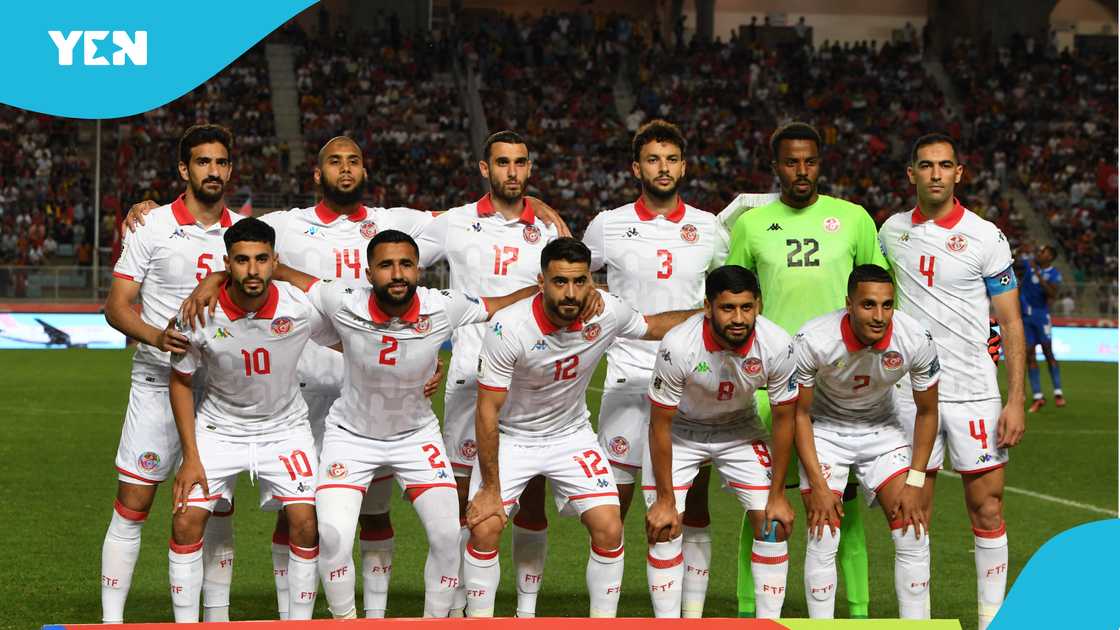
Coach Sabri Lamouchi has launched a new offensive project for the Tunisia national team, starting his tenure with an encouraging victory over Haiti in his first friendly match in charge. This match was not just a tactical test but a clear message reflecting the beginning of a new chapter based on courage and renewal, with a focus on the diverse attacking style that Lamouchi aims to establish within the team before the global tournament.
Lamouchi summarizes his football philosophy by stating, "In one match, luck may play a role, but not in an entire tournament." This statement reflects his vision that extends beyond immediate results, aiming to build a comprehensive project capable of sustainability and achieving long-term success.
Event Details
In his efforts to develop performance, Lamouchi relies on a 4-3-3 formation that allows the team to dominate possession and execute smooth attacks. This formation provides the Tunisia national team with significant attacking flexibility, as the coach seeks to integrate players from diverse football backgrounds, enhancing his attacking options. The transformation from a team that is hard to defeat to one that is hard to stop is Lamouchi's primary goal.
The Tunisian attack ahead of the 2026 World Cup is characterized by diversity, combining different schools of global football. From the speed and physical strength of the German school to the creativity and build-up play of the French school, and finally to the quick transitions and direct play from the American and Canadian schools. This diversity offers Lamouchi multiple options and allows the team to adapt to any opponent's style of play.
Background & Context
Historically, the Tunisia national team has relied on defensive solidity, but with Lamouchi's arrival, the team seeks to reshape its identity to become more offensive. The Tunisian coach has clearly defined his vision from the start of his coaching career, as he is accustomed to documenting and analyzing training sessions, which has helped him gain a deeper understanding of tactical and managerial aspects.
Among the new players called up is Latif, who has shown impressive performance in the German league, scoring five goals and assisting one. This addition strengthens Lamouchi's project in developing the attacking line, thanks to his speed and ability to play on the wings.
Impact & Consequences
If Lamouchi succeeds in integrating these talents into a cohesive system, the Tunisian audience may witness the Eagles of Carthage with a stronger and bolder attack than ever before. The biggest challenge will be achieving harmony among players from different football schools and applying the 4-3-3 philosophy without losing defensive balance.
Coach Lamouchi faces significant challenges, but if he can achieve harmony among the players, the Tunisia national team could make a qualitative leap in the 2026 World Cup, breaking the stagnation it has suffered in previous tournaments.
Regional Significance
The success of the Tunisia national team in the World Cup represents a source of pride for the Arab region, reflecting the development of football in Arab countries and their ability to compete on a global level. Additionally, Tunisia's success may inspire other countries in the region to develop their sports programs.
In conclusion, it seems that Lamouchi's project represents a new beginning for Tunisian football, as he seeks to transform the national team into an offensive squad capable of competing in the largest sporting arenas.