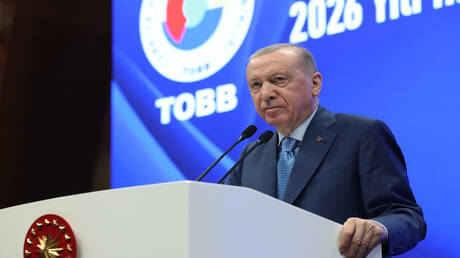
Turkish President Recep Tayyip Erdoğan emphasized that Turkey serves as a strategic transit point between energy-rich regions and consumer countries. These statements come at a time when global markets are experiencing significant transformations in the energy sector, enhancing Turkey's importance in this context.
Erdoğan pointed out that Turkey's unique geographical location makes it a vital bridge connecting energy-producing countries like Russia and Azerbaijan with consumer nations in Europe and Asia. This role reflects Turkey's strategic intentions to strengthen its economic and political relations with energy-producing nations.
Details of the Event
In remarks made during a press conference, Erdoğan clarified that Turkey is working on developing its energy infrastructure, including pipeline and port projects, to facilitate energy transport to global markets. He also stressed the importance of cooperation with neighboring countries in this field, indicating that Turkey aims to become a regional energy hub.
These statements are part of Turkey's efforts to enhance its position as a pivotal player in the energy market, especially given the challenges some European countries face in securing energy supplies. Erdoğan noted that Turkey seeks to expand its partnerships with energy-producing nations to ensure supply stability.
Background & Context
Historically, Turkey has played an important role in the energy sector, always serving as a transit point for natural resources. With the increasing demand for energy in Europe, Turkey has become more significant as a link between the East and the West. Additionally, new natural gas discoveries in the Black Sea may bolster Turkey's capacity to meet European market needs.
Furthermore, geopolitical tensions in the region, including conflicts in the Middle East, may increase Turkey's importance as a secure energy corridor. These dynamics make Erdoğan's statements particularly significant amid ongoing changes in the global energy market.
Impact & Consequences
Erdoğan's remarks signal Turkey's future directions in the energy sector, as it seeks to enhance its investments in this area. These investments are expected to improve relations with energy-producing countries, potentially contributing to price stability in global markets.
Moreover, strengthening Turkey's role as an energy hub could help reduce European dependence on traditional energy sources, leading to shifts in European energy policies. This situation could positively impact the Turkish economy by increasing revenues from the energy sector.
Regional Significance
Developments in Turkey's energy sector directly affect Arab countries, particularly those reliant on oil and gas exports. Enhancing Turkey's role as an energy corridor may lead to changes in market dynamics, prompting Arab nations to reassess their strategies in this field.
Additionally, potential cooperation between Turkey and Arab countries in the energy sector could open new avenues for investment and economic collaboration, benefiting all parties involved.
In conclusion, Erdoğan's statements reflect a strategic vision for Turkey in the energy sector, positioning it as a key player in the global market. Given the current challenges, Arab countries must closely monitor these developments.