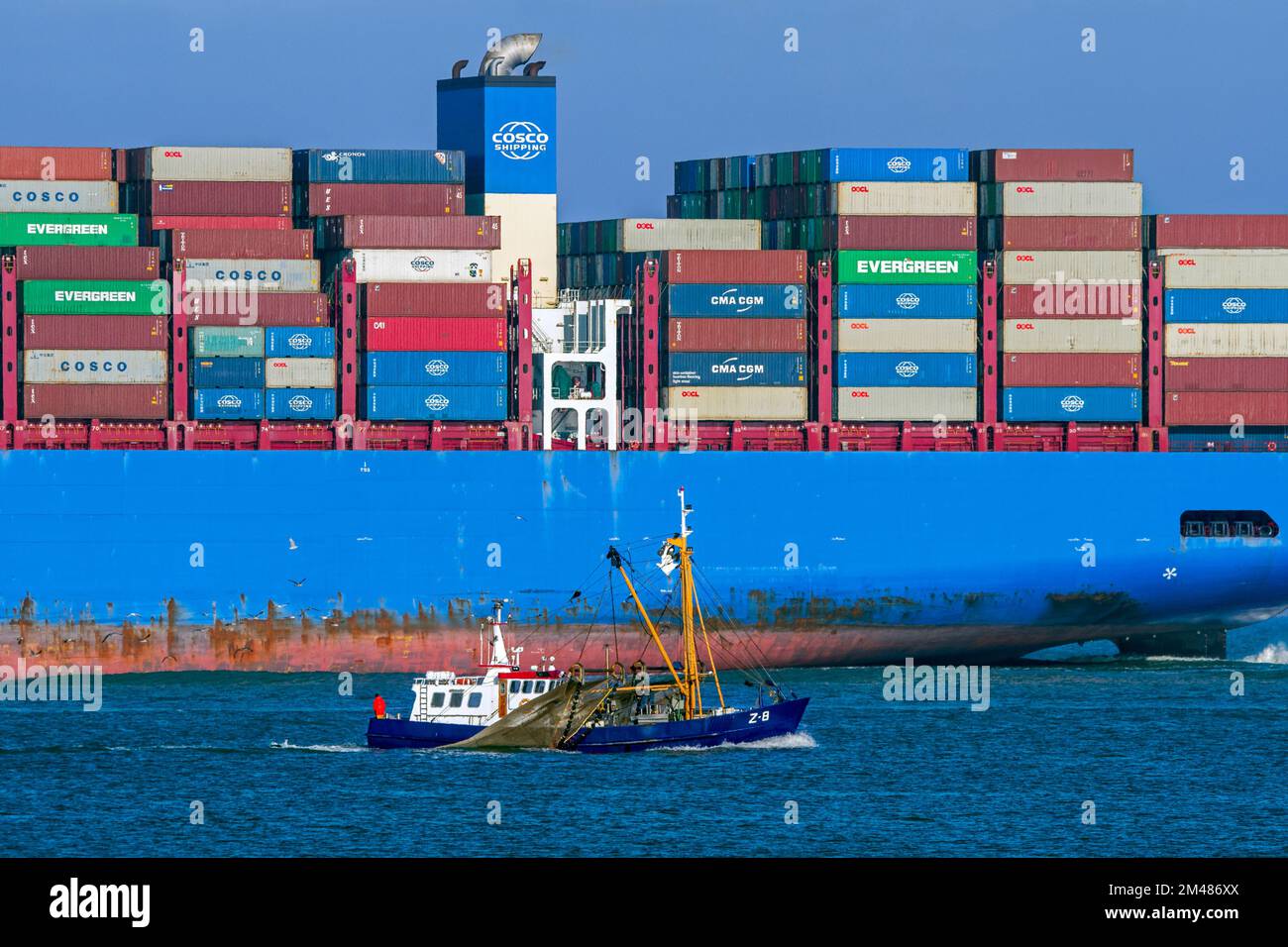
Two container ships belonging to China's COSCO Line have crossed the Hormuz Strait, after a previous crossing attempt was canceled last Friday. This step represents the first indication of a resumption of commercial shipping in the region, which has recently witnessed increasing tensions.
According to maritime data from the website MarineTraffic, the vessel CSCL Indian Ocean crossed the strait at 08:47 UTC, followed by the ship CSCL Arctic Ocean at 09:14. Automatic identification system data indicates that both vessels are owned by COSCO and carry Chinese crews.
Details of the Event
The two ships are headed towards Port Klang in Malaysia, as part of the MEX Service offered by COSCO, which connects ports in the Middle East with ports in the Far East. This crossing is the first confirmed operation of container ships from a major shipping company through the Hormuz Strait since tensions in the region began, potentially indicating a gradual return to commercial navigation.
Despite the increasing tensions, COSCO Line announced on March 25 the resumption of container cargo transport to the United Arab Emirates, Saudi Arabia, Bahrain, Qatar, Kuwait, and Iraq. This move reflects the company’s desire to enhance its commercial operations in the region, despite potential risks.
Background & Context
These developments come in the context of the U.S.-Israeli campaign against Iran, which has cast a shadow over the Hormuz Strait, one of the world's most important maritime passages. Approximately one-fifth of global oil supplies pass through this strait, making it a sensitive strategic point. Military escalation in the region could negatively impact commercial navigation, raising concerns among shipping companies.
Under these circumstances, several countries and shipping companies have issued warnings about security risks, with some shipping firms opting to suspend or reschedule their voyages through the strait. These decisions reflect the growing anxiety over the mutual threats between Iran and the United States, which could affect the region's stability.
Impact & Consequences
The resumption of navigation through the Hormuz Strait could have positive effects on the global economy, especially given the increasing demand for oil and gas. However, risks remain, as any new escalation in tensions could lead to the strait being closed again, negatively impacting oil prices and global trade.
These developments also indicate the ability of major companies to adapt to changing conditions, as they seek to enhance their operations despite challenges. However, the question remains about the sustainability of this resumption amid fluctuating security conditions.
Regional Significance
For Arab countries, the resumption of navigation through the Hormuz Strait is vital, as many of these nations rely on oil and gas supplies. Any disruption in navigation could lead to rising energy prices, directly affecting Arab economies.
In conclusion, hope rests on the stabilization of conditions in the region, as the resumption of commercial navigation could contribute to strengthening economic relations between Arab nations and Asian countries, enhancing growth and development opportunities.