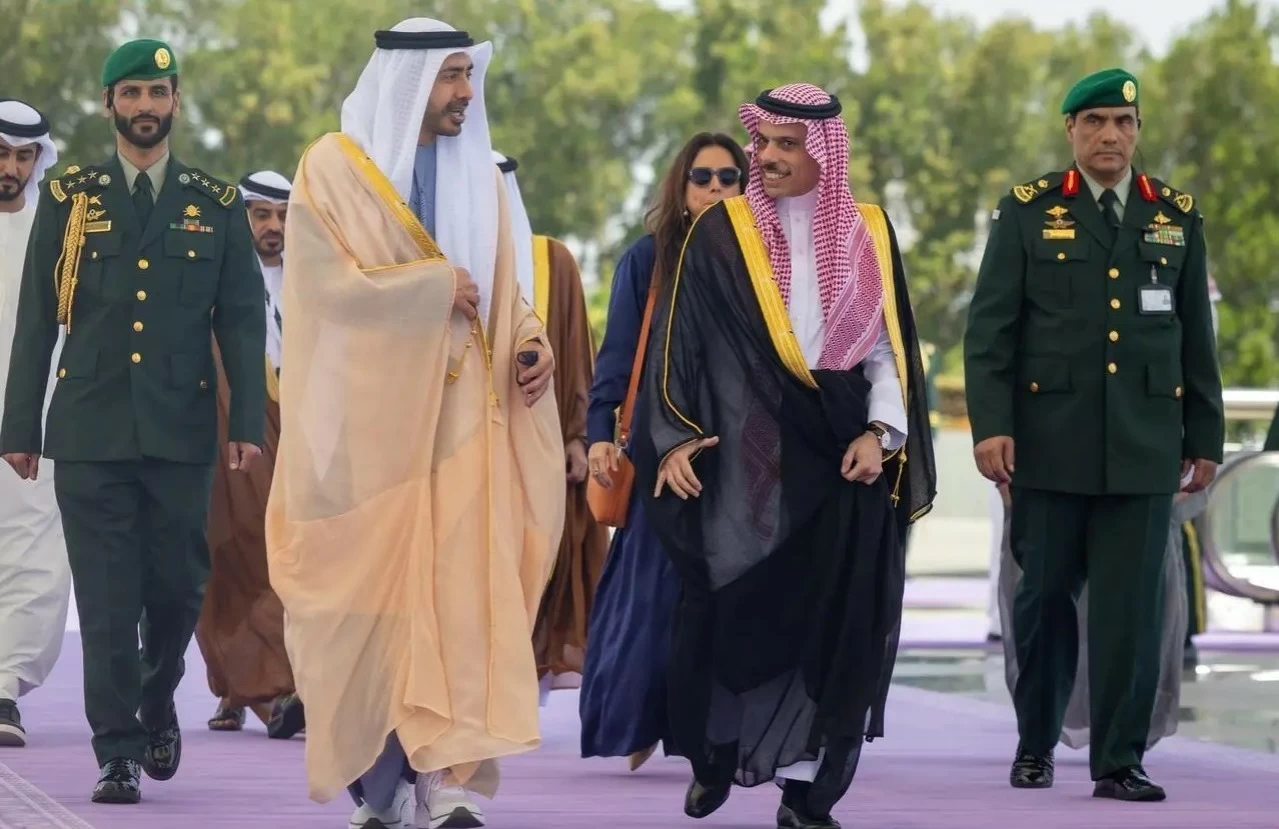
Sheikh Abdullah bin Zayed Al Nahyan, Deputy Prime Minister and Minister of Foreign Affairs and International Cooperation of the United Arab Emirates, arrived in Jeddah today to participate in the Gulf Consultative Summit. He was received at King Abdulaziz International Airport by Saudi Foreign Minister Prince Faisal bin Farhan bin Abdullah, who welcomed him and his accompanying delegation to the Kingdom.
Also present to welcome Sheikh Abdullah were the Secretary-General of the Gulf Cooperation Council, Jasem Mohamed Al Budaiwi, the Ambassador of the Custodian of the Two Holy Mosques to the UAE, Sultan bin Abdullah Al-Anqari, and the UAE Ambassador to the Kingdom, Matar bin Salem Al Dhaheri. This visit reflects the significance of Gulf relations and the enhancement of cooperation among the member states of the council.
Details of the Event
The Gulf Consultative Summit comes at a sensitive time for the region, addressing numerous political and economic issues of concern to Gulf countries. Discussions are expected to focus on enhancing security cooperation and tackling regional challenges, in addition to promoting economic integration among member states.
This summit is an opportunity to exchange views on current issues, including developments in Yemen, Iraq, and Syria, as well as relations with major powers such as the United States and Iran. It is also anticipated that ways to enhance food and energy security will be discussed in light of current global challenges.
Background & Context
The Gulf Cooperation Council was established in 1981 and includes six countries: the UAE, Saudi Arabia, Kuwait, Bahrain, Qatar, and Oman. The council aims to enhance cooperation among member states in various fields, including politics, economics, and security.
Over the years, the region has faced numerous challenges, from regional conflicts to economic crises. The Gulf Consultative Summit seeks to address these issues by promoting dialogue and cooperation among member states.
Impact & Consequences
The Gulf Consultative Summit serves as an important platform for setting cooperation priorities among member states. The outcomes of this summit could lead to enhanced stability in the region, especially amid rising regional tensions.
Discussions are expected to contribute to strengthening security cooperation among Gulf countries, which may help address common challenges such as terrorism and extremism. Additionally, enhancing economic cooperation could contribute to achieving sustainable development in the region.
Regional Significance
Decisions made at the Gulf Summit impact the overall situation in the Arab region. Cooperation among Gulf countries serves as a model for strengthening relations between other Arab nations.
Furthermore, enhancing economic and security cooperation among Gulf states can contribute to regional stability, positively affecting other Arab countries facing similar challenges.
In conclusion, the visit of the UAE Foreign Minister to Jeddah and participation in the Gulf Consultative Summit represents an important step towards strengthening Gulf relations and reaffirming the commitment to joint cooperation in addressing regional challenges.