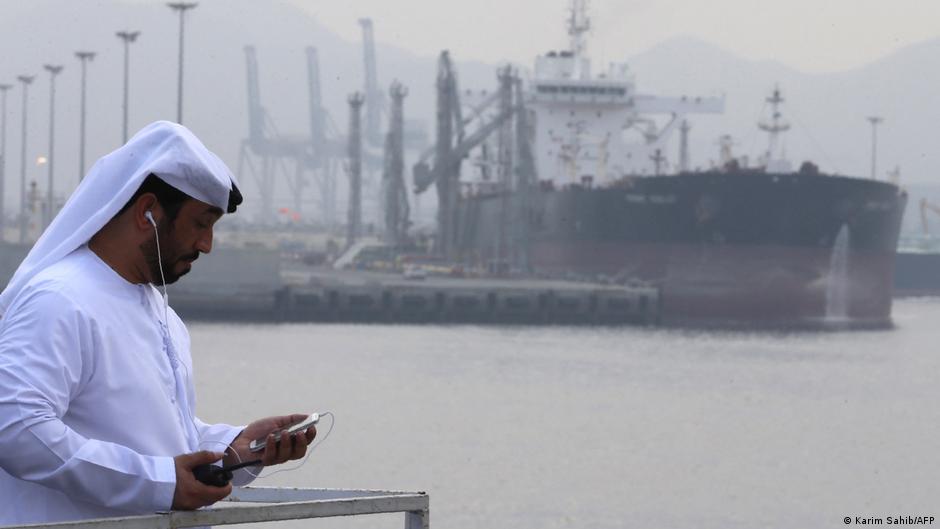
The United Arab Emirates has announced its decision to leave OPEC, granting it greater freedom to increase oil production according to its specific needs. This step comes at a time when relations between the UAE and Saudi Arabia, the most influential member of OPEC, are experiencing heightened tensions due to disagreements over production quotas.
UAE Energy Minister Suheil Al-Mazrouei stated to The New York Times that "the world needs more energy and resources, and the UAE wants to be unbound by any groups." These remarks indicate the UAE's desire to enhance its production capacity amid rising demand for oil.
Details of the Departure
The UAE's exit from OPEC is set for May 1, as the country currently produces between 3.2 to 3.6 million barrels per day under the quota system, while it has a spare production capacity of up to 4.8 million barrels per day. The UAE plans to increase its production to 5 million barrels per day by next year.
The UAE's departure is a significant blow to OPEC, as the organization will lose a member capable of easily increasing production. Previously, Saudi Arabia relied on reducing its output to stabilize prices, but with the UAE's exit, it will have to depend more on cutting its own production.
Context and Background
The UAE joined OPEC in 1967, and since then has been part of the quota system that determines how much oil each member can produce. However, the UAE has felt pressured by the restrictions imposed on it, having invested heavily in developing its oil sector.
Historically, OPEC controlled more than half of the world's oil supplies, but today this percentage has dropped to less than a third, reflecting a decline in the organization's influence in the global market.
Impact and Consequences
Analysts suggest that the UAE's departure could lead to lower oil prices and increased volatility in the market. David Oakley, chief economist at Capital Economics, described this move as "the beginning of the end" for OPEC, warning that the ties binding members together are starting to erode.
If the UAE succeeds in increasing its market share outside of OPEC, other producers may follow suit, further fragmenting the organization. However, most other member countries remain unable to achieve the same level of production.
Significance for the Arab Region
This move is indicative of the rising tensions among oil-producing countries in the region, especially given Saudi Arabia's urgent need to achieve high oil prices to support its ambitious projects like Vision 2030, which aims to reduce reliance on oil.
Ultimately, the UAE's departure marks a significant shift in the dynamics of the oil market, potentially leading to radical changes in how production and prices are managed in the future.