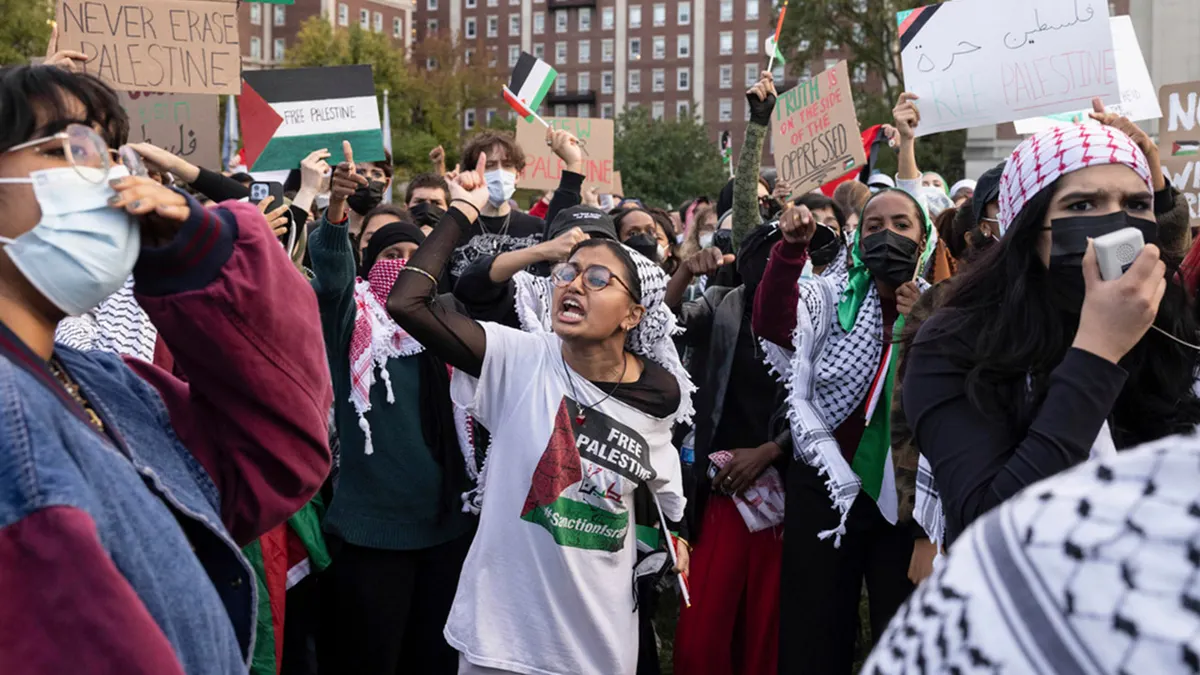
UK Labour Party leader Keir Starmer stated that his government is considering imposing restrictions on pro-Palestine marches as part of its efforts to maintain public order. These remarks come at a time when the United Kingdom is witnessing a surge in public protests expressing solidarity with the Palestinian people, raising concerns about escalating tensions on British streets.
Starmer, who has faced criticism from some party members regarding his stance on the Palestinian issue, emphasized that the government will work to ensure the safety of citizens. He noted that any march that could threaten public safety would be subject to careful review. These statements come at a sensitive time, as calls for demonstrations against what are perceived as violations of Palestinian rights are increasing across the country.
Details of the Protests
In recent weeks, numerous British cities have witnessed large-scale marches, with thousands of demonstrators gathering in London, Manchester, and Birmingham, demanding an end to violence against Palestinians. These protests coincided with escalating events in Palestinian territories, bringing the issue into sharper focus. Starmer, who is attempting to unify his party, appears to be facing significant challenges in balancing the diverse positions of his members.
Starmer's comments follow concerns expressed by some ministers in the current government regarding the impact of these marches on public safety, as reports of incidents involving tensions between protesters and police forces have emerged. He indicated that any potential restrictions would take into account citizens' rights to express their opinions, while also emphasizing the need to maintain order.
Background & Context
Historically, the UK has played a significant role in the Palestinian issue, having been part of the British mandate over Palestine in the 20th century. Since then, the country has witnessed numerous discussions and debates regarding Palestinian rights, making the issue a sensitive topic in British politics. In recent years, the intensity of these discussions has increased, particularly with the escalation of conflict in the region.
Pro-Palestine marches are part of a broader movement advocating for justice and peace in the region, and they have seen growing support from various social and political groups. However, government responses to these protests are often mixed, reflecting the division in British public opinion regarding the issue.
Impact & Consequences
If restrictions on pro-Palestine marches are implemented, it could have a significant impact on freedom of expression in the UK. This may lead to heightened tensions between the government and civil society, as many view such restrictions as a limitation on their fundamental rights. Additionally, this move could result in increased protests and demonstrations, further exacerbating divisions within society.
On the other hand, the government may perceive these restrictions as necessary to maintain public order, especially in the current tense climate. However, any attempt to restrict freedom of expression may face widespread criticism from human rights organizations and activists.
Regional Significance
The Palestinian issue is one of the central concerns in the Arab world, and any developments in the UK could influence reactions in Arab countries. Imposing restrictions on pro-Palestine marches may lead to increased discontent in the Arab world, where many view this move as a lack of understanding of Palestinian rights and suffering.
At the same time, these developments may encourage activists in Arab countries to organize more solidarity events with Palestine, reflecting a growing awareness of the issue in the region. Any actions taken by the British government could significantly affect relations between the UK and Arab nations, particularly in light of current circumstances.
In conclusion, the Palestinian issue remains central to both British and global politics, and any steps taken by the British government will continue to be monitored by both local and international communities.