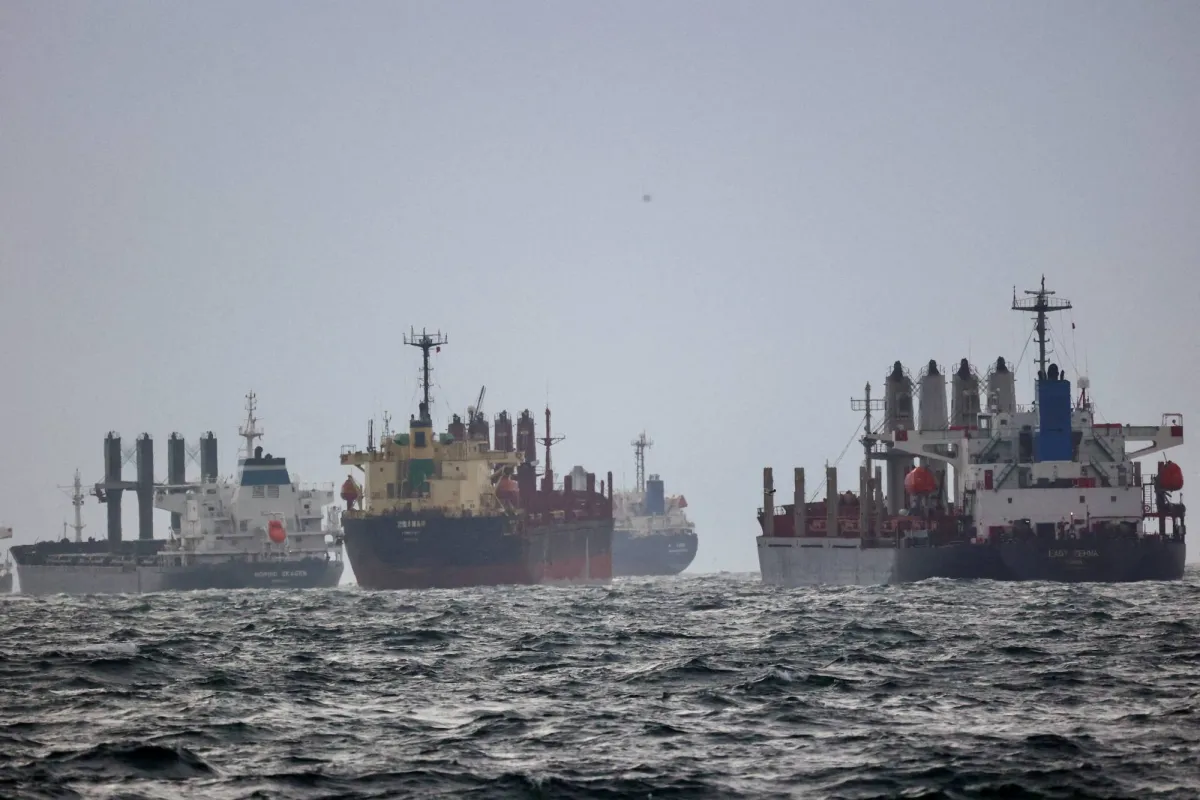
A Ukrainian diplomatic source told Reuters that Ukraine will take diplomatic and legal measures against Israel if it permits the docking of a ship carrying grain from Ukrainian territories occupied by Russia at the port of Haifa.
The ship in question, named ‘Panormitis’, is waiting for permission to dock in Haifa, where it is believed to be carrying shipments of grain that Ukraine considers stolen. This situation has raised significant concerns in Kyiv, as the Ukrainian government views allowing the ship to dock as a violation of its sovereignty.
Details of the Incident
The Ukrainian source, who requested anonymity, stated that Kyiv reserves the right to take a range of diplomatic and international legal actions if the ship and its cargo are not rejected. They emphasized that the practice of laundering stolen goods is unacceptable and noted that Israel has ignored Ukraine's demands regarding previous ships that transported cargo from occupied territories.
Earlier, the Israeli newspaper ‘Haaretz’ reported that four shipments of grain from occupied Ukrainian territories have already been unloaded in Israel this year, further escalating tensions between the two countries. Ukraine has warned that allowing the ship to dock would have negative consequences for bilateral relations.
Background & Context
The relationship between Ukraine and Israel is complex, with both countries cooperating in several areas, yet issues surrounding Russia's occupation of Ukrainian territories remain a major point of contention. Since the onset of the conflict in Ukraine, there have been concerns that Russia might exploit the situation to increase its influence in the region, threatening regional stability.
Historically, Ukraine and Israel have sought to enhance cooperation in security and economic fields; however, recent events may adversely affect these relations. Additionally, Israel's stance on the Ukrainian conflict has sparked widespread debate in political circles, as any support given to Russia is perceived as a threat to Ukraine's interests.
Impact & Consequences
If Israel continues to allow ships carrying cargo from occupied Ukrainian territories to dock, it could escalate tensions between Kyiv and Tel Aviv. Furthermore, any legal action that Ukraine might take could open the door to broader diplomatic repercussions, including the possibility of sanctions or legal actions in international forums.
This issue exemplifies how regional conflicts can impact international relations, where individual actions can exacerbate diplomatic crises. Additionally, this situation may influence the positions of other countries in the region, prompting them to adopt cautious stances regarding dealings with Israel.
Regional Significance
These developments are particularly significant for Arab countries, as they reflect the tensions between major powers in the region. The relationship between Ukraine and Israel may affect the stance of Arab nations towards the Ukrainian conflict, especially given the historically complex relations with Israel.
Moreover, any escalation in relations between Ukraine and Israel may raise concerns among Arab countries, which seek to achieve stability in the region. This could lead to a reassessment of diplomatic relations between Arab states and Israel, especially under the current circumstances in the region.
In conclusion, all eyes remain fixed on the developments of this issue, as any steps taken by Ukraine or Israel will significantly impact international relations in the region.