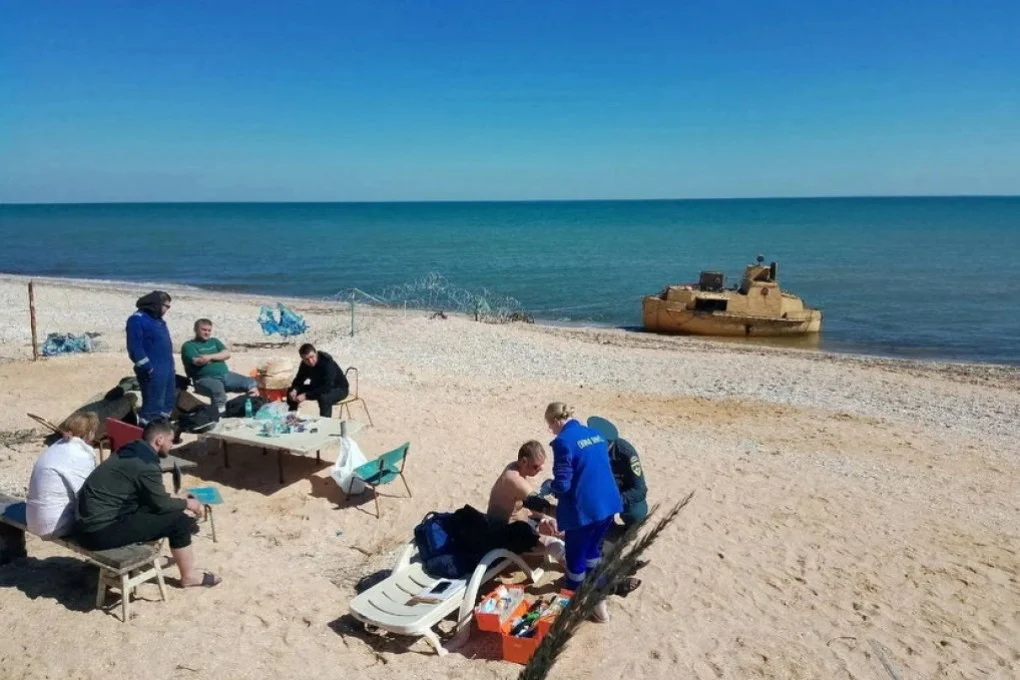
Reports indicate that a cargo ship carrying wheat sank in the Sea of Azov due to a Ukrainian drone attack, leading to one fatality and two individuals missing. The attack, which occurred on Friday, was not disclosed until Sunday, when Vladimir Saldo, the Russian-appointed official in the Russian-controlled areas of Ukraine, revealed the details.
The vessel involved, named Volgo-Balt, was attacked while sailing, causing it to sink in territorial waters. Saldo confirmed that the crew was unable to report the incident until Sunday, raising questions about the circumstances of the incident and the safety of the crew.
Details of the Incident
The attack on the ship comes at a sensitive time in the ongoing conflict between Ukraine and Russia, with mutual attacks between the two sides increasing. Russian officials have indicated that the attack reflects an escalation in Ukrainian military operations, while Ukraine views these actions as part of its defense of sovereignty.
The ship was carrying a cargo of wheat, complicating the food situation in the region, especially amid economic crises affecting many countries. This incident highlights the increasing risks faced by commercial vessels in the Black Sea and the Sea of Azov, where military tensions are on the rise.
Background & Context
Historically, the Sea of Azov region has experienced increasing tensions since the onset of the Ukrainian conflict in 2014. Russian control over parts of Ukraine, including Crimea, has escalated the conflict, impacting trade and maritime transport in the area. Attacks on commercial vessels are not new, but they have notably increased in recent months.
In recent years, Ukraine has sought to enhance its defensive capabilities, including the use of drones, as part of its strategy to counter Russian threats. These military developments indicate a shift in the nature of the conflict, with modern technology playing a pivotal role in military operations.
Impact & Consequences
The attack on the ship could have significant implications for maritime security in the region. The escalation of attacks may lead to increased military tensions, potentially affecting international trade movements. Furthermore, the incident may raise concerns among neighboring countries, which fear a larger escalation in the conflict.
Additionally, the loss of life in such incidents underscores the dangers faced by maritime crews in conflict zones. This incident may prompt countries to reassess their security strategies in the Black Sea and the Sea of Azov, potentially resulting in changes to maritime policies.
Regional Significance
Events in the Sea of Azov have indirect effects on the Arab region, particularly given the heavy reliance on imported wheat. Any escalation in the conflict could impact global wheat prices, adversely affecting Arab countries that depend on imports to meet their food needs.
Moreover, the tense security situation in the Black Sea may affect global maritime trade flows, potentially leading to increased costs and shipment delays. This situation necessitates that Arab nations closely monitor developments and plan to address any potential repercussions.