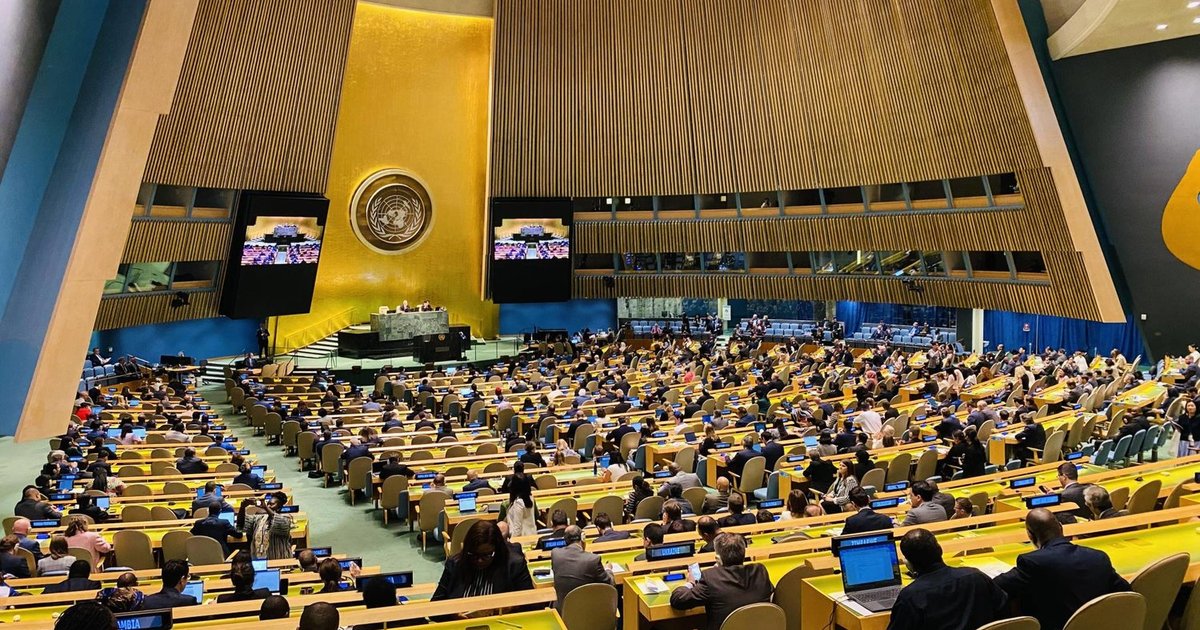
In a historic move, the United Nations General Assembly has adopted a resolution declaring the slave trade in Africa over the centuries as 'the most heinous crime against humanity.' This resolution serves as an official acknowledgment of the colonial legacy that has left deep scars on African societies, paving the way for potential apologies and reparations for victims and their families.
It is noteworthy that the resolution faced opposition from three countries, while 52 countries abstained from voting, reflecting the international division on how to address the repercussions of colonialism and the slave trade.
Details of the Resolution
The resolution adopted during the UN General Assembly session highlights the humanitarian, social, and economic dimensions of the slave trade, which persisted for many centuries. It was emphasized that this trade not only affected the individuals who were enslaved but also left negative impacts on entire communities, leading to the disintegration of social and cultural ties.
The transatlantic slave trade, which began in the 16th century and continued until the 19th century, saw millions of Africans transported to the Americas, where they were subjected to the most horrific forms of exploitation. This resolution comes at a time when global calls for recognizing historical truths and compensating the damages inflicted on victims are increasing.
Background & Context
The history of the slave trade in Africa is a painful chapter in human history, where millions of Africans were exploited under harsh and inhumane conditions. This trade was driven by the demand for cheap labor in European colonies in the Americas, resulting in rampant violence and racial discrimination.
In recent years, many countries have begun to reassess their colonial past, with some governments issuing formal apologies for the actions committed against colonized peoples. However, there are still countries that refuse to acknowledge their historical responsibilities, complicating efforts to achieve justice.
Impact & Consequences
This resolution could have far-reaching effects on international relations, as it may lead to pressures on countries that have not acknowledged their responsibilities regarding the slave trade. It could also open the door to new dialogues about transitional justice and human rights, strengthening the position of African nations on the international stage.
Moreover, this resolution may increase public awareness of issues related to slavery and racism, contributing to enhanced efforts to combat racial discrimination and inequality worldwide.
Regional Significance
For the Arab region, this resolution highlights the importance of recognizing the shared history between Arabs and Africans, as there have been historical and cultural ties. The slave trade also had impacts on Arab societies, where many Africans were transported to Arab countries as part of the slavery system.
This resolution may encourage Arab countries to reconsider their history and engage with issues of social justice and human rights, thereby strengthening their position in the international community.
In conclusion, this resolution represents an important step towards acknowledging historical truths and compensating for the damages inflicted on victims. It is a call to reflect on how to build a better future based on justice and equality.