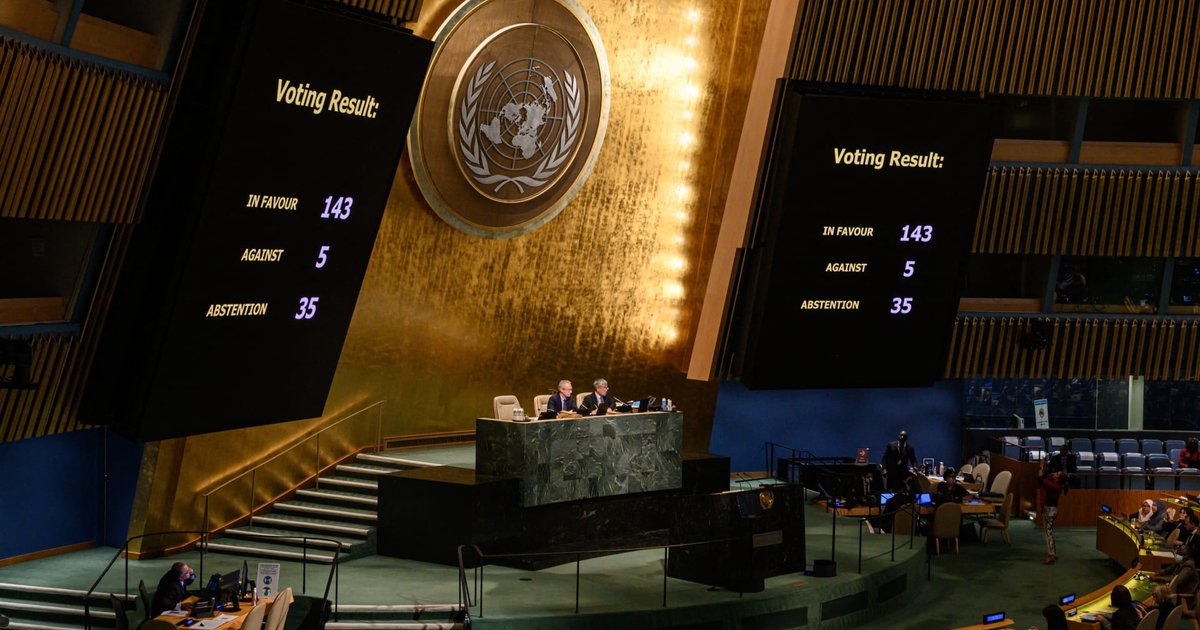
On Wednesday, the UN General Assembly voted on a resolution put forward by the African group, which includes Arab nations in Africa such as Egypt, Algeria, Tunisia, Morocco, Sudan, Somalia, Djibouti, and Mauritania. The resolution firmly condemns the enslavement of Africans and the transatlantic slave trade, deeming it "one of the most severe forms of inhumane injustice and the longest-lasting." The resolution received support from 123 countries, reflecting the international community's commitment to confronting this historical phenomenon.
This initiative comes at a time when global calls are increasing to recognize the negative impacts of the slave trade on African communities, where the effects of this trade are still felt today. The resolution emphasized the necessity of enhancing international efforts to combat all forms of modern slavery, including human trafficking.
Details of the Resolution
The resolution that was voted on reflects a broad consensus among UN member states regarding the importance of addressing issues of slavery and enslavement. It was presented by the African group, which includes Arab countries in Africa, showcasing a unified Arab and African stance on this historical issue.
It is noteworthy that the transatlantic slave trade was one of the darkest chapters in human history, forcibly transporting millions of Africans to the Americas, leading to the destruction of entire communities. The General Assembly deemed that acknowledging this historical crime is a necessary step towards justice and reconciliation.
Background & Context
The history of the slave trade dates back to the Middle Ages, where Africans were exploited for labor in sugar, tobacco, and cotton plantations in the Americas. This trade not only affected the individuals who were enslaved but also had profound impacts on African communities, leading to the disintegration of families and societies.
In recent years, the international community has begun to reassess this issue, with numerous events and seminars organized to highlight the effects of the slave trade. Several non-governmental organizations have also been established to document these historical violations and raise awareness about them.
Impact & Consequences
The adoption of this resolution by the UN General Assembly may open the doors for further discussions on how to address the impacts of the slave trade. This decision is expected to increase pressure on member states to adopt policies that promote human rights and combat modern slavery.
Moreover, this resolution could contribute to enhancing international cooperation to combat human trafficking, as many countries still suffer from this phenomenon. This may lead to improved living conditions for individuals affected by modern slavery.
Regional Significance
For Arab countries, this resolution represents an opportunity to strengthen their position on the international stage as advocates for human rights. It could also foster Arab-African cooperation in addressing common challenges.
Furthermore, recognizing the slave trade as a crime against humanity can help enhance the cultural and historical identity of Arab and African nations, thereby strengthening their position in international forums.
In conclusion, this resolution marks an important step towards acknowledging the historical injustices faced by Africans and reflects the international community's commitment to confronting all forms of slavery. Addressing this issue requires ongoing efforts and effective international cooperation.