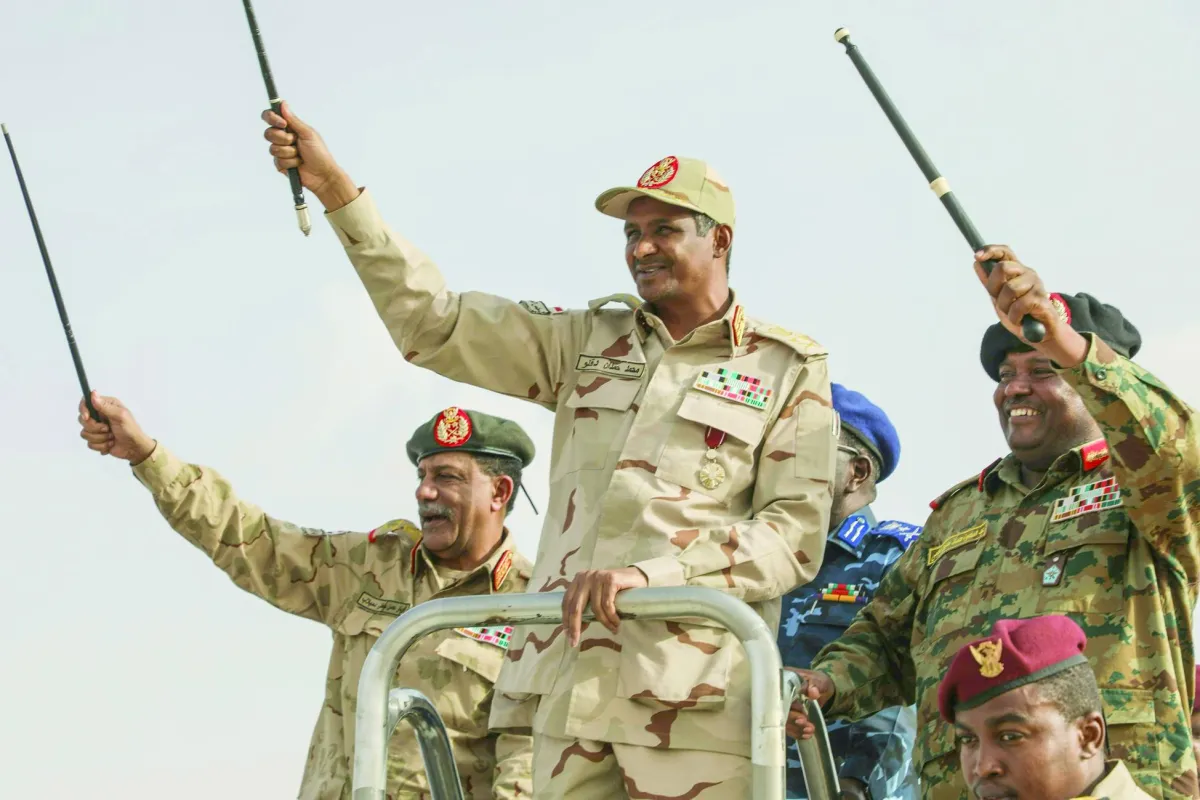
In a new move reflecting escalating tensions in Sudan, the United Nations imposed sanctions on Al-Quni Hamdan Daglo Musa on Tuesday, the younger brother of the leader of the Sudanese Rapid Support Forces, alongside three Colombian mercenaries accused of recruiting former Colombian fighters to battle in the country.
A statement from the British mission to the United Nations indicated that these sanctions were imposed based on a proposal from the United States, Britain, and France, highlighting international cooperation in addressing humanitarian and security crises in Sudan.
Details of the Sanctions
The sanctions list includes Al-Quni Hamdan Daglo Musa, who is considered a key figure in the Rapid Support Forces' efforts to procure weapons and military equipment. Sanctions were also imposed on Alvaro Andres Quijano Becerra, Claudia Viviana Oliveros Forero, and Matteo Andres Duque Botero, who played significant roles in recruiting former Colombian military personnel.
Available evidence, including videos and photographs, indicates that these mercenaries provide technical and tactical support to the Rapid Support Forces, acting as infantry soldiers and artillerymen, and even training children to fight within these forces.
Background & Context
These sanctions come at a time when Sudan is suffering from a severe humanitarian crisis due to the ongoing conflict between the Sudanese army and the Rapid Support Forces, which began three years ago. This war has exacerbated humanitarian conditions, with relief organizations describing the situation as the worst in the world currently.
In February, Britain, in collaboration with France and the United States, managed to impose sanctions on four leaders of the Rapid Support Forces due to atrocities committed during the siege of El Fasher. It was also revealed that Colombian mercenaries participated in several battles in various regions of Sudan, including the capital Khartoum, Omdurman, and Kordofan.
Impact & Consequences
These sanctions are considered an important step in the international community's efforts to pressure the Rapid Support Forces and may lead to increased political and economic isolation for these forces. Furthermore, these measures could encourage other countries to take similar actions, thereby increasing pressure on the Sudanese regime.
Concerns are growing that the continuation of the conflict in Sudan could lead to broader repercussions in the region, as neighboring countries may be affected by the humanitarian and economic crisis plaguing the country.
Regional Significance
The situation in Sudan is of particular importance to Arab countries, as it can impact security and stability in the region. The escalation of violence and conflict could lead to an influx of refugees into neighboring countries, increasing the pressures on these nations.
In conclusion, these sanctions reflect the international community's commitment to addressing security and humanitarian challenges in Sudan and underscore the importance of international cooperation in tackling escalating crises.