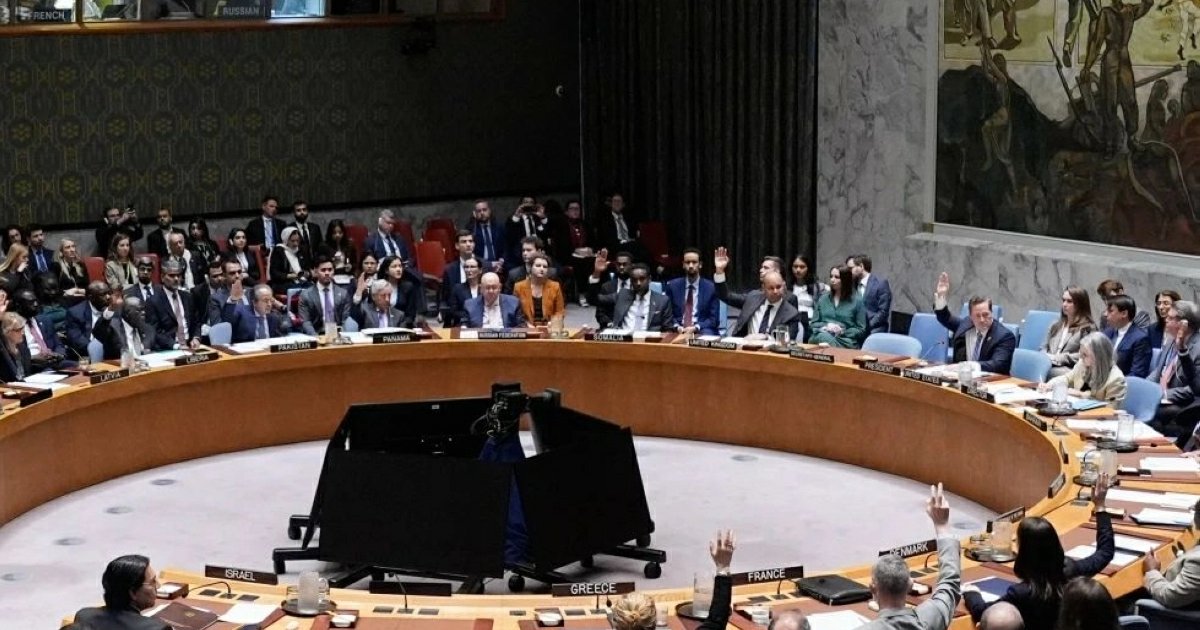
The UN Security Council has postponed the vote that was scheduled for Friday on a draft resolution aimed at authorizing the use of defensive force to protect shipping in the Strait of Hormuz from Iranian attacks. The council, composed of 15 members, was set to vote on Friday morning, but the schedule was changed by Thursday evening, as diplomatic sources indicated that the United Nations is celebrating the Good Friday holiday.
No new date has been set for the vote on the draft resolution, which was presented by Bahrain and significantly softened in response to opposition from some Security Council members regarding allowing countries to use force to secure this vital waterway. Both Russia, China, and France, which hold veto power in the council, have expressed their opposition to approving the use of force.
Details of the Event
The Strait of Hormuz is a critical point in global shipping, through which about one-fifth of the world's oil and liquefied natural gas production passes. Iran has imposed control over this waterway, threatening fuel supplies and negatively impacting the global economy, in reaction to American and Israeli pressures that have escalated the conflict in West Asia.
In this context, Bahrain's ambassador to the UN, Jamal Al-Ruwaie, stated that "economic terrorism" affects the region and the entire world, noting that the text, which has been amended several times and enjoys US support, comes at a critical time. Former US President Donald Trump urged countries facing fuel shortages to "get their own oil" from the Strait of Hormuz, emphasizing that US forces would not assist them.
Context and Background
Historically, the Strait of Hormuz is one of the most important waterways in the world, linking the Arabian Gulf and the Sea of Oman. This region has witnessed ongoing tensions due to political and military disputes between Iran and the United States and its allies. Last March, Security Council members voted to condemn Iran for closing the strait, which heightened tensions.
The sixth and final version of the draft resolution, on which the vote was postponed, authorizes member states to use "all necessary defensive means" to ensure the passage of shipments, reflecting the nature of defensive intervention. This amendment seems to have alleviated France's concerns, as the French ambassador to the UN, Jérôme Bonaventure, emphasized the need for a rapid defensive response from the council.
Impact and Consequences
Analysts expect that the draft resolution will face significant difficulties in gaining approval, especially with the likelihood of Russia and China using their veto power. The Chinese ambassador, Fu Cong, warned that authorizing member states to use force could lead to an unwarranted escalation of the situation, which could have severe consequences.
Decisions that authorize the use of force are rare in the Security Council, as military interventions were previously allowed during certain wars, such as the Gulf War in 1990 and NATO's intervention in Libya in 2011. However, the current situation in the Strait of Hormuz requires a comprehensive approach that goes beyond security aspects.
Impact on the Arab Region
The events in the Strait of Hormuz are particularly significant for Arab countries, as any escalation in tensions could affect oil supplies and energy prices in the region. The stability of this vital waterway is crucial for Arab economies that heavily rely on oil exports.
In conclusion, the fate of the draft resolution remains uncertain amid rising tensions, prompting Arab countries to take clear positions to protect their interests in this strategic region.