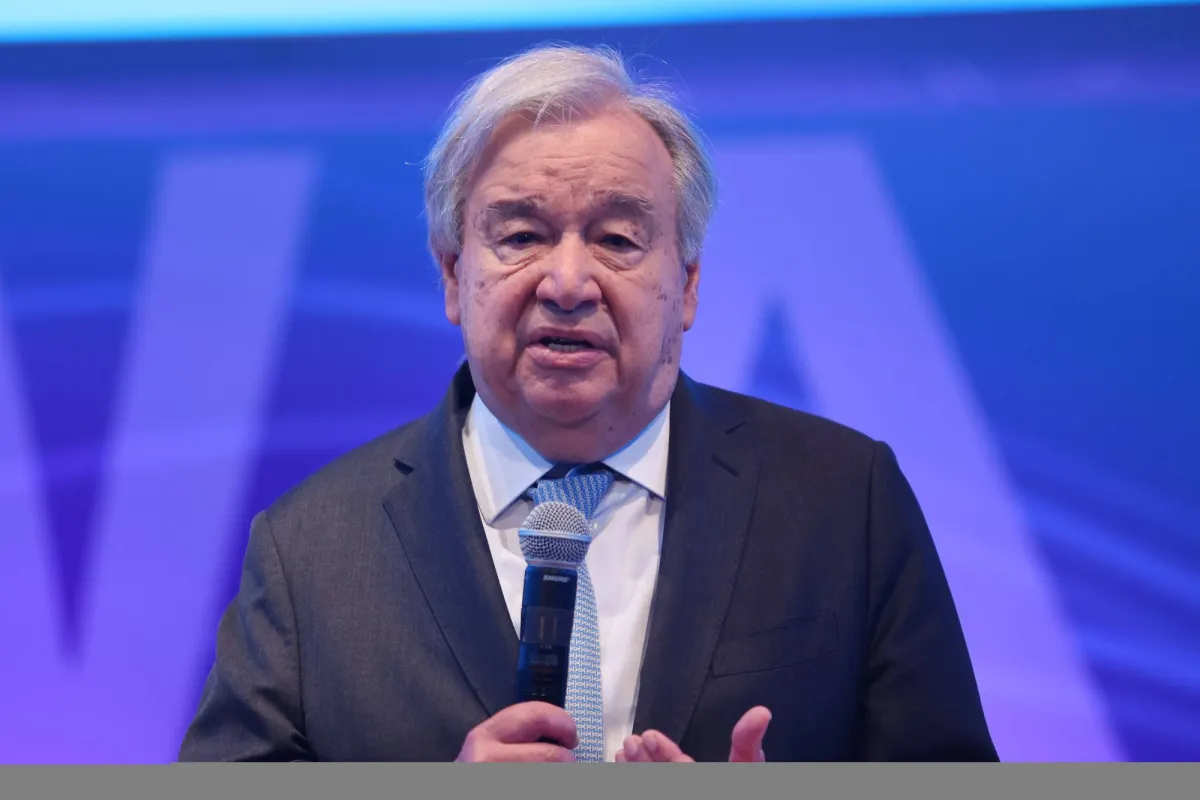
UN Secretary-General Antonio Guterres has warned of the accelerating pace of nuclear weapons proliferation during the opening of a meeting of states that are signatories to the Nuclear Non-Proliferation Treaty. In his opening remarks, Guterres stated, "The treaty is fading, commitments remain unfulfilled, trust and credibility are declining, and the motivations for proliferation are accelerating. We must revive the treaty once again."
This meeting comes at a time when fears of a new arms race are increasing, as signatories to the historic treaty gather at the United Nations headquarters. Guterres pointed out that the last review of the treaty in 2022 showed that humanity is "one miscalculation or one misstep away from nuclear annihilation."
Event Details
Despite the significance of this conference, it remains unclear what it will yield, especially given the rising global geopolitical tensions since the last meeting. Do Hong Viet, Vietnam's ambassador to the UN and conference president, stated that "we should not expect this conference to resolve the strategic tensions that overshadow our era... However, reaching a balanced outcome that reaffirms core commitments and establishes practical steps forward would enhance the integrity of the Nuclear Non-Proliferation Treaty."
Viet added that "the success or failure of this conference will have implications that extend far beyond these halls and the next five years; the specter of a new nuclear arms race looms on the horizon."
Background & Context
The Nuclear Non-Proliferation Treaty was established in 1968 to curb the spread of nuclear weapons and promote cooperation in the peaceful uses of nuclear energy. Almost all countries in the world have signed it, except for nations like Israel, India, and Pakistan. However, tensions between nuclear-armed states, particularly between the United States and Russia, have negatively impacted the treaty's effectiveness.
According to the latest report from the Stockholm International Peace Research Institute (SIPRI), the nine nuclear-armed states, including Russia, the United States, France, the United Kingdom, China, India, Pakistan, Israel, and North Korea, possessed approximately 12,241 nuclear warheads as of January 2025. The United States and Russia account for about 90% of these weapons, having initiated massive programs to modernize their nuclear arsenals in recent years.
Impact & Consequences
Guterres's warnings indicate that the world may be on the brink of a new nuclear crisis, as tensions between major powers escalate. Under these circumstances, it becomes essential to enhance dialogue and international cooperation to mitigate the spread of nuclear weapons. Current security challenges require a coordinated response from the international community, especially as conflicts continue in regions like the Middle East and Eastern Europe.
The current tense situation necessitates a reassessment of national security strategies by states, as any uncalculated escalation could lead to dire global consequences. Therefore, the success of the conference in achieving consensus among the treaty signatories will have far-reaching effects on international security.
Regional Significance
For the Arab region, global nuclear tensions may impact regional security, particularly with countries like Iran seeking to develop a nuclear program. Any escalation in this context could lead to a nuclear arms race in the region, complicating security situations further. Thus, it is crucial for Arab states to remain vigilant and cooperate to address these challenges.
In conclusion, Guterres's warning serves as an urgent call for the international community to revive the Nuclear Non-Proliferation Treaty and strengthen international commitments towards nuclear disarmament to ensure a secure future for generations to come.