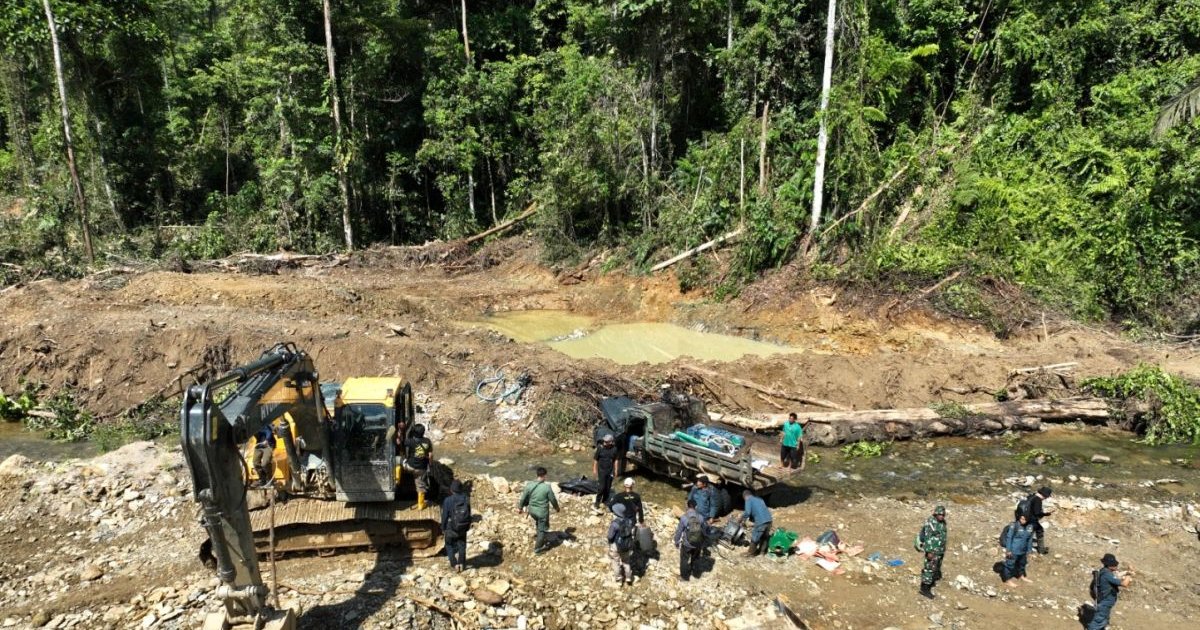
In a significant step to combat illegal activities, the Banyumas police revealed an unlicensed gold mining network in the Gumilar area of Banyumas Regency in Central Java. The operation resulted in the arrest of three individuals accused of engaging in illegal mining activities, following reports from citizens about these operations.
During a press conference held at the police headquarters, Banyumas Police Chief, General Commissioner Peters B. Selalahi, explained that investigations began after receiving reports of gold mining activities in the Paningkapan village. The police's criminal investigation unit conducted searches that led to the apprehension of the suspects on March 31.
Details of the Incident
The arrested suspects are S.R.O (51 years old), N.M (50 years old), and S.B.N (56 years old), who held key positions in this network. Investigations revealed that they were mining for gold without obtaining the necessary permits, such as a mineral mining license.
Upon searching the site, police discovered two mining locations where the excavations reached depths of up to 55 meters. Reports indicated that one of the sites could produce approximately seven grams of gold weekly, reflecting the scale of illegal activities being conducted there.
Background & Context
Indonesia is one of the largest gold-producing countries in the world; however, illegal activities in this sector pose a significant challenge to the government. In recent years, the country has witnessed an increase in unlicensed mining operations, leading to environmental degradation and heightened risks for local communities.
Since 2012, one of the suspects had been working in this field before transitioning to an investor role. Meanwhile, the others began opening new sites since 2017, indicating the persistence of these activities despite legal and environmental risks.
Impact & Consequences
Indonesia faces substantial challenges due to these illegal activities, which negatively impact the environment and increase health risks for local populations. Furthermore, these activities contribute to the spread of corruption and weaken the government's ability to regulate the sector.
Moreover, illegal activities can exacerbate economic conditions in affected areas, as many residents rely on these activities as a primary source of income. Therefore, the government needs to take stringent measures to combat this phenomenon.
Regional Significance
Although this event occurs in Indonesia, it has significant implications at the regional level. Arab countries also face similar challenges in the mining sector, where economic activities require strict regulations to protect the environment and ensure the rights of local communities.
This issue serves as a reminder of the importance of international cooperation to combat illegal activities in the mining sector, as these activities can affect economic and social security in the region.