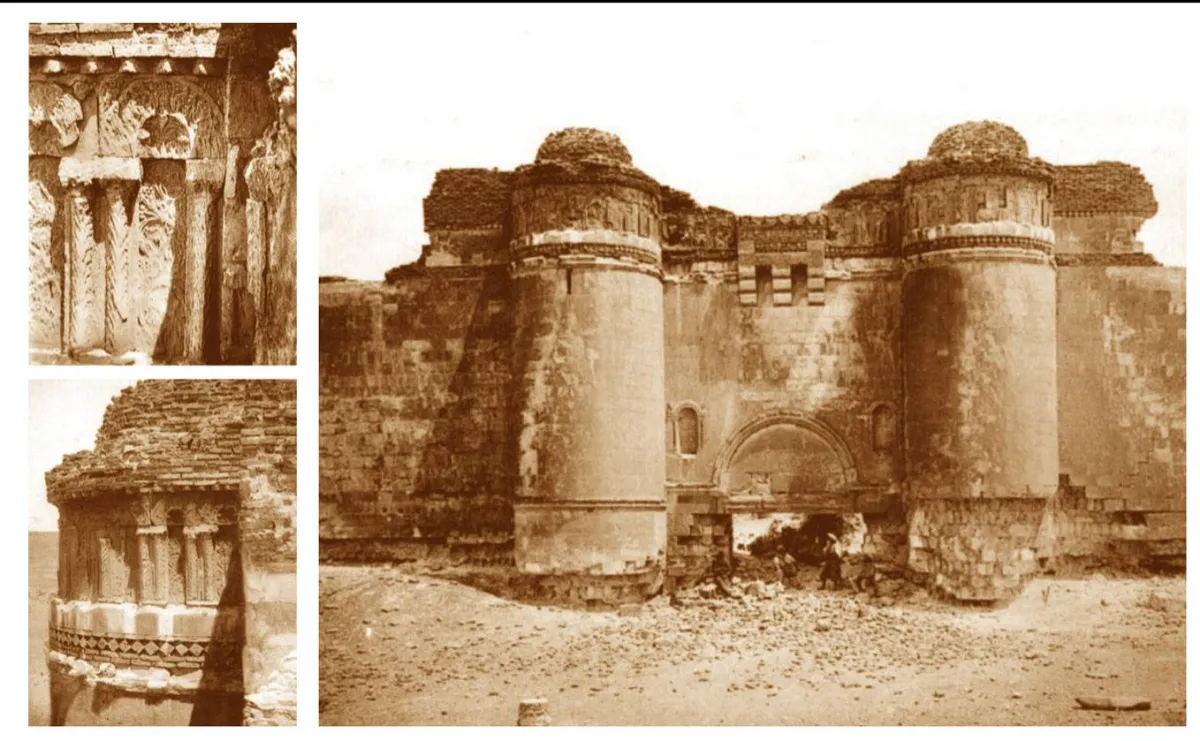
Qasr al-Hayr al-Sharqi, located northeast of Palmyra in the Syrian desert, is one of the most prominent archaeological sites dating back to the Umayyad period. This palace was constructed during the reign of Caliph Hisham ibn Abd al-Malik, characterized by its massive architectural foundations that reflect the grandeur of Islamic civilization during that era.
The other palace in the region is known as Qasr al-Hayr al-Gharbi, which is notable for its rich artistic details, combining the arts of engraving, sculpture, and painting. Despite the passage of time, the ruins of the eastern palace remain visible, having witnessed numerous travelers since the 17th century, which has helped highlight its historical significance.
Details of the Excavation
The excavation work at Qasr al-Hayr al-Sharqi began in 1964, when an American expedition from the University of Michigan conducted its first exploratory campaigns. This campaign continued until 1972, during which many inscriptions and evidence indicating the palace's construction history and identity were discovered. This palace is considered part of a series of Umayyad palaces built in the deserts of the Levant, reflecting the advanced architectural arts of that period.
The origins of the palace date back to the period between 728 and 729 AD, located 30 kilometers north of the village of Al-Sukhna. The archaeological complex consists of two main buildings surrounded by square-shaped walls, one known as the Great Palace and the other as the Small Palace. The Great Palace features 28 towers, while the Small Palace contains four round towers.
Background & Context
Hisham ibn Abd al-Malik assumed the caliphate in 724 AD and was known for developing the infrastructure of the Umayyad state. He played a prominent role in building palaces and public facilities, contributing to the flourishing of Islamic civilization during that time. Qasr al-Hayr al-Sharqi stands as a living example of this development, embodying the architectural arts and advanced techniques that were prevalent at the time.
The history of the palace extends back to ancient times, with many travelers and explorers referencing it, which has contributed to its exploration and deeper study. Among these travelers was the Italian explorer Pietro Della Valle, who mentioned the palace in his journal in 1667, drawing attention to this archaeological landmark.
Impact & Consequences
The archaeological discoveries at Qasr al-Hayr al-Sharqi are part of ongoing efforts to understand Islamic history and Umayyad civilization. These findings shed light on the architectural arts and techniques used in palace construction, enhancing the importance of this archaeological site in historical and cultural contexts.
These discoveries also contribute to boosting cultural tourism in the region, allowing visitors to learn about the history of Islamic civilization through visits to these archaeological sites. Furthermore, ongoing studies of the palace may lead to a deeper understanding of the archaeological history of the Syrian desert.
Regional Significance
The Umayyad palaces in the Syrian desert are part of the Arab cultural heritage, reflecting the architectural arts and advanced techniques that were prevalent during that period. This heritage enhances the cultural identity of the region and contributes to promoting cultural tourism, benefiting the local economy.
In conclusion, Qasr al-Hayr al-Sharqi is a symbol of Islamic civilization, embodying the architectural arts and the rich history that characterizes the region. The archaeological discoveries within it enhance the cultural and historical understanding of the area, emphasizing the importance of preserving this heritage for future generations.