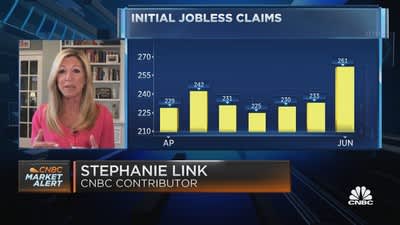
The United States has recorded a decline in the number of unemployment claims, with the total reaching 202,000, suggesting stability in the labor market despite turbulent global economic conditions. This decrease comes at a time when the region is experiencing increasing tensions, particularly with the escalation of the conflict in Iran, which adds to the uncertainty in the markets.
According to reports, the number of new unemployment claims has dropped significantly, reflecting the resilience of the American economy in the face of challenges. Despite concerns regarding geopolitical tensions, layoffs remain at low levels, highlighting the strength of the U.S. labor market.
Details of the Event
Data shows that new unemployment claims decreased by 6,000 from the previous week, indicating that the American economy is still capable of providing job opportunities. This decline occurs at a time when the world is facing uncertainty due to the ongoing conflict in Iran, which could impact the global economy.
These figures are positive given the current circumstances, as they suggest that companies are still able to retain their employees despite economic challenges. Some analysts have pointed out that this stability may be a result of effective economic policies implemented by the U.S. government.
Background & Context
Historically, the United States has experienced periods of boom and recession, where economic crises significantly impacted the labor market. However, current data indicates that the American economy has notably recovered from the effects of the COVID-19 pandemic, with millions of new jobs added in recent months.
These figures come at a sensitive time, as the world faces new challenges, including geopolitical tensions and regional conflicts. The conflict in Iran, for instance, could lead to rising oil prices and negative impacts on the global economy, which may reflect on the U.S. labor market.
Impact & Consequences
This data is significant not only for the United States but also for other economies around the world. If the labor market in the U.S. continues to stabilize, it could enhance confidence in the global economy, potentially aiding growth in other regions.
On the other hand, if conditions worsen in Iran or if new crises arise, this could lead to negative impacts on the American economy, altering labor market trends. Therefore, close monitoring of these developments will be essential to understand how they affect the global economy.
Regional Significance
The economic conditions in the United States are particularly important for the Arab region, as any changes in the American economy could affect oil prices and trade. If stability in the U.S. labor market continues, it may lead to increased demand for oil, benefiting the economies of oil-producing Arab countries.
Conversely, any escalation in the Iranian conflict could negatively impact oil prices, which may reflect on the region's economies. Thus, following these developments will be crucial to understand how they affect Arab interests.