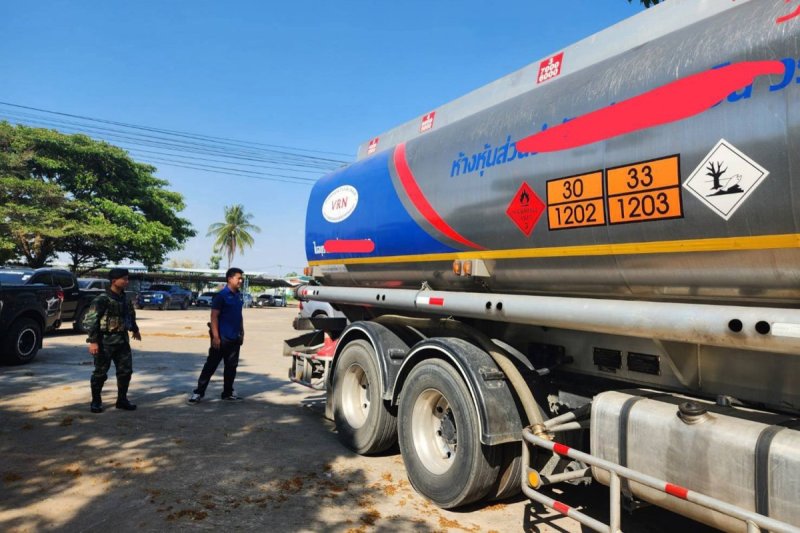
This week, Thailand witnessed a surprising surge in fuel prices, with prices rising by 6 baht, which has led to public discontent among citizens who had been receiving assurances from the government that the situation was under control. However, the reality on the ground has been quite different, as drivers reported purchasing restrictions and long queues at gas stations, with some stations even closing due to fuel shortages.
This price increase comes at a time when the government has been insisting that there is enough fuel to meet the needs of citizens, suggesting that public anxiety is a result of panic buying. Nevertheless, the current situation reveals a significant gap between official statements and the reality experienced by the citizens.
Details of the Incident
In recent weeks, there have been increasing reports of fuel shortages in many areas, with drivers reporting that gas stations have run out of fuel. Instead of acknowledging the problem, the government attributed the situation to public panic, claiming that citizens were exaggerating their fuel purchases. However, the figures indicate that the demand for fuel has significantly doubled, raising questions about the government's effectiveness in managing the crisis.
In his recent statements, the Thai Prime Minister confirmed that the government is investigating the disappearance of approximately 10,000 liters of fuel from national accounts, further increasing doubts about inventory management. Orders have also been issued for refineries and gas stations to release their mandatory reserves to meet the rising demand, but this appears to have been insufficient.
Background & Context
Historically, Thailand has faced similar crises in the past, such as the mask shortage during the COVID-19 pandemic, where the government insisted there was an adequate supply while markets suffered from severe shortages. At that time, the Minister of Public Health, Anutin Charnvirakul, insisted that masks were available, but the reality was quite the opposite, with pharmacies running out of stock.
These crises demonstrate a significant gap between official statements and reality, leading to a loss of trust in the government. Currently, it seems that the situation is repeating itself with fuel, as concerns grow that the government may not be able to effectively manage the crisis.
Impact & Consequences
The rise in fuel prices in Thailand could have significant economic and social repercussions. With increasing fuel costs, prices of other goods and services are likely to rise, affecting citizens' purchasing power. Additionally, fuel shortages could disrupt transportation and supply chains, exacerbating the economic crisis.
Moreover, the loss of trust in the government could lead to public protests and demands for urgent reforms. The current situation highlights the urgent need for improved crisis management in the country and ensuring transparency in dealing with critical issues such as fuel.
Regional Significance
The fuel crisis in Thailand serves as an example of how economic crises can impact communities. In the Arab region, many countries face similar challenges, where fuel prices are affected by geopolitical tensions and changes in global oil markets. Understanding how governments handle these crises can provide valuable lessons for Arab countries on better crisis management.
In conclusion, the Thai government must take urgent steps to address the current fuel crisis and restore citizens' trust. Failure to do so may exacerbate the economic and social conditions in the country.