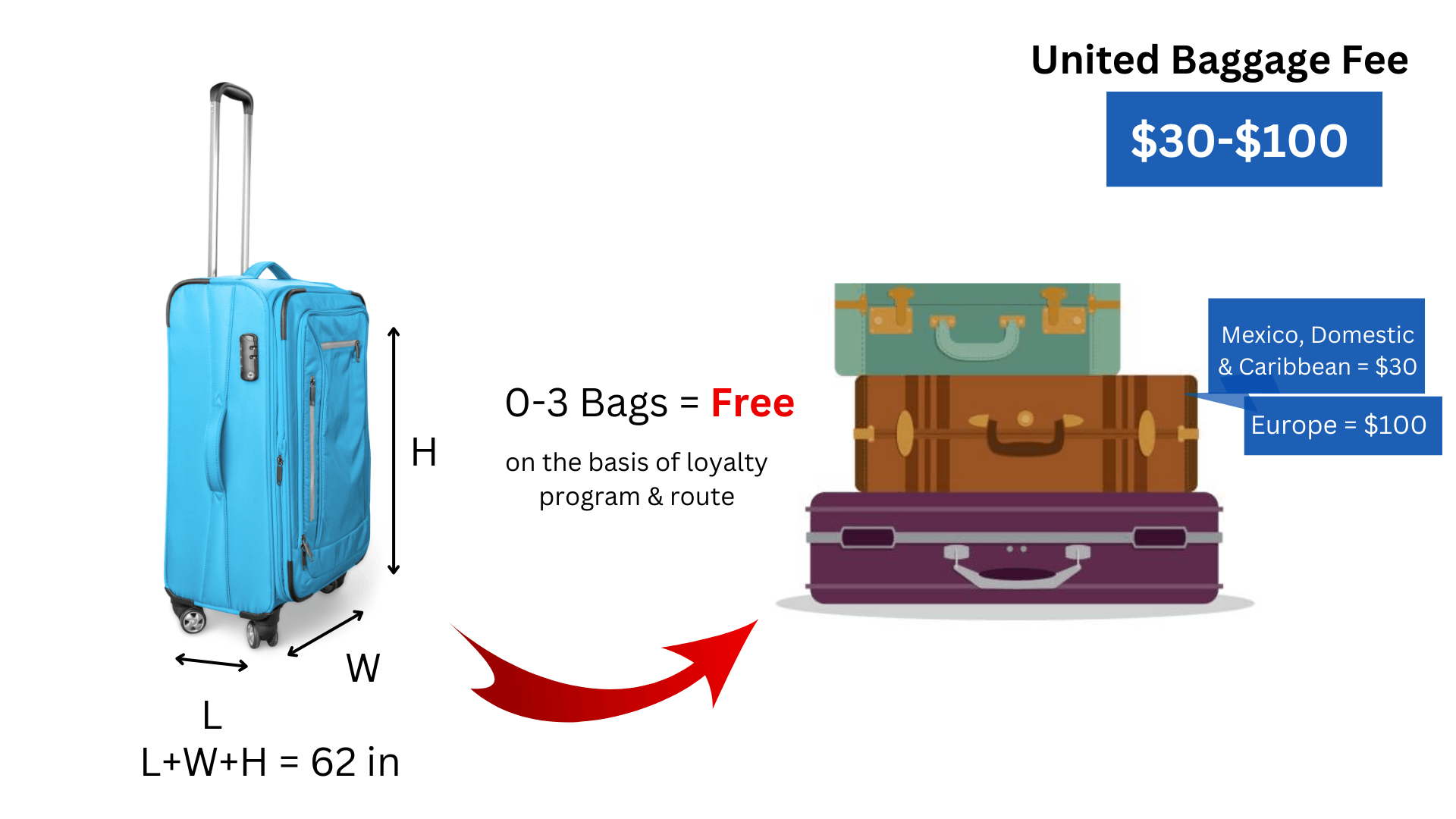
In a new move reflecting the challenges faced by U.S. airlines, United Airlines has announced a $10 increase in checked baggage fees, bringing the cost to $45 for the first bag when paid in advance, and $50 if paid within 24 hours of the flight. This increase is a direct response to the rising fuel prices, which are among the largest costs incurred by airlines after labor expenses.
United Airlines is the second U.S. airline to raise baggage fees in less than a week, following JetBlue, which announced an increase ranging from $4 to $9 depending on the timing of the booking. These increases come at a time when fuel prices have seen a significant rise, with average fuel prices in cities like Chicago, Houston, Los Angeles, and New York reaching $4.56 per gallon, an increase of over 82% since the attacks by the U.S. and Israel on Iran on February 28.
Details of the Announcement
United Airlines clarified that the new increase in baggage fees will take effect starting April 3, as airlines face mounting pressure to cover rising costs due to escalating fuel prices. The company also confirmed that holders of United Chase credit cards, members of the Premier MileagePlus program, and military personnel can continue to check bags for free.
Airlines are striving to adapt to these challenging economic conditions, as rising fuel prices impact all aspects of operations, forcing them to seek ways to offset these costs by increasing fees for customers.
Background & Context
Historically, the aviation industry has experienced significant fluctuations in fuel prices, which are a major factor affecting operating costs. In recent years, fuel prices have been heavily influenced by geopolitical events, such as conflicts in the Middle East, which have led to increased demand for fuel and rising prices. In this context, the recent increase in baggage fees is part of a broader strategy for airlines to adapt to these changes.
It is noteworthy that airlines often follow each other in raising fees, making it difficult for travelers to avoid these additional costs. However, there are some loopholes, such as airline-specific credit cards that offer benefits like free baggage.
Impact & Consequences
This increase in fees underscores the financial pressures facing airlines, which may lead to higher prices overall in the travel industry. These increases are expected to influence consumers' travel decisions, as some may hesitate to book flights due to the additional costs.
Moreover, rising travel costs could affect demand for flights, potentially leading to a decrease in the number of travelers. At the same time, airlines may be compelled to enhance their services or offer special deals to attract travelers amid these challenging economic conditions.
Regional Significance
Amid rising travel costs, Arab travelers may also be affected by these increases, especially those traveling to or through the United States. The increase in baggage fees could alter travel plans for many families and individuals, potentially impacting tourism flows between Arab countries and the United States.
In conclusion, this increase in baggage fees reflects the ongoing challenges faced by the aviation industry, which requires companies to make tough decisions to ensure their sustainability amid changing economic conditions.