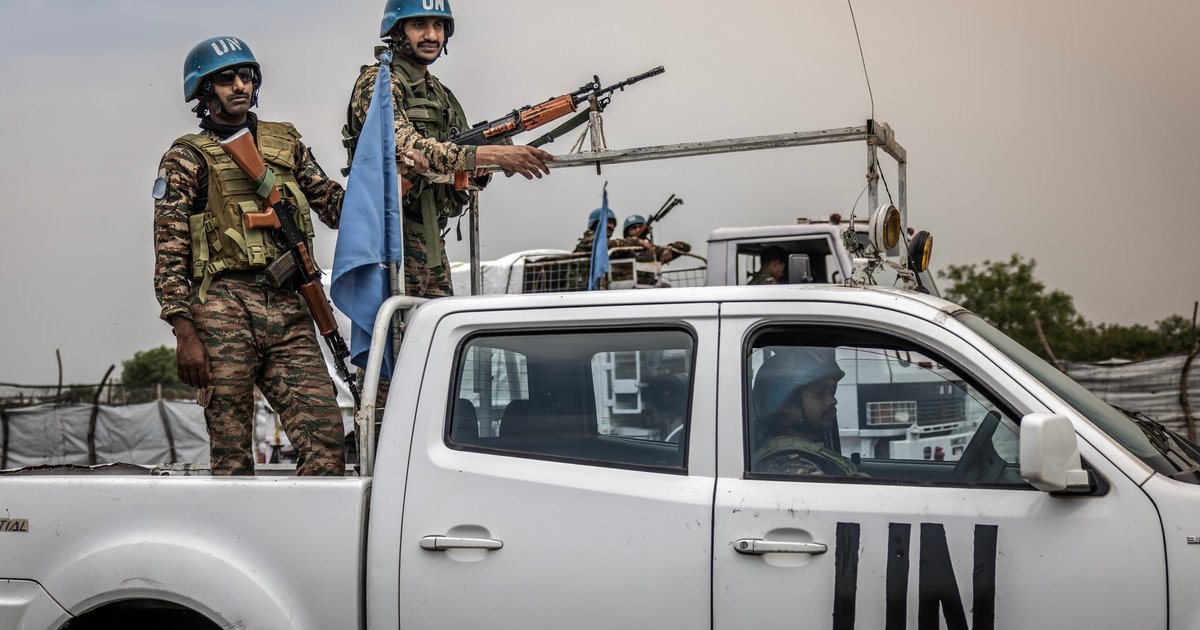
Recent reports have revealed that funding and resources for United Nations peacekeeping operations have plummeted to their lowest levels in 25 years, as major countries, particularly the United States, have failed to meet their financial commitments on time. This sharp decline in funding and resources jeopardizes the UN's ability to effectively manage conflicts, potentially exacerbating humanitarian crises worldwide.
As of July 2025, approximately 35% of the UN's budget of $5.6 billion was missing, forcing many missions to reduce their personnel. According to the Stockholm International Peace Research Institute (SIPRI), the number of international personnel involved in peace operations stood at only 78,633 by December 31, 2025, representing a 49% decrease compared to 2016, marking the lowest level since 2000.
Details of the Event
The report indicated that the decline in personnel participating in peacekeeping operations was most severe last year, with a 17% drop compared to the previous year. Jair van der Linde, Director of the Peace Operations and Conflict Management Program at SIPRI, stated that if this trend continues, it could lead to significant weaknesses in managing multilateral conflicts, marginalizing institutions like the UN.
He also warned that this situation could result in an increase in conflicts, which would have more severe impacts on civilians, as countries abandon long-established standards.
Background & Context
The United States and China are among the largest contributors to the UN peacekeeping budget, together contributing half of the budget. However, most contributions come from less wealthy countries in the Global South, such as Uganda, Nepal, and Bangladesh. The report did not directly blame Washington but pointed to a growing political trend that began in 2025, where the current U.S. administration started undermining the UN's mandate and calling for significant reforms.
Since returning to power in January 2025, U.S. President Donald Trump has taken steps to cut funding allocated to the UN, including withdrawing funding from several of its agencies. Proposals have also been made to eliminate funding for peacekeeping operations entirely as part of cost-cutting measures at the State Department.
Impact & Consequences
Concerns are rising that this decline in funding and resources will lead to an increase in conflicts in regions such as Africa and the Middle East. Peacekeeping operations in countries like the Democratic Republic of the Congo, Haiti, and Iraq have been shut down, indicating a shift in conflict response away from the traditional UN framework. Instead, there is a reliance on unilateral or bilateral arrangements, which are often more militarized and influenced by the self-interests of the involved states.
In Lebanon, the mandate of the United Nations Interim Force in Lebanon (UNIFIL) is expected to end in December, under pressure from the United States. Washington has made it clear that it prefers to bolster the Lebanese army as an alternative, despite its inability to fulfill its commitments under the ceasefire agreement between Lebanon and Israel.
Regional Significance
The Arab region is significantly affected by these developments, as conflicts are escalating in countries like Lebanon and Palestine. The ongoing war between Israel and Hezbollah has resulted in the deaths of over 3,000 Lebanese since October 2023, highlighting the urgent need for effective peacekeeping mechanisms. The diminishing role of the UN in the region may exacerbate humanitarian crises and increase civilian suffering.
In conclusion, this decline in funding for peacekeeping operations poses a significant threat to global security and stability. It is crucial for major countries to take urgent steps to ensure support for the UN and funding for its operations, to maintain peace and security worldwide.