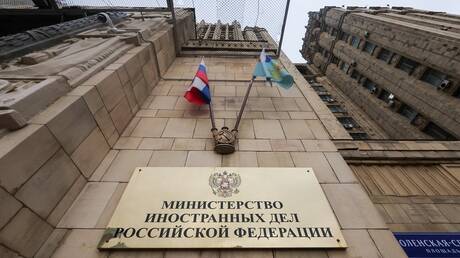
Russian Deputy Foreign Minister Alexander Pankin stated that the United States continues to exert increasing pressure on Russia and its partners, noting that Moscow is fully aware of this strategy. Pankin affirmed that this pressure will not impact Russia's position but will enhance its determination to confront challenges.
Pankin's remarks come at a sensitive time, as relations between Russia and the United States are increasingly strained, particularly amid ongoing geopolitical crises. It is evident that Washington seeks to utilize all available means to bolster its position on the international stage, which heightens tensions between the two parties.
Details of the Situation
In his remarks, Pankin clarified that the American pressures encompass a range of political and economic measures aimed at weakening Russia on the international front. He pointed out that these pressures are not new; rather, they are part of a long-term strategy intended to undermine Russian influence in various regions, including the Middle East and Eastern Europe.
He also noted that the United States is working to strengthen its alliances with countries it considers partners in countering Russia, complicating the geopolitical situation further. These moves are part of a pressure policy that Washington has followed for years, involving the imposition of economic sanctions and support for Russia's traditional allies.
Background & Context
The roots of the tensions between Russia and the United States extend back several decades, with the relationship experiencing numerous fluctuations since the end of the Cold War. With the escalation of events in Ukraine, these relations have become more complicated, as Russia has accused the United States of interfering in its internal affairs and supporting opposition movements.
In recent years, the United States has increased its support for countries it views as allies against Russian influence, leading to heightened tensions in areas such as the Black Sea and the Middle East. These actions are part of a broader strategy aimed at containing Russia and preventing it from expanding its influence.
Impact & Consequences
Pankin's recent statements underscore that American pressures will not lead to a change in Russia's policy; rather, they may reinforce its position in facing external challenges. These pressures are likely to escalate tensions between the two parties, potentially affecting stability in multiple regions.
Moreover, these pressures may provoke reactions from Russia, including strengthening cooperation with countries it considers allies, further complicating the geopolitical landscape. In this context, Russia may seek to enhance its relations with China and other nations in an effort to counter American pressures.
Regional Significance
The Russian-American relationship holds significant importance for the Arab region, as both Russia and the United States play key roles in various regional issues. With the rising tensions between them, the situation in the Middle East could be significantly affected, especially amid ongoing crises in Syria and Libya.
American pressures on Russia could lead to changes in regional policies, as Arab countries may seek to reassess their alliances in light of these developments. Additionally, any escalation in relations between Russia and the United States could impact peace and stability efforts in the region.
In conclusion, American pressures on Russia remain a complex topic that requires careful monitoring, as its ramifications could extend to various political and economic aspects on the international stage.