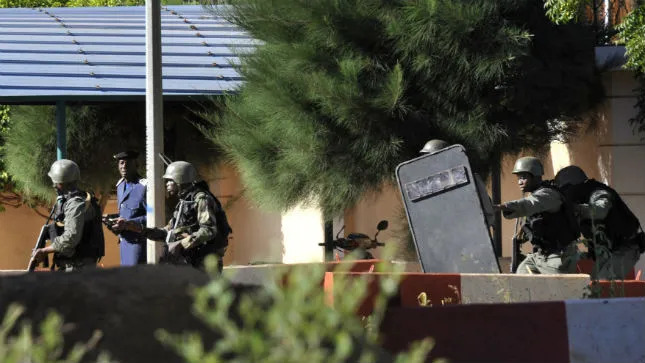
On April 25, coordinated and unprecedented attacks occurred in Mali's capital, Bamako, and the city of Kati, executed by fighters from the jihadist group JNIM, in collaboration with Tuareg rebels from FLA. The assault targeted sensitive sites in the capital, raising serious concerns regarding the stability of the military government that has been in power since the coup in 2021.
In the evening, government forces confirmed that they had regained control of the situation, supported by their Russian allies. However, this attack is considered one of the most dangerous challenges faced by the military government, demonstrating the armed groups' capability to execute complex operations in the heart of the capital.
Details of the Incident
The attack in Bamako and Kati, where the generals leading the country reside, followed a series of assaults targeting various regions in Mali. Reports indicated that the attack was supported by coordination between the two groups, reflecting an increase in collaboration among armed groups in the area.
The Malian government is striving to enhance security in the country, but the recurring attacks indicate that challenges remain. Russian forces have been deployed in Mali as part of military agreements, complicating the security situation further.
Background & Context
Mali has been suffering from political and security instability for years, having experienced two military coups in 2020 and 2021. This situation has led to the proliferation of armed groups, including jihadist factions seeking to impose control over vast areas of the country.
Historically, Mali was a center of culture and trade in West Africa, but it now faces significant challenges due to internal conflicts. Armed groups exploit the political chaos to enhance their influence, complicating the government's efforts to regain control.
Impact & Consequences
The recent attack is seen as a sign of escalating violence in Mali and may negatively affect the government's efforts to restore security. It also demonstrates that armed groups remain capable of executing complex operations, undermining confidence in the government's ability to protect its citizens.
Additionally, these events may exacerbate the humanitarian situation in the country, where many residents suffer from poverty and displacement due to ongoing conflicts. This scenario may necessitate new international interventions to assist the government in facing security challenges.
Regional Significance
The Arab region is directly affected by the situation in Mali, as it is part of the Sahel region, which suffers from security instability. The escalation of violence in Mali could have repercussions for neighboring countries, especially given the presence of armed groups operating across borders.
Moreover, the situation in Mali underscores the importance of regional and international cooperation to address security challenges. Arab countries may need to bolster their efforts to support stability in Mali, particularly in light of the increasing threats from armed groups.
The attack on Bamako and Kati serves as a wake-up call for the Malian government and the international community, highlighting that security challenges persist and that the need for effective strategies to confront these challenges has become urgent.