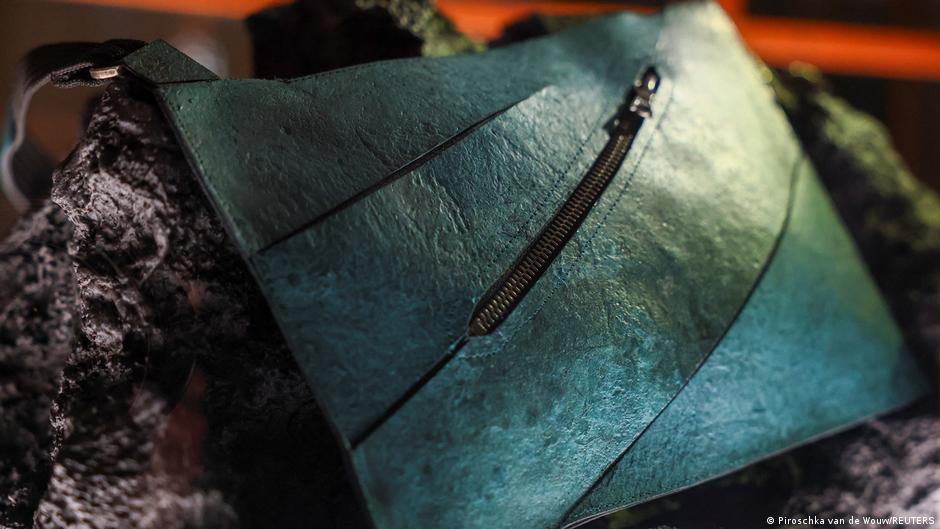
In an exciting event, the Artis Zoo Museum in Amsterdam unveiled a unique handbag, promoted as the world's first product made from lab-grown 'T. Rex' skin. This handbag was designed by the Polish brand 'Antoine Leve' as part of an experimental clothing collection, but the controversy lies in the material used for its production, rather than the design itself.
The company aims to sell the handbag at an auction taking place in Paris on June 11. The brand describes the material as having a 'unique character,' sparking curiosity among many about whether this material is indeed from dinosaur skin.
Event Details
The origins of this project trace back to the discovery of a T. Rex skeleton in Montana about 20 years ago, where soft tissue remnants were found within the bones, raising scientific debate about the possibility of such organic materials surviving for thousands of years. However, many scientists remain skeptical about the validity of these findings.
The handbag in Amsterdam is based on data from this discovery, where researchers used the protein fragments found to reconstruct a complete protein sequence using artificial intelligence. Nevertheless, researchers indicate that most of the proteins used in the handbag are derived from chicken, not dinosaurs.
Background & Context
Historically, the 1990s film 'Jurassic Park' sparked significant interest in dinosaurs, leading to questions about the possibility of cloning them. However, research has confirmed that dinosaur DNA degrades over time, making cloning impossible. In this context, the handbag project in Amsterdam represents a new attempt to explore the world of dinosaurs through modern technology.
While scientists continue to study dinosaur remains, advancements in ancient protein science may open new avenues for understanding biodiversity in ancient times. However, questions about the validity of the materials used in the handbag remain.
Impact & Consequences
The handbag serves as an example of how modern technology is utilized in the fashion world, but scientists warn that claims about 'T. Rex' skin may be misleading. If the handbag contains proteins from chicken, it is merely an experimental product aimed at attracting attention.
This type of project can spark public interest in paleobiology, but there must be a balance between innovation and scientific facts. If this project encourages people to explore the sciences, it could have a positive impact on society.
Regional Significance
In the Arab world, such projects can inspire innovation in technology and fashion. Additionally, interest in dinosaurs and ancient sciences can enhance scientific understanding among youth, contributing to their skill development and orientation towards the sciences.
In conclusion, the handbag made from 'T. Rex' skin raises questions about the limits of innovation in the fashion world and highlights the importance of verifying scientific facts in the information age.