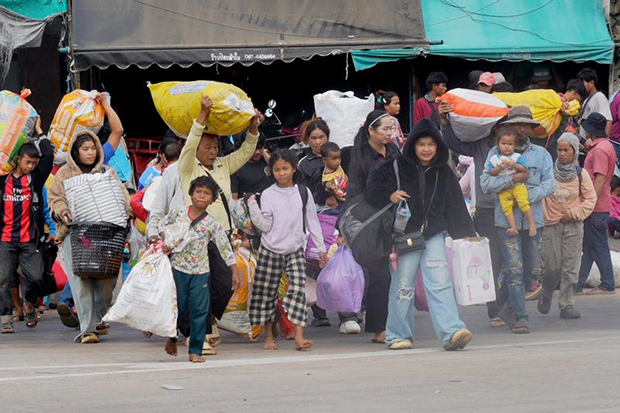
Amid increasing economic challenges, the Thai Chamber of Commerce has called on the government to take urgent measures to address the migrant labor shortage. This shortage, which has been aggravated by a sharp rise in energy costs, threatens vital sectors such as agriculture and industry in the country.
During a press conference, Weebon Subhakarnbukol, Vice President of the Thai Chamber of Commerce, emphasized the need to expedite the renewal of work permits, particularly for Cambodian workers, to avoid losing their legal status. This comes at a critical time for the Thai economy, which heavily relies on migrant labor across various sectors.
Event Details
Estimates indicate that there are approximately 3.9 million migrant workers in Thailand, but the number of Cambodian workers has significantly decreased to about 194,000 from around 550,000, following the return of many to their homeland after border clashes between Thailand and Cambodia last year. Cambodian workers are essential for fruit harvesting in Eastern Thailand, where the season begins in late April and lasts for five months.
As the work permits for many of these workers near expiration, delays in renewing permits due to security concerns threaten to disrupt production in the fruit sector, which is valued at approximately 200 billion baht annually. Weebon warned that the labor shortage could lead to a decline in quality and lost harvesting opportunities.
Background & Context
Historically, Thailand has heavily depended on migrant labor from neighboring countries, especially from Cambodia and Myanmar. This labor has contributed significantly to the country’s economic growth, particularly in labor-intensive sectors such as agriculture and industry. However, political and economic tensions in the region, along with health crises like the COVID-19 pandemic, have led to significant changes in labor flows.
Migrant labor is an integral part of the Thai economy, helping meet local market needs and providing necessary labor for vital sectors. Nevertheless, the current challenges require a swift and effective response from the government to ensure the continuity of these sectors.
Impact & Consequences
The labor shortage could have severe consequences for the Thai economy. Weebon warned that the labor shortage might affect the logistics of rice exports, one of the country’s main agricultural products. Additionally, negative impacts on production quality could lead to the loss of foreign markets, adversely affecting the national economy.
Furthermore, the labor shortage may lead to increased production costs, which would reflect on local prices and affect citizens' purchasing power. Therefore, addressing this shortage is an urgent necessity to maintain economic stability.
Regional Significance
Thailand's experience in dealing with the migrant labor shortage serves as an important lesson for Arab countries that also rely on foreign labor. Many Arab nations face similar challenges in the labor market, necessitating effective strategies to ensure continuity of production and economic growth.
Arab countries can benefit from Thailand's experience in developing flexible labor recruitment policies that ensure workers' rights and enhance market stability. Strengthening cooperation with labor-exporting countries could contribute to providing effective solutions to economic challenges.