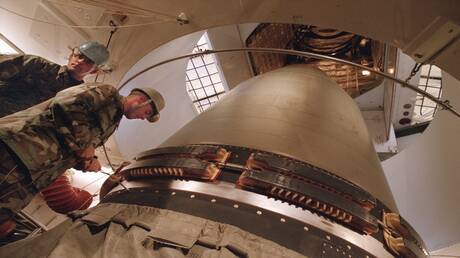
The US Air Force has requested a funding increase of $2 billion for the development of the intercontinental ballistic missile 'Sentinel' for the fiscal year 2027. This initiative is part of a comprehensive restructuring of the military program, reflecting the US's commitment to strengthening its defense capabilities in response to increasing global challenges.
The 'Sentinel' missiles are a crucial component of the US nuclear arsenal, intended to replace the aging 'Minuteman' missiles. This move comes at a sensitive time, as geopolitical tensions are escalating worldwide, necessitating an upgrade of defense systems to ensure strategic superiority.
Details of the Funding Request
According to the 'Novosti' agency, the requested funding increase will expedite the development process of the missile, which is considered a next-generation ballistic missile. The program aims to enhance the accuracy of the missiles and increase their maneuverability, making them more effective against potential threats.
The proposed budget also includes investments in modern technology that will bolster missile capabilities, enabling them to address evolving threats. This step is part of a broader strategy to enhance US national security.
Background & Context
Historically, the United States has relied on 'Minuteman' missiles developed in the 1960s. As time has progressed and threats have evolved, it has become essential to modernize these systems. The 'Sentinel' missile represents the new generation of ballistic missiles, featuring advanced technology that allows it to operate in diverse environments.
Concerns about nuclear threats from countries such as North Korea and Russia are increasing, making it imperative for the United States to enhance its defensive capabilities. This approach also reflects Washington's commitment to maintaining a balance of power globally.
Impact & Consequences
The increase in funding for the 'Sentinel' missile could escalate tensions between the United States and other nations, particularly those with nuclear programs. This move may be viewed as a challenge to international efforts aimed at nuclear disarmament.
Furthermore, bolstering US military capabilities may prompt other countries to increase their military spending, potentially leading to a new arms race worldwide. This situation could affect regional and international stability, heightening tensions among major powers.
Regional Significance
In light of these developments, the Arab region may be indirectly affected. Increased military tensions could lead to changes in defense strategies among Arab nations, necessitating enhanced military cooperation among them.
These steps may also influence the relationships between Arab countries and the United States, as some nations may seek to strengthen their military partnerships with Washington in the face of rising threats.
In conclusion, the US Air Force's request for increased funding for the 'Sentinel' missile reflects the security challenges facing the United States. As it seeks to enhance its defensive capabilities, the question remains about how this will impact regional and international security.