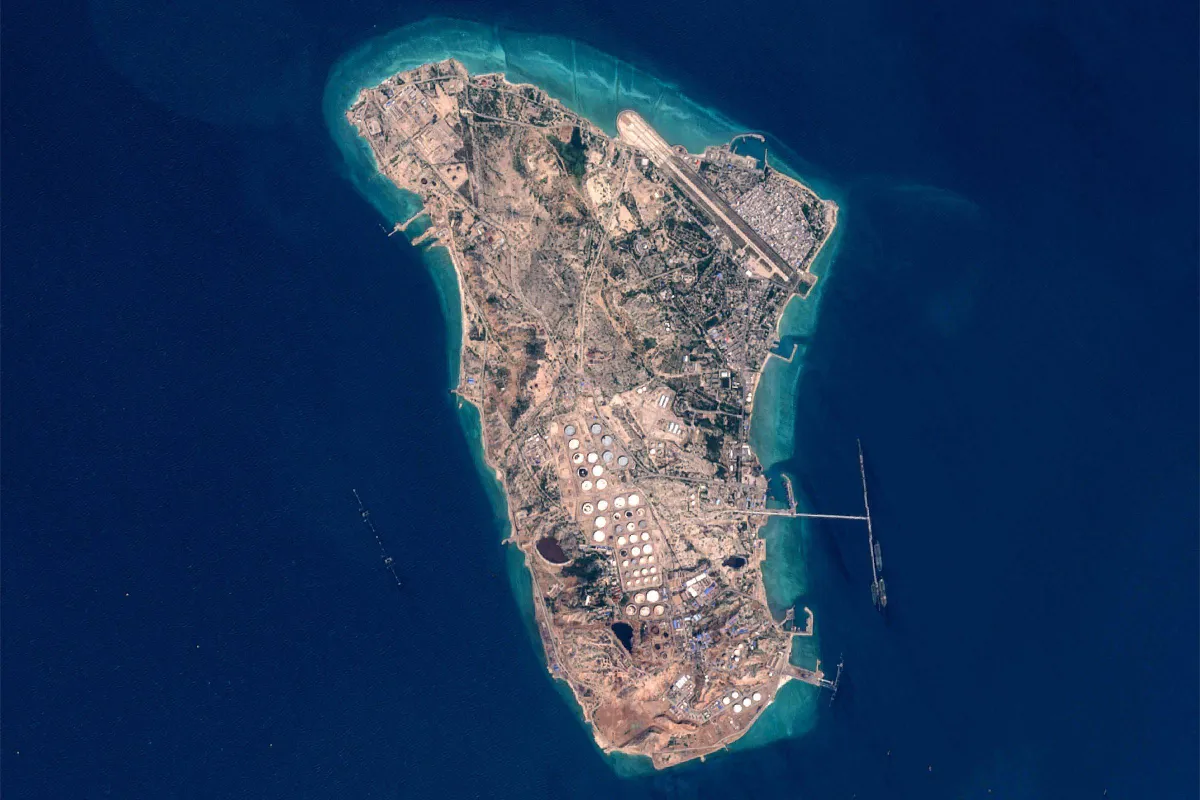
The United States conducted airstrikes on military targets in Kharg Island early Tuesday morning, according to U.S. officials. These strikes come ahead of the deadline set by President Donald Trump for Iran to reopen the Strait of Hormuz, a vital artery for oil exports.
The airstrikes targeted more than 50 military sites on the island, which is located off the southern coast of Iran and serves as a major hub for Iranian oil exports. Officials confirmed that the strikes did not target oil infrastructure, indicating a focus on military objectives.
Details of the Event
Earlier, Trump had set a deadline for Iran, warning that non-compliance would lead to devastating attacks on Iranian energy infrastructure. He indicated that an entire civilization could be wiped out if Tehran did not respond to his demands by 8 PM Washington time.
U.S. Vice President J.D. Vance warned that the United States possesses tools that have not yet been used against Iran, expressing hope that negotiations would spare Washington from resorting to those options. He confirmed that intense negotiations would take place in the coming hours before the deadline expires.
Background & Context
These strikes occur amid escalating tensions between the United States and Iran, with recent days witnessing heightened tensions in the Strait of Hormuz, one of the world's most important maritime passages. Several commercial vessels in the area have been damaged, raising concerns about navigation security.
U.S. pressure on Iran is mounting, as Washington seeks to undermine Tehran's military capabilities, particularly regarding its nuclear and missile programs. Reports have indicated that airstrikes may also target sites within Iran, complicating the security situation in the region.
Impact & Consequences
The U.S. airstrikes could lead to further escalation in the conflict, as the Iranian Revolutionary Guard has warned that it will target civilian facilities if Iranian infrastructure is attacked by the U.S. This escalation could negatively impact regional security and heighten tensions among major powers in the area.
Additionally, these events may affect global oil prices, as the Iranian economy heavily relies on oil exports. Any escalation in military actions could lead to rising oil prices, impacting the global economy.
Regional Significance
Arab countries are directly affected by these developments, especially those that rely on the Strait of Hormuz for oil transportation. Any military escalation could threaten navigation in the region, potentially leading to new economic crises.
The ongoing tensions between the United States and Iran could also exacerbate instability in the region, prompting Arab nations to take precautionary measures to address any negative repercussions.
In conclusion, the situation in the region remains tense, with anticipation for developments in the coming hours that could alter the course of events.