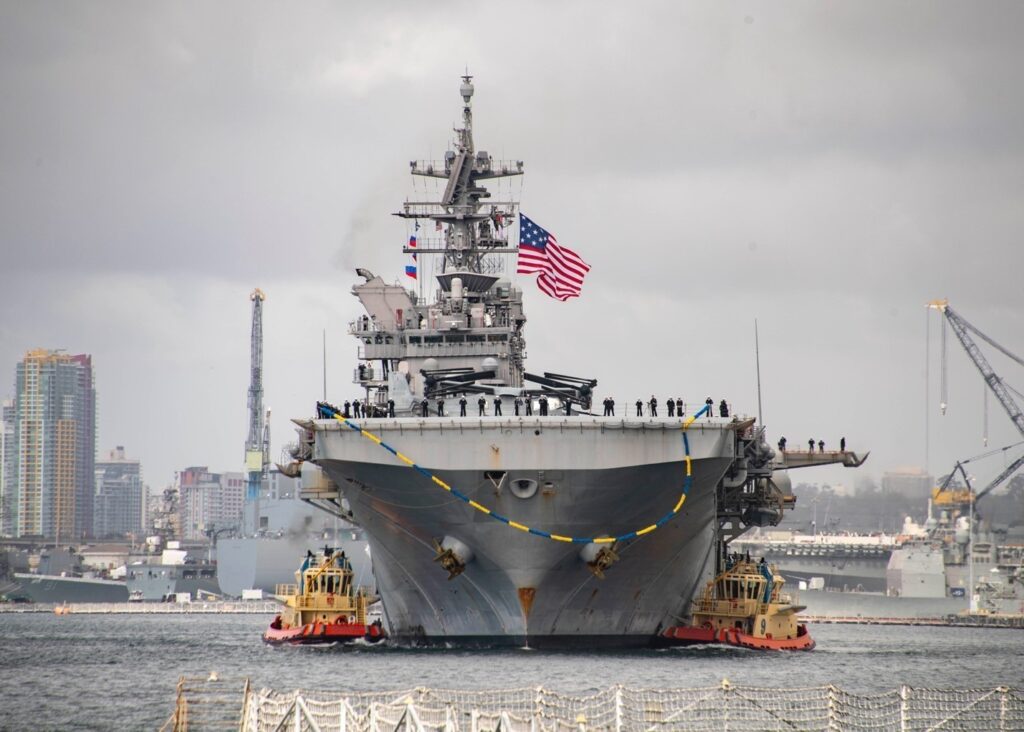
The U.S. Central Command has today denied reports regarding the targeting of the USS Tripoli amphibious assault ship, stressing that the vessel continues to perform its duties in the region. The command confirmed that the ship has not been attacked and that military operations are ongoing as planned.
These statements come at a sensitive time in the region, where tensions between major powers in the Middle East are escalating. The USS Tripoli is considered one of the prominent U.S. naval assets, playing a vital role in enhancing the U.S. military presence in the area.
Details of the Incident
In an official statement, the Central Command confirmed that the USS Tripoli is continuing its routine missions and has not faced any attacks or direct threats. It noted that the ship operates within the framework of U.S. military operations in the region, aimed at enhancing security and stability.
The USS Tripoli is part of the U.S. Navy fleet and possesses advanced offensive and defensive capabilities, making it a strategic tool in any potential conflict. It has been deployed in the region as part of the response to increasing security challenges.
Background & Context
Historically, the region has witnessed increasing tensions between the United States and Iran, with both countries exchanging accusations regarding military activities. These tensions have escalated since the U.S. withdrawal from the Iranian nuclear deal in 2018, leading to heightened situations in the Arabian Gulf.
The USS Tripoli is part of the U.S. strategy to bolster its military presence in the region, as it seeks to counter any potential threats from Iran or Iran-backed armed groups. It has been deployed in several previous missions, including humanitarian relief operations and rapid intervention in crises.
Impact & Consequences
These statements underscore the importance of U.S. forces in the region, as they play a pivotal role in maintaining regional security. The denial of targeting the ship may help to de-escalate the tense situation and reflects the U.S. commitment to protecting its interests and those of its allies.
On the other hand, these tensions may lead to increased military preparations in the region, raising the level of tensions among major powers. This situation serves as a test for U.S. policies in the Middle East, where it must balance deterrence and diplomacy.
Regional Significance
These events directly impact Arab countries, especially those located in the Arabian Gulf. Any military escalation could negatively affect security and stability in the region, impacting local economies.
Moreover, the continued presence of U.S. forces in the area may provoke feelings of resentment among certain groups, potentially exacerbating internal situations in some countries. Therefore, balancing military strength and diplomacy will be crucial in the upcoming phase.
The situation in the region remains under observation, as the U.S. Central Command continues to emphasize the importance of its military presence. With ongoing tensions, the hope for achieving stability requires continuous diplomatic efforts.