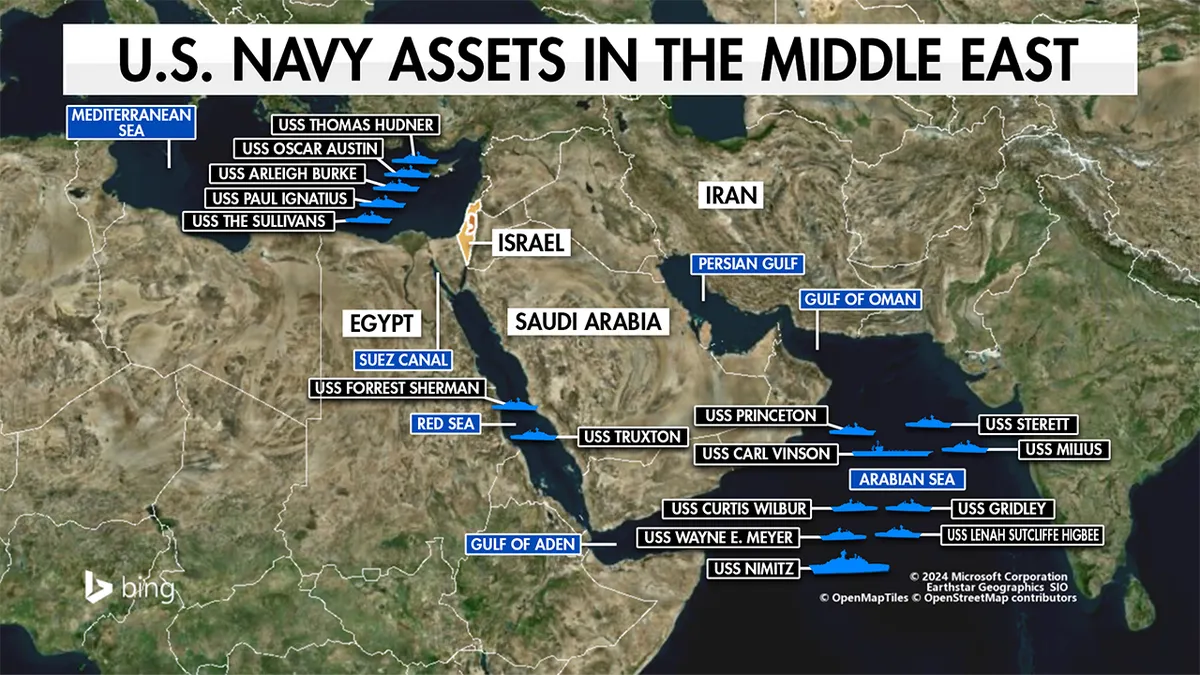
The United States is considering the possibility of conducting ground military operations in the Middle East, amid fears that this could lead to a prolonged conflict that may draw it into a new military quagmire. These discussions are taking place at a sensitive time, as tensions in the region are increasing, raising questions about the U.S. military strategy under current circumstances.
During an interview with Bloomberg, both Jumana Branstetter and Nancy Youssef, a writer for The Atlantic, discussed the U.S. military situation in the Middle East, pointing out the potential risks the United States could face if it becomes embroiled in a long-term conflict. This discussion has sparked widespread concern about the possible consequences of such a move.
Details of the Situation
Pressure is mounting on the U.S. administration to make decisive decisions regarding its military presence in the Middle East, as it faces multiple challenges from armed groups and hostile nations. Analysts have indicated that any military intervention may require significant resources and could escalate tensions with regional powers.
The importance of understanding the geopolitical context surrounding the region has also been highlighted, as U.S. interests intersect with those of other nations, complicating any military action. Some U.S. officials have expressed concern that engaging in ground operations could lead to unforeseen outcomes.
Background & Context
Historically, the United States has witnessed military interventions in the Middle East, most notably in Iraq and Afghanistan, where these interventions have led to prolonged conflicts and significant human and material costs. These experiences have influenced how American decision-makers think about any future steps.
In recent years, the region has seen an escalation in conflicts, including the wars in Syria and Yemen, further complicating the situation. The emergence of groups like the Islamic State (ISIS) has added a new dimension to the challenges faced by the United States in the region.
Impact & Consequences
If the United States decides to implement ground operations, it could have significant repercussions at both regional and international levels. This is likely to escalate tensions with regional powers such as Iran, which views the United States as a primary adversary.
Moreover, any military intervention could affect U.S. relations with its allies in the region and may provoke negative reactions from local populations, increasing feelings of hostility towards the American presence.
Regional Significance
In the context of current events, any U.S. military operations could impact stability in neighboring Arab countries, with nations like Iraq, Syria, and Lebanon potentially being directly affected. The escalation of conflict could also lead to an influx of refugees, increasing the burden on host countries.
In conclusion, the question remains about how the United States will address the complex challenges in the Middle East and whether it will take new steps that could alter the balance of power in the region.