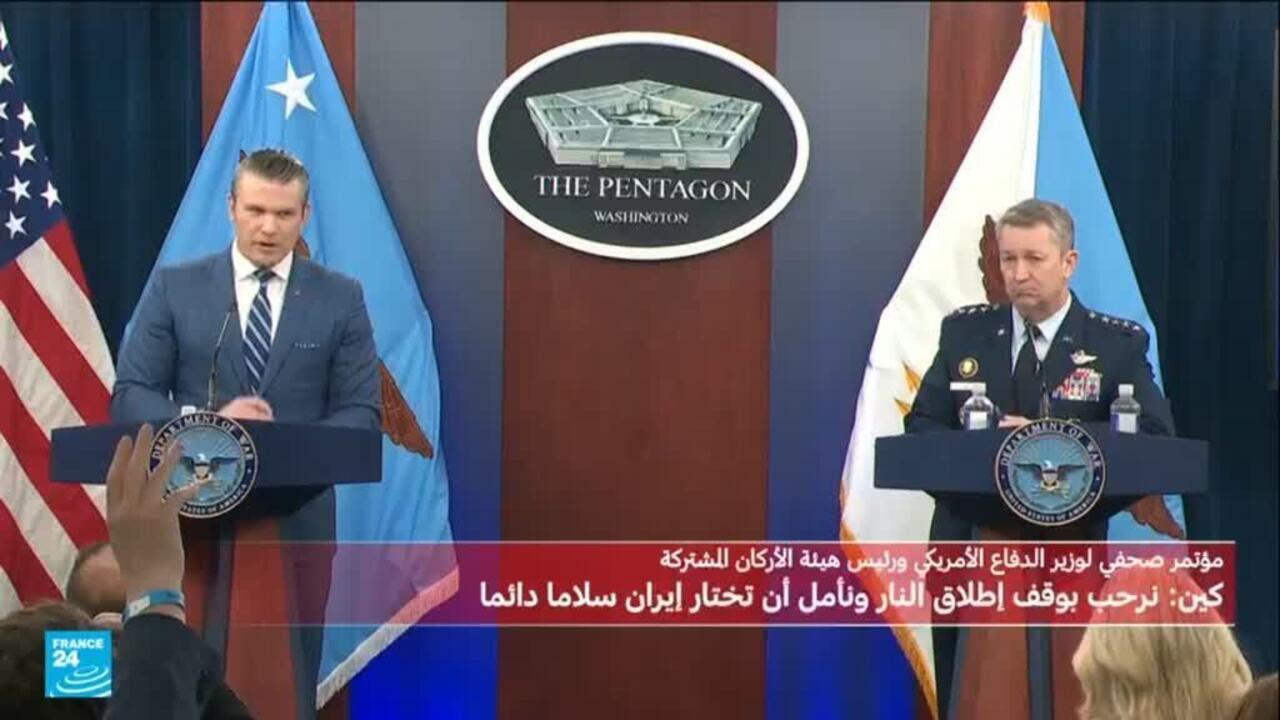
In a press conference held on Wednesday, U.S. Defense Secretary Pete Hegseth announced that the United States has achieved a decisive military victory over Iran, with the complete destruction of its missile program. Hegseth emphasized that the U.S. is prepared to take stringent actions if Iran refuses to surrender its uranium, stating, "We know what they have, they will surrender it, we will get it, and we will take it if we have to, this can be done by all possible means."
Additionally, General Dan Keen, Chairman of the Joint Chiefs of Staff, clarified that the military objectives set in Iran have been accomplished, but he noted that the current ceasefire is merely a truce, as U.S. forces remain on alert to resume combat if necessary.
Details of the Event
These statements come at a sensitive time, as tensions between the United States and Iran escalate following a series of military operations targeting Iranian military facilities. Reports have indicated that U.S. military pressure has significantly impacted Iran's ability to develop its missile programs, leading to the destruction of several strategic sites.
The American statements reflect a firm policy towards Tehran, as Washington seeks to diminish Iran's influence in the region, especially amid ongoing tensions in the Middle East.
Background & Context
Historically, relations between the United States and Iran have been tense since the Islamic Revolution in 1979. These relations have seen a notable escalation in recent years, particularly after the U.S. withdrawal from the Iranian nuclear deal in 2018. Since then, Washington has imposed strict economic sanctions on Tehran, exacerbating the economic and social conditions in the country.
Iran is considered one of the key countries in the Middle East, with significant influence on regional events, making any military escalation with the United States have far-reaching implications for security and stability in the region.
Impact & Consequences
The recent statements from U.S. officials could lead to a new escalation in the conflict between the United States and Iran. If military pressures continue, Iran may take escalatory steps, increasing the likelihood of armed conflict in the region.
These developments may also affect relations between the United States and its allies in the region, as some allies may feel concerned about escalating tensions, while others may see an opportunity to strengthen military cooperation with Washington.
Regional Significance
The Arab countries neighboring Iran are cautiously watching the developments between the United States and Tehran. Military tensions could impact regional security, especially in countries like Iraq, Syria, and Lebanon, where Iranian influence plays a significant role.
Any military escalation could lead to an influx of more refugees and increased sectarian tensions, threatening stability in the Arab region as a whole.
In conclusion, the situation in the Middle East remains complex, with overlapping regional and international interests, making it difficult to predict the course of events in the near future.