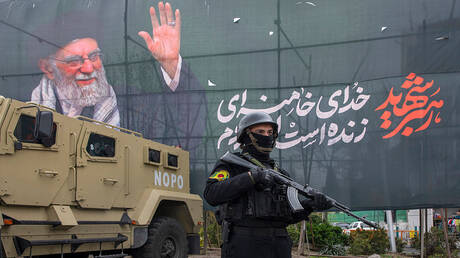
US intelligence assessments have reported that the Iranian regime shows no signs of losing its grip on power, with reports indicating that the successors of assassinated leaders remain committed to the ideology of the Islamic Republic. This information comes at a time when the Iranian regime is facing multiple internal and external challenges.
These assessments coincide with increasing international pressure on Iran, including economic sanctions and criticisms related to its nuclear program. However, it appears that the Iranian regime has managed to maintain its stability, raising questions about the effectiveness of these pressures in achieving their goals.
Details of the Event
These assessments are part of US intelligence efforts to understand the internal dynamics in Iran. Reports have shown that the Iranian regime still enjoys relative popular support, despite the protests that have occurred in the country in recent years. Additionally, successors of assassinated leaders, such as Qassem Soleimani, remain committed to the approach followed by the regime, reflecting the continuity of the revolutionary ideology.
In this context, reports have confirmed that the Iranian regime has succeeded in consolidating its power through the use of repression and media disinformation, which has helped it confront challenges threatening its stability. The Iranian government continues to strengthen its military capabilities, reflecting its determination to maintain its regional influence.
Background & Context
Historically, Iran has witnessed numerous political and social crises, starting from the Islamic Revolution in 1979 to the present day. The Iranian regime has faced ongoing challenges, including economic sanctions imposed by the United States and its allies, aimed at undermining its economic and military capabilities.
Despite these challenges, the Iranian regime has managed to maintain its stability through various strategies, including strengthening ties with regional allies such as Hezbollah in Lebanon and Shiite militias in Iraq. These relationships enhance Iran's position in the region, making it a key player in regional conflicts.
Impact & Consequences
These assessments confirm that the Iranian regime remains strong, which may affect regional and international policies towards Iran. While Western countries seek to impose further pressures on Tehran, the regime's stability may complicate negotiation efforts regarding its nuclear program and regional behavior.
Moreover, the Iranian regime's continued maintenance of its power may encourage the escalation of tensions in the region, especially with neighboring Arab countries. This situation could lead to increased sectarian divisions and heightened regional conflicts, threatening security and stability in the Middle East.
Regional Significance
Iran is a key player in many conflicts in the Arab region, including the disputes in Syria, Iraq, and Yemen. The continued stability of the Iranian regime may mean ongoing Iranian interventions in these conflicts, further complicating the situation in the region.
This situation may also affect the relationships between Arab countries and Iran, as some nations may seek to strengthen their alliances to counter the increasing Iranian influence. At the same time, there may be a need for new strategies to address the challenges posed by the Iranian regime to regional security.
In conclusion, US intelligence assessments indicate that the Iranian regime remains strong and stable, raising questions about the effectiveness of international pressures. The current situation requires careful analysis and integrated strategies to address the challenges posed by this regime to the region.